
Lebanon has accused "Israel" of spraying farmland in the country’s south with a herbicide linked to cancer, calling the action a “health crime” that threatens food security and farmers’ livelihoods.
President Joseph Aoun condemned the spraying as “an environmental and health crime” and a violation of Lebanese sovereignty, pledging to take “all necessary legal and diplomatic measures to confront this aggression.”
The incident has reinforced claims that its occupation forces are conducting a campaign of ecocide aimed at making southern Lebanon uninhabitable, echoing tactics previously reported in Gaza, the West Bank, and Syria.
Aerial spraying raises alarm
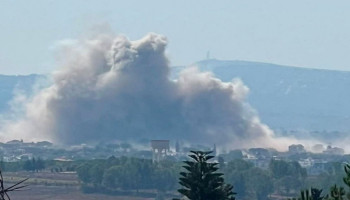
The reported spraying occurred last Sunday. UN peacekeepers said they were warned by the Israeli military to remain under cover while an aerial operation released an allegedly "non-toxic chemical". Videos from the area show light aircraft spraying extensively over agricultural land
Lebanese authorities said laboratory analysis identified the substance as glyphosate, a widely used herbicide that the World Health Organization classified in 2015 as “probably carcinogenic to humans.”
While glyphosate is commonly applied to crops before harvest to accelerate drying, research indicates it can disrupt mammalian organs and biochemical pathways.
Lebanese ministries warn of severe agricultural and ecological damage
In a joint statement, Lebanon’s ministries of agriculture and environment said some samples contained glyphosate at concentrations “20 and 30 times higher than normal use.”
They warned that spraying would “damage vegetation in the targeted areas, with direct repercussions on agricultural production, soil fertility and ecological balance.”
The statement added, “The spraying of chemicals from military aircraft over Lebanese territory constitutes a serious act of aggression that threatens food security, inflicts severe damage on natural resources, and undermines the livelihoods of farmers, in addition to posing potential health and environmental risks to water, soil, and the entire food chain.”
Repeated attacks on the environment
In the days before the Israeli crime in Lebanon, videos reportedly showed Israeli aircraft spraying agricultural areas in Syria on three separate occasions within a week
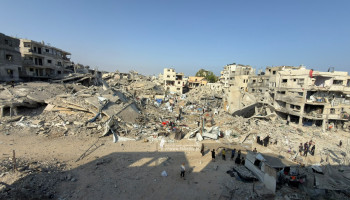
South Lebanon is still recovering from an aggression by "Israel", which continues with near-dailyattacks on the country. An estimated 4,000 people were killed, 17,000 were injured, and 1.2 million were displaced. "Israel" has been accused of deploying white phosphorus, incendiary bombs, and cluster munitions, which burned farmland, olive groves, and forests, and left soils contaminated with heavy metals and unexploded ordnance.
Environmentalists warn of long-term ecological harm
Hisham Younes, founder and president of the Lebanese environmental group Green Southerners, said the repeated attacks on southern Lebanon’s ecosystem would have “cumulative, complex and deep impacts.”
“This spraying does not take place over an intact ecosystem or healthy soil capable of better absorbing or accommodating such impacts,” Younes stressed. “It occurs over land and vegetation already severely stressed and degraded by the intensive use of white phosphorus, incendiary munitions, and the accumulation of heavy-metal residues.”
He added that agricultural land, including beekeeping areas, had been deliberately targeted, and that glyphosate use further harms insect communities and pollinators, compounding the challenges facing an already devastated agricultural sector.
A continuum of environmental damage
Younes linked the chemical spraying to a broader “legacy of colonial practices” in Israeli aggression. “The very concept of ‘scorched’ or ‘dead’ land is rooted in a colonial tradition of warfare,” he said. “Israel has long relied on approaches characterized by long-term destructive effects on landscapes, natural systems, and the conditions necessary for sustaining life and livelihoods.”
He concluded, “Within this continuum, the recent chemical spraying cannot be seen as an isolated incident. It forms part of an evolving pattern in which environmental harm is cumulative and increasingly difficult to reverse.”
Source:Websites