
Yemen’s Ministry of Foreign Affairs and Expatriates has urged Saudi Arabia to recognize that there is no alternative to lifting its blockade on Yemen, ending its military mobilization, and allowing Yemenis to benefit from their national resources.
In a statement issued Monday, the ministry warned that the more the Saudi regime persists in its escalatory steps, the more it will face a reciprocal response,” stressing that the safest, closest and least costly solution is for Riyadh to meet Yemen’s legitimate demands, address its own internal affairs and leave Yemenis to determine their own affairs.
The ministry said Saudi Arabia had reneged on previous commitments and intensified its blockade on Yemen to an unprecedented level, prompting Yemen to adopt a blockade-for-blockade strategy as a necessary measure to alleviate the world’s worst humanitarian crisis.
It added that after the adoption of the new policy, Saudi Arabia continued escalating by mobilizing forces and allied groups across occupied Yemeni territories.
The ministry described the Saudi military buildup as a direct threat to Yemen’s security, safety and stability, saying that the Yemeni Armed Forces therefore responded to the deployments in an appropriate manner.
The remarks come amid renewed tensions between Yemen and Saudi Arabia following a prolonged period of de-escalation and stalled efforts to implement a roadmap aimed at ending the Saudi aggression. Riyadh has failed to meet previously agreed commitments, and Sana'a has warned that renewed military mobilization will be met with reciprocal escalation.
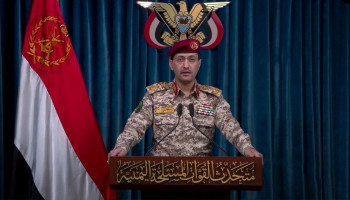
Earlier, the Yemeni Armed Forces announced targeting a Saudi military landing ship and four escort boats off the coast of Mokha in the Red Sea, saying the landing ship was destroyed and several boats were sunk or damaged. The Armed Forces also reported a drone strike on a Saudi-backed weapons depot in Marib.
The operation followed repeated warnings from Sana'a that Saudi military mobilizations would be met with direct retaliation under its blockade-for-blockade and escalation-for-escalation policy.