As long as the Saudi regime believed that its policy of “starvation and subjugation” against the Yemeni people would come without a hefty price, it continued to embrace the state of neither peace nor war established by the roadmap.
Through that framework, Riyadh sought to lull the Yemeni situation into submission, deepen the crisis, and push Yemenis further into hunger and despair until they would ultimately be forced to surrender their sovereignty—much like its hypocritical proxies and mercenaries have done.
It is against this backdrop that the Yemeni equation emerged as the defining feature of a new phase and a new chapter in Yemen’s revolution, aimed at reclaiming the country’s sovereignty and its fundamental rights as a state.
More than a month into the Yemeni blockade imposed on Saudi maritime traffic, the figures on the ground and the economic data have delivered a stinging blow to the decision-making circles in Riyadh.
Saudi “defiance” is no longer proving effective in the face of a devastating Yemeni strategy that has shifted the battle from defending sovereignty to strangling the lifeline of the Saudi economy, under one clear and unequivocal message: “There will be no oil security for those who besiege the Yemenis’ bread.”
The Fall of the Last Outlet
The Kingdom’s exports have hit rock bottom. The latest report by U.S. news agency Bloomberg reveals an economic earthquake shaking Saudi Arabia, with Saudi oil exports plunging in August to their lowest level in nine years.
According to the agency, the recorded figure—just 3 million barrels per day—marks a historic low that the Kingdom had not even witnessed at the height of the COVID-19 pandemic.
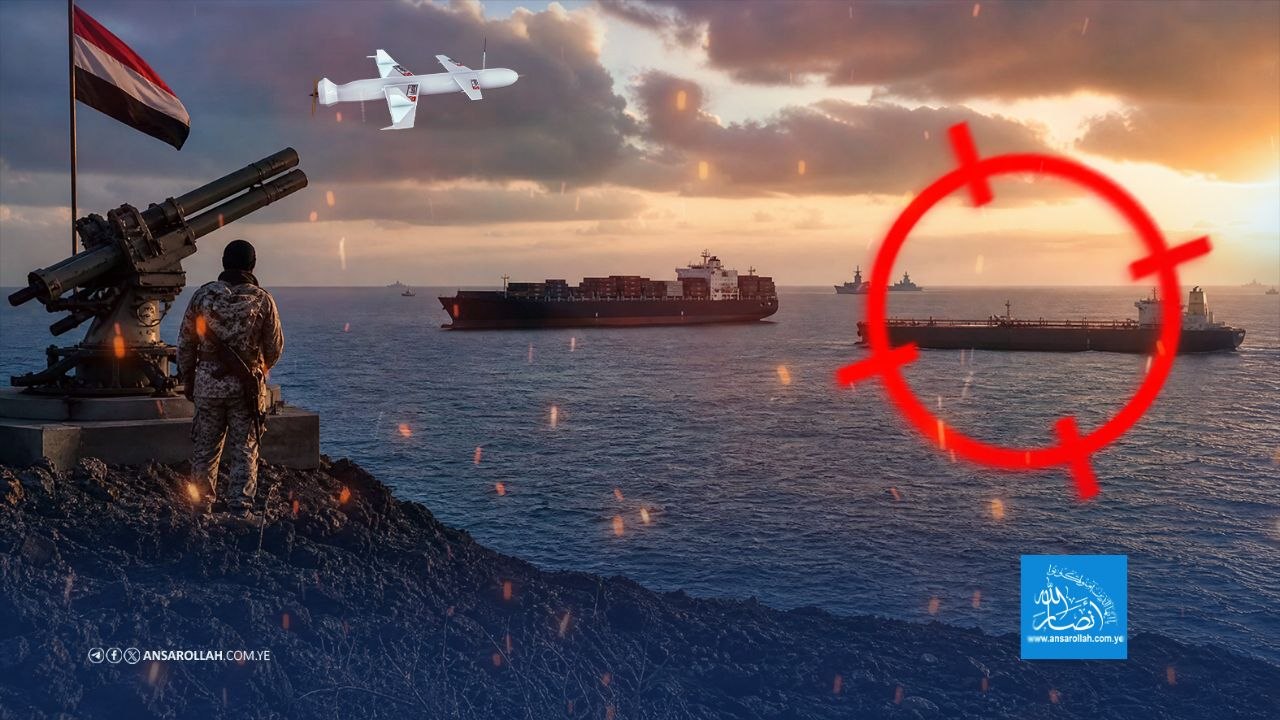
The collapse is not the result of a voluntary decision to cut production. Rather, it came as a direct consequence of Yemen’s success in imposing a sweeping maritime ban on Saudi tankers in the Red Sea, which had served as the Kingdom’s strategic outlet and alternative to the Strait of Hormuz.
The figures tell the story: exports through Saudi Arabia’s western ports fell from 3.7 million barrels per day in July to roughly 2 million in August, translating into an immediate loss of more than $4 billion in a single month, at a time when the price of a barrel is approaching $100.
Rights, Not Favors
The economic strangulation imposed by Sanaa is not an end in itself; it is a means of reclaiming rights that have been denied.
In this context, Abdul-Malik Al-Ajri, a member of the National Negotiating Delegation, leaves no room for ambiguity, stressing that Yemen is “not asking anyone for a favor,” but is demanding its legitimate right to have its looted national resources made available to pay the salaries of all state employees, an immediate end to the obstruction of cargo vessels bound for the ports of Hodeidah, and the lifting of the restrictions imposed on Sanaa International Airport.
Al-Ajri argues that these purely humanitarian demands “should never have been a subject of negotiation had it not been for Saudi arrogance and tyranny,” emphasizing that the era in which Riyadh monopolized Yemen’s resources while Yemenis died under siege is gone for good.
On the Ground: “East–West” in the Line of Fire
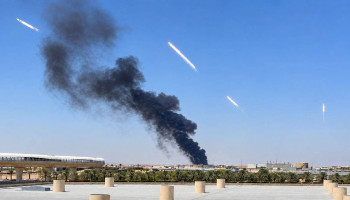
As the Saudi regime sought to maneuver geographically, the operation carried out on July 27 targeted the crude-oil transportation lines running from the Kingdom’s east to its west, signaling the end of any notion of “safe havens.”
The operation, carried out—and periodically repeated—by the Yemeni Armed Forces using drones, delivered a precise intelligence message, striking at the “backbone” of Saudi Arabia’s energy infrastructure as part of the Yemeni equation that Yemen declared from the outset, heralding a new chapter in the struggle for liberation, the restoration of rights, and the completion of national sovereignty.
A military source confirms that the targeting of these facilities comes as a natural response to Saudi violations of Yemeni airspace and its failure to honor its commitments. In multiple statements, the spokesman for the Yemeni Armed Forces has repeatedly stressed that enemy mobilization on land and at sea will remain legitimate targets, reaffirming the steadfastness of the “blockade for blockade” equation—an equation that has turned military landing ships and their escorting boats into easy prey off the coast of Mokha.
The Saudi Paradox: Borrowing Amid “Reliance” on Washington
In a scene that lays bare the absurdity of the Kingdom’s handling of the crisis, Saudi Arabia is moving to borrow $9 billion through international bonds to cover its widening budget deficit, even as Washington holds more than $142 billion in Saudi Treasury securities—assets over which Riyadh has no real say when it comes to transferring or blocking them.
This drain represents a reverse flow of capital: the Saudi regime helps finance the stability of the U.S. economy at low interest rates while borrowing at higher rates to plug the holes created by its war on Yemen, leaving the Kingdom’s monetary sovereignty increasingly exposed.
Meanwhile, the “quagmire” alliances pursued by the Saudi enemy, along with the escalation now taking shape—including Riyadh’s recent outreach to Turkiye and Pakistan under the banner of “defense alliances”—are, according to observers, a desperate attempt to fill the vacuum left by the decline of American influence. The enduring reality, however, is that such alliances will not shield Riyadh from the consequences of its aggression.
Saudi bases used in the U.S.-Israeli war against the region have made the Kingdom a partner in a war of extermination, further strengthening the legitimacy of Yemeni strikes and making them a cause that enjoys broad support among peoples across the region and the Muslim world.
In the same context, the Ministry of Foreign Affairs in Sanaa has reiterated that “escalation for escalation” will define the next phase, holding the Saudi regime fully responsible for the consequences of its recklessness in continuing the blockade of Al Hudaydah Governorate and obstructing humanitarian solutions.
The nerve center of the Saudi economy now lies between the jaws of the “Yemeni equation”: either Riyadh submits to legitimate demands to lift the blockade, pay salaries, and reopen airports and ports, or it faces a sweeping collapse across the energy and financial sectors.
Yemen, which endured a decade under bombardment, now possesses the capabilities and experience to reclaim the rights that the reckless Saudi enemy has denied and seized while tampering with Yemen’s resources for decades.
The earlier attacks on Abqaiq and Khurais are nothing more than a modest glimpse of what the Saudi regime could face if it persists in its delusion and defiance—a course that, in the end, “kills its own master.”