
Ansar Allah website - Report -2 Rabi' al-Thani 1448 AH
What happened along Yemen’s western coast over the past few days goes far beyond the boundaries of local geography. It was a decisive battle that reshuffled the cards of the regional and international conflict and proved that when faith-driven resolve is armed with certainty, it can crush the most formidable military machines and the largest human mobilizations. Six districts—Mawza, Jabal Habashi, Al-Wazi’iyah, Al-Khawkhah, Mokha, and Dhubab—with a combined area of 5,400 square kilometers, were liberated within a matter of days, despite the enemy mobilizing more than 50,000 mercenaries, providing them with all the necessary equipment and weaponry, and backing them with hundreds of airstrikes. Yet all this tyranny collapsed like a house of cards under the blows of the Mujahideen.
The Magnitude of the Achievement: When the Military Myth Collapses
The Saudi enemy has long relied on its air and firepower superiority, as well as its ability to buy loyalties and recruit mercenaries from the dregs of society. It mobilized seven military divisions comprising 38 brigades, deployed an arsenal of advanced weapons, and built a complex network of camps and bases along the western coast, from Mokha Airport to Khalid bin Al-Walid Camp, and from the Yakhtul naval base to Jabal Zuqar. It believed these fortified strongholds would serve as a strategic asset guaranteeing its control over Bab al-Mandab and enabling it to economically and humanly suffocate Yemen.
To understand the magnitude of this achievement, it is necessary to draw an accurate picture of the military infrastructure the enemy possessed along the western coast before the operation began. The focus here is on an integrated military system built over the course of years, including command-and-control centers that represented the brains behind the enemy’s operations.
Mokha Airport Camp housed the enemy’s general command headquarters, joint operations headquarters, and the residences of the senior leadership of the aggression coalition. It served as the link between the Saudi command in Riyadh and its tools in Yemen. Anbara Camp in Al-Khawkhah was a special operations center for mercenary Tariq Affash and the coast guard, coordinating naval and ground operations in the south. Al-Omari Camp was the enemy’s main command headquarters for securing Bab al-Mandab and oversaw all the fortifications extending along the coast. Al-Mahjar Camp, east of Hays, was the field command and artillery support center for the Hays fronts and represented the enemy’s firepower depth. Jabal al-Hamli and Al-Ruwais camps were command centers for the Maqbanah fronts, overseeing strategic mountainous areas. Al-Shuqaira Camp was the district command center and secured the link between the western coast and Lahj. These six centers were nodes in an integrated command-and-control network that enabled the enemy to manage the battle from the highest levels down to the finest tactical details.
The enemy’s military system was not limited to command centers. It also extended to naval bases that formed the backbone of control over the coast. The Mokha Port base served as the headquarters of coastal security and the coast guard. The Yakhtul naval base was affiliated with the coast guard forces and secured the enemy’s southern waterways. The military pier at Al-Khawkhah was affiliated with the “Coast Guard” militias, while the military landing pier on Jabal Zuqar Island was designated to receive coast guard boats and the enemy’s logistical vessels. These four bases secured the maritime supply lines for the enemy’s mobilized forces and ensured the continuity of the fighting.
The enemy also possessed training and assembly centers, the most important of which was Abu Musa Al-Ashari Camp, which was considered the largest training and assembly camp for what is known as the “Tihama Resistance” and the “Giants Brigades.” It was the main factory for mercenaries, housing thousands of recruits from various nationalities. Yakhtul Camp was an advanced training center for the enemy, while Jabal Zuqar Camp was used to train and arm the “Coast Guard” militias and units tasked with securing the islands. These centers were not merely for training; they were also sites for assembling forces before sending them into battle and represented the enemy’s reserve of manpower.
In addition, the enemy established logistical bases and major depots to ensure the continuity of the fighting. Khalid bin Al-Walid Camp was the largest and most important military base in the southern part of the western coast and served as the main depot for weapons and equipment. Jabal al-Nar Camp was one of the largest weapons depots on the western coast. Al-Omari Schools Camp in Dhubab served as an assembly and supply site. Al-Thubani Camp was a logistical camp and supply center east of Mokha, while Al-Aqd and Al-Maghras camps served as assembly and supply sites. These five bases ensured the flow of supplies to the enemy’s field units.
The enemy also possessed observation and air-defense positions, the most important of which were the air-defense camp east of Mokha, the naval observation and radar station at Jabal Zuqar, the Hanish al-Kubra coast guard observation post, and the Dhubab naval radar station.
The air infrastructure was likewise not overlooked. There were Mokha Airport and Dhubab Airport for military and logistical use, the military airstrip on Zuqar Island, the Hanish al-Kubra helicopter landing site, and the Anbara airstrip in Al-Khawkhah. This aerial infrastructure enabled the enemy to move troops and supplies rapidly and provide close air support.
The enemy possessed an integrated military system along the western coast covering command and control, training and assembly, logistics and supply, air defense and surveillance, and naval bases. This system was designed to withstand any conventional attack and was based on the principle of “multi-layered defensive depth”: fortified front lines, followed by rear support bases, and then command centers beyond the reach of direct fire. Yet what happened within a matter of days exceeded all expectations.
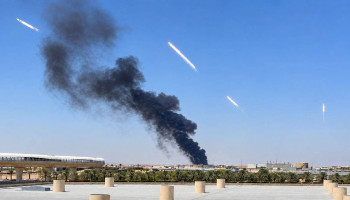
Seven military divisions comprising 38 brigades were shattered, with hundreds of their personnel killed, captured, or wounded, while those who remained fled, leaving their equipment and weapons behind. The heavy airstrikes proved ineffective, and the sophisticated fortifications offered no protection. Command-and-control centers fell, naval bases were liberated, and the training and assembly camps that had been prepared to kill Yemenis were reduced to nothing but ruins. The Armed Forces also managed to carry out 32 operations to repel Saudi warplanes and shoot down nine aircraft. It was the equation of “How many a small group has overcome a large group by Allah’s permission” brought to life before the eyes of the world.
The magnitude of this achievement lies in the figures and in breaking the myth of military superiority that the enemy had sought to impose for decades. The Yemeni fighter proved that faith in Allah and reliance upon Him, combined with preparedness and planning, are capable of defeating the most formidable and heavily armed armies. The sands of the coast and Tihama were transformed into a graveyard for modern military vehicles, while the villages of the liberated districts became witnesses that it is the divine hand that grants victory, and that the terror Allah cast into the hearts of the aggressors was stronger than all their bombs and artillery.
How Was the Operation Carried Out Militarily?
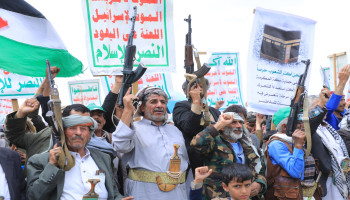
The operation began on September 3 along several axes, with broad participation from the Yemeni people and their free tribes. This detail is militarily significant because it indicates that the operation was not merely an attack by regular units, but rather a broad popular mobilization operation. This meant that the enemy was facing an entirely hostile environment, with local residents serving as the attacking forces’ eyes, a source of intelligence, and logistical supporters.
The operation’s planning was based on a careful study of the enemy’s defensive structure, identifying weaknesses in its command-and-control system, determining the locations of warehouses and depots, accepting material asymmetry, relying on the element of surprise and speed, and coordinating the various axes in order to disperse the enemy’s efforts and prevent it from concentrating on a single direction.
The operation was launched along several axes, meaning that the attacking forces advanced on more than one front simultaneously. This confused the enemy and prevented it from determining the main direction of the attack. Advancing from several directions also meant that the enemy could not use its reserves effectively, as they were dispersed across multiple fronts.
Advancing through exposed terrain required careful planning to take advantage of the nature of the terrain, using valleys and high ground to conceal movement and relying on speed of movement to avoid airstrikes.
The military statement announced that the enemy had failed to affect the operation despite heavy air cover. This means that the attacking forces used advanced tactics for dealing with aircraft, including dispersion and avoiding concentration in large formations, moving in small and scattered groups, using the terrain for concealment from radars and aircraft, and effectively employing mobile air defense through the use of anti-aircraft weapons.
The forces managed to carry out 32 interception operations and shoot down nine aircraft. This figure is highly significant because it indicates the presence of an effective air-defense system, whether through portable surface-to-air missiles or anti-aircraft guns. Shooting down nine aircraft within a matter of days is a major achievement, and it means that the enemy lost part of its reconnaissance and air-support capabilities, further increasing its battlefield blindness.
After breaching the front lines, the attacking forces moved to storm the main bases and centers. Here, the element of surprise and speed became prominent: the enemy had not expected the attacking forces to reach these centers so quickly and found itself facing two options—fight to the end or flee. Many chose to flee, leaving their equipment and weapons behind.
Storming command centers such as Khalid bin Al-Walid Camp meant paralyzing the enemy’s brain and severing the lines of communication between field units and the command, resulting in a collective collapse within its ranks.
The statement also indicated that a number of Yemeni prisoners who had been held by the enemy’s mercenaries for years were liberated. This means that the attacking forces reached the detention sites and freed the prisoners in a rapid operation, indicating the accuracy of the intelligence and the success of the planning.
Why Did This Operation Succeed?
This can be explained through several military principles.
First, the principle of decentralized command, as the operation was launched along several axes, meaning that field commanders enjoyed a significant degree of independence in decision-making. This form of command allows flexibility and speed in responding to developments on the battlefield, unlike centralized command, which can be slower in its responses.
Second, the principle of speed and surprise, as the enemy expected a slow, conventional attack, but what occurred was a swift and rapid assault. The speed of the advance prevented the enemy from reorganizing its ranks, employing its reserves, or receiving reinforcements. The element of surprise paralyzed its ability to make sound decisions.
Third, the principle of reverse attrition warfare, as the enemy sought to exhaust Yemen through an economic siege and continuous military mobilization, but the operation reversed the equation: Yemen was the one exhausting the enemy, forcing it to lose its forces and equipment and depriving it of control over strategic areas.
Fourth, the principle of strategic depth, as the liberation of the western coast provided Yemen with strategic depth on the Red Sea. This depth does not merely mean geographical space; it means the ability to threaten maritime traffic, impose a naval blockade, and deter from a distance.
Fifth, the principle of people’s war, as the participation of tribes and local residents in the operation meant that the enemy was facing an entirely hostile environment. This type of warfare makes it difficult for any conventional army to control the territory, because the population itself becomes part of the fighting force and provides intelligence and logistical support.
What Are the Strategic Dimensions of This Victory?
It is a decisive battle because it broke the strategic siege that the enemy had imposed on Yemen for years. The enemy had sought to economically strangle Yemen by controlling its ports and western coast, but the liberation of the coast means breaking this siege and opening the way for Yemen to communicate with the world. Mokha Port, which had been under the enemy’s control, is now under the control of the Armed Forces, meaning that Yemen has regained one of its most important maritime gateways.
The western coast is also the southern gateway to the Red Sea, and controlling it means that Yemen has become capable of controlling maritime traffic, threatening enemy vessels, and protecting friendly ships. This shift has disrupted the calculations of major powers, particularly the United States and “Israel,” which consider the Red Sea a vital strategic passage.
The enemy sought to turn Yemen into fragmented cantons, separate the coast from the highlands, and establish entities loyal to it in the south. The liberation of the coast thwarted this project and reaffirmed Yemen’s geographical and political unity.
Saudi Arabia, which had bet on controlling the western coast to secure Bab al-Mandab, found itself facing a new reality: the loss of strategic areas, the collapse of military prestige, and the erosion of regional influence.
Before the operation, Yemen had been in a defensive position: defending its territory and seeking to lift the siege. After the operation, Yemen moved into an offensive position: imposing new equations, threatening the enemy’s interests, and transferring the battle into the enemy’s depth. This shift in strategic posture is the most important consequence of the victory.
What Are the Military Consequences for the Enemy?
The enemy had built a multi-layered defensive system along the western coast, but this system collapsed within days. This means that the enemy no longer possesses defensive depth in the area and that any future attack will encounter exposed ground.
The killing and capture of hundreds of personnel from the mobilized forces, particularly field commanders, also means the loss of cadres that cannot easily be replaced. Their loss weakens the enemy’s ability to manage operations in the future.
If Saudi Arabia had promised its allies protection, the loss of the western coast demonstrates its inability to fulfill those promises. This erosion of confidence could lead to discontent among its allies and perhaps prompt them to seek alternatives.
“Israel,” which built its security strategy on military and intelligence superiority, found itself facing a new reality: Yemen has become capable of threatening its maritime security and imposing a deterrence equation in the Red Sea.
The United States, which had relied on Saudi Arabia as a strategic ally in confronting Yemen, found itself facing the failure of its ally. This failure weakens the American position in the region and pushes Washington to reassess its strategy, particularly amid the growing challenges elsewhere.
What Are the Military Lessons Learned?
The operation proved that faith is a decisive factor in battle, stronger than any weapon. This lesson is not merely religious, but military: high morale gives a fighter the ability to endure and remain steadfast beyond his physical capabilities.
It also demonstrated that material superiority does not guarantee victory. The enemy possessed air, naval, and ground superiority, yet it was defeated. This means that material superiority alone is insufficient; it must be accompanied by competent leadership, high fighting morale, and the right strategy.
The participation of the people in the battle made it difficult for the enemy to control the territory. This is an important lesson for any force attempting to occupy territory it does not know and whose inhabitants it does not understand.
The liberation of the coast also provided Yemen with strategic depth, and this depth is essential for any state seeking to possess deterrence capabilities. Without strategic depth, a state becomes vulnerable to danger at any moment.
The foreign powers sought, through control of the western coast and Bab al-Mandab, to turn Yemen into fragmented cantons and impose an eternal siege that would bring the political and popular will in Sanaa to its knees.
The divine victory, however, was not limited to militarily driving back the aggressors; it also overturned all the “devilish schemes” of the aggression. Thus, the liberated coast was transformed from a center of colonial threat into a launchpad for full Yemeni sovereignty. It became a strategic depth that enabled Yemen to impose international maritime equations that terrified the forces of global arrogance.
This remarkable transformation—from a position of defense and siege to one of deterrence and global sovereignty—is the clearest evidence of the great divine providence guiding this battle, creating from supposed weakness a force capable of overturning the calculations of the arrogant.
What distinguishes this victory from other military victories is that it did not stop at crushing the skulls of the tyrants; it extended to reviving souls and purifying consciousness.
After the enemy forces were driven back, the decision to issue a general presidential amnesty revealed a unique moral character. Divine victory gives its possessor strength and the ability to rise above revenge, transforming the military liberation of the land into the moral liberation of those who had been misled.
Extending the hand of tolerance to those who had been misled in the western coast, Ma’rib, and elsewhere is a message to the world that this people is not a people of revenge, but a people seeking to build its homeland and lift injustice from its sons.
This moral dimension added a human depth to the victory and deprived the enemy of its ability to exploit Yemeni blood. While the enemy sought to fan the flames of discord and revenge, the amnesty came as another moral blow to the Saudi-American coalition, which had continued to fuel conflicts and exploit tribal and regional divisions.
A complete victory is one that combines the liberation of the land with the liberation of the human being. This is what was achieved on the western coast.
What happened on the western coast is not the end of the road, but rather the prelude to a decisive battle. Yemen has proven that it is capable of defeating the strongest alliances and is no longer that weak country that ambitious powers seek to divide among themselves.
The continuation of steadfastness and escalation in response to escalation, striking the enemy’s mobilization forces, and consolidating the equation of “siege for siege”—all of this paves the way for a new phase in which Yemen will be a principal actor in shaping the future of the region.
The victory on the western coast is glad tidings for all the free people of the nation that victory is coming and that the era of American and Zionist domination over the resources and destiny of peoples has passed.
The Yemeni army has written one of its greatest heroic epics, and history will record it in letters of light. These few days will remain a defining moment in the history of Yemen and the world, affirming that the power of faith is stronger than all the arsenals of the West, and that Allah, Glorified and Exalted be He, is the One who grants victory and empowerment.
Long live Yemen—free, proud, and independent. Victory for Yemen and for all the free people of the nation.