Ansarollah Website — Report
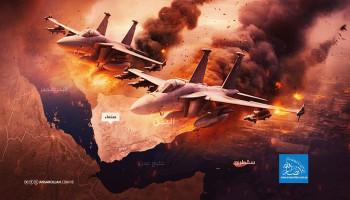
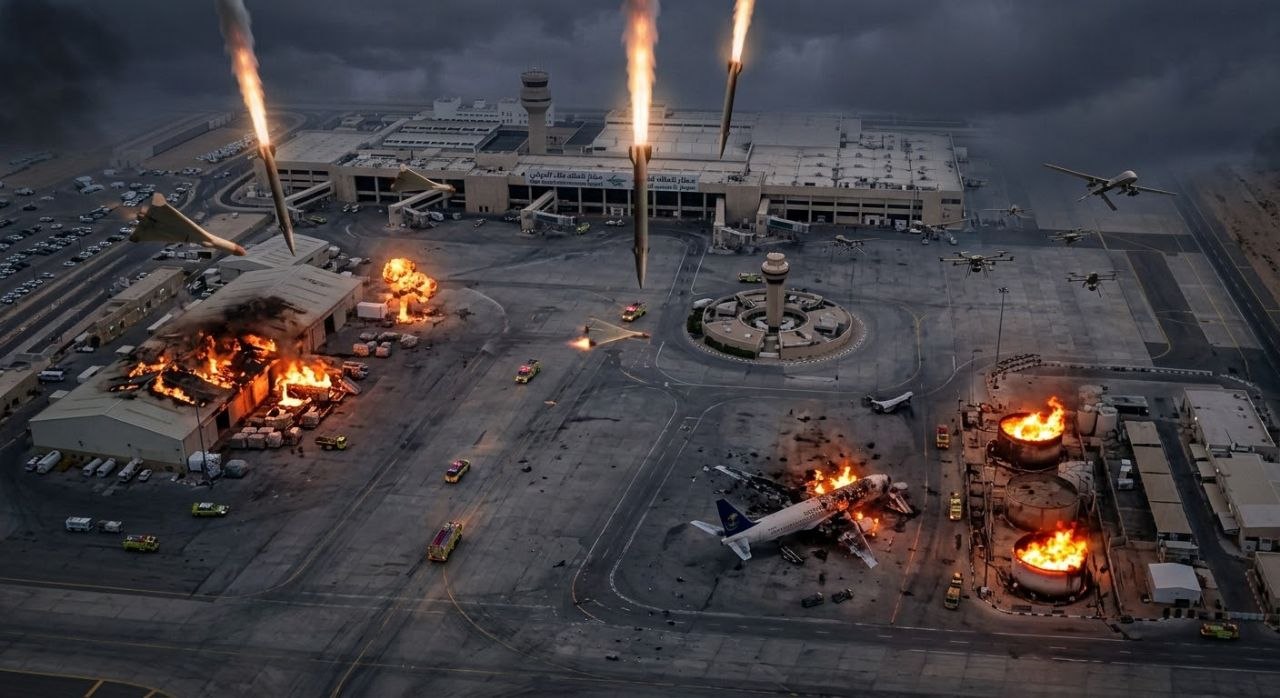
On October 10th, time stood still at King Khalid International Airport. The skies were cleared of aircraft, control towers fell silent, and terminal doors closed on passengers rushing toward the exits while smoke billowed from Terminal 3. The Kingdom’s busiest airport was transformed into a building swarmed by fire engines and ambulances—a scene that encapsulated the collapse of the illusion built by Riyadh over the years, proclaiming that the capital, which thought itself safe, is now within the range of Yemeni missiles.
This came after explicit Yemeni warnings sent to Saudi Arabia and international civil aviation authorities: Saudi airspace and airports have left the safety zone, and everyone must seek alternative routes. The Yemeni Armed Forces knew that warnings alone would not suffice, as the Saudi regime is filled with arrogance and hubris, making targeting an absolute necessity.
In response, the Saudi enemy launched hundreds of airstrikes on the capital, Sana'a, and the provinces, believing that fire can be extinguished with fire and that a loud voice can silence an even louder one. However, the Yemeni response was swift: a direct hit on King Khalid Airport in the heart of the capital, Riyadh. A civilian aircraft was hit, Terminals 3 and 4 were penetrated, and the airport was shut down for eight consecutive days, with the closure certain to be extended further. Riyadh has not witnessed such a scene in decades. Dozens of international airlines suspended their flights, hundreds of flights were canceled in a single day, and the number later rose to over a thousand. Riyadh Airport topped the list of the world's most disrupted airports. Embassies of the United States, Britain, Canada, Germany, Spain, France, Australia, New Zealand, and South Korea urged their nationals to stay away from the airport and surrounding areas, and to reconsider travel to Saudi Arabia.
The European Union Aviation Safety Agency (EASA) recommended that airlines avoid wide swaths of Saudi airspace, while the OpsGroup recommended avoiding overflights at all altitudes. Thus, the Kingdom's airspace was transformed into a restricted zone, and Riyadh became a city from which departure is advised.
Strategic Impacts of Yemeni Military Operations
In the wake of this came heavier repercussions: the tennis tournament was canceled, the Gulf-European summit was postponed, and the "Desert Davos" conference was delayed. The chief executives of ExxonMobil, TotalEnergies, Shell, and BP withdrew from the energy conference in Riyadh. Brent crude prices surged by four percent, the Saudi stock index declined, Aramco shares dropped, and both the National Commercial Bank (Al Ahli) and Al Rajhi shares took heavy hits. An insurance report revealed the total loss of one aircraft and damage to five others, valued at approximately 375 million dollars.
This is what it means for a symbol of sovereignty to be struck at the core: material damage, an inability to protect a supposedly fortified location, and disruption affecting the economy, investment, reputation, and tourism. The Wall Street Journal reported that Saudi interceptor missile stockpiles have begun to deplete, that Riyadh was forced to relocate air defense batteries to protect palaces and energy facilities, and that parts of the capital have come to resemble a battleground. The Economist stated that Saudi Arabia has no good options left—a state that has declared its inability to protect its own skies.
Complete Yemeni Dominance over Saudi Airspace
On October 13th, the Saudi enemy committed a grave mistake. Having failed to counter Yemeni missiles, it resorted to psychological warfare, announcing that it would target the Yemeni Oil Company in Al-Sabaha, Sana'a, and publishing warning images to evacuate the area—in the pattern followed by the Israeli enemy in Gaza. It believed that threats would terrify, images would intimidate, and Yemenis would raise white flags. But the response came within minutes: the Yemeni Armed Forces announced they would retaliate and named three targets explicitly: Aramco in Dhahran, King Khalid International Airport in Riyadh, and the Aramco refinery in Riyadh. They announced before executing and named before striking. This is the difference between one who threatens to negotiate and one who threatens to execute.
No sooner had the enemy targeted the oil company in Sana'a than Yemeni missiles launched, striking all three targets. Fires erupted in Dhahran, the top three floors of the Aramco headquarters were damaged, and the enemy was forced to evacuate the building and announce that Aramco employees would work from home. Reuters reported citing its sources that the damage is severe, and the Saudi Ministry of Energy announced the fire itself. The message arrived loud and clear: whoever touches Sana'a will see their capital burn.
The significant point in all this is that Yemen announced what it would do, and then did it. This is the meaning of confidence: when the Yemeni Armed Forces announce that Saudi airspace is unsafe, they know their missiles will reach; when they announce they will target airports and oil facilities, they know the US interceptor systems provided to Saudi Arabia will not protect it; and when they name three targets explicitly, they know they will hit them. This is precisely what happened, verified by Reuters, the Saudi Ministry of Energy, and satellite imagery. Yemeni missiles bypassed all defense systems, reached the pre-announced targets, and set them ablaze. In this sense, Saudi air defenses transformed into a paralyzed apparatus, and Saudi airspace became an open arena for Yemeni weaponry.
Fires Tracked by Satellites
Satellite imagery documented what transpired: in Abqaiq, high-intensity thermal signatures across the infrastructure, thick plumes of spreading smoke, and gas fires at the pipeline pumping station and refinery; in Khurais, continuous fires and rising smoke; in Yanbu, damage to fuel tanks with one tank entirely destroyed; in Riyadh, a destroyed storage tank and a dark patch indicating an oil spill; at King Khalid Airport, a puncture in the roof of Terminals 3 and 4; at King Fahd Airport in Dammam, damage to the main terminal's roof. These are documented satellite damage maps that no one can deny.
Contraction of the Saudi Economy
After all this, what does the Wall Street Journal say about the Saudi economy? It says the war threatens to drive it into contraction, budget deficits are widening, defense spending and infrastructure costs are draining funds needed to diversify the economy, a number of mega-projects launched by bin Salman have stalled, Riyadh abandoned plans to host the 2029 Asian Winter Games, foreign investment declined during the first and second quarters, and the non-oil sector has contracted.
The Daily Mail revealed that Mohammed bin Salman is moving stealthily between palaces, working to conceal himself out of fear of Yemeni missiles, and the Wall Street Journal reported that he shuttles between "heavily guarded palaces equipped with bunkers," protected by a security detail chosen with extreme care. This is the man who talks about Vision 2030 and the new Saudi Arabia, hiding in an underground bunker, fleeing with his aircraft from Riyadh to Medina, terrified that a single Yemeni missile might reach him.
Limitless Yemeni Escalation
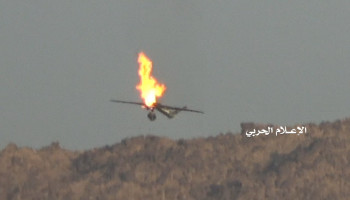
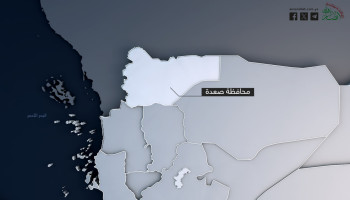
Over the past few days, Yemen has fought a comprehensive battle. It targeted King Khalid Airport multiple times, King Fahd Airport in Dammam, Najran Airport, the air base in Khamis Mushait, Shaqadiq gas station, Tanajib oil facility, Aramco Dhahran, and Riyadh refinery. It shot down a Wing Long 2 armed reconnaissance drone, hit a Typhoon fighter jet in over Sa'ada, targeted enemy build-ups in Ras al-Aara, Al-Suqia, and Al-Mandharah, and struck a war operations headquarters in Al-Maashiq Palace in Aden. Every time, it announced before executing and named before striking—the behavior of a confident force, not a party looking for a way out.
This is the equation imposed by Yemen: blockade for blockade, escalation for escalation, airport for airport. An equation that has become a reality unfolding on the ground in Riyadh, Dammam, Dhahran, Yanbu, Abqaiq, and Khurais.
The Yemeni people, who endured twelve years of blockade and airstrikes, see today the fruit of their steadfastness. They see the enemy's airports closed, its oil facilities burning, its economy bleeding, and its crown prince hiding. They see that the spilled blood, the murdered children, and the suffocating blockade were not in vain, and that rights are wrested by force when the enemy closes the doors of peace. This people, who have suffered everything, know that dignity is built through patience, resilience, and precision missiles.
What took place over the past few days surpasses what happened over years: dozens of international airlines suspended flights, entire airspace declared unsafe, summits, conferences, and tournaments canceled, global oil executives withdrawing, a shaken stock market, a hiding crown prince, and an economy heading toward contraction. All because Yemen decided to respond, to announce what it would do, and to execute what it announced. This is the difference between one who threatens and fails, and one who threatens and executes.