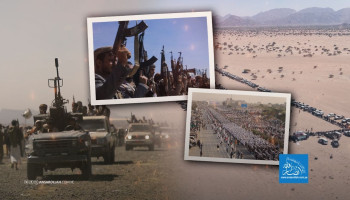
As the pace of the Yemeni Armed Forces’ operations against the Saudi aggressor intensifies and their direct impact on its vital infrastructure grows, warnings issued by Western countries to their nationals have begun to take on a serious and decisive tone. Several countries have swiftly imposed narrow, clearly defined movement routes for their nationals inside Saudi territory, establishing strict rules governing their travel and movement.
However, as operations continued and their impact increased, exerting stronger pressure on the Saudi aggressor to recognize the Yemeni people’s right to live independently on their own land without any foreign interference, Western diplomatic warnings escalated beyond restrictions to explicitly urging nationals to pack their bags and leave Saudi Arabia without delay.
The most striking and astonishing development, carrying profound implications, was that this stern, high-level directive came from Washington itself—the very country that has long presented itself as a presumed guardian and security umbrella for the Saudi regime under the terms of their historic treaties and agreements.
Fleeing to Neighboring Countries
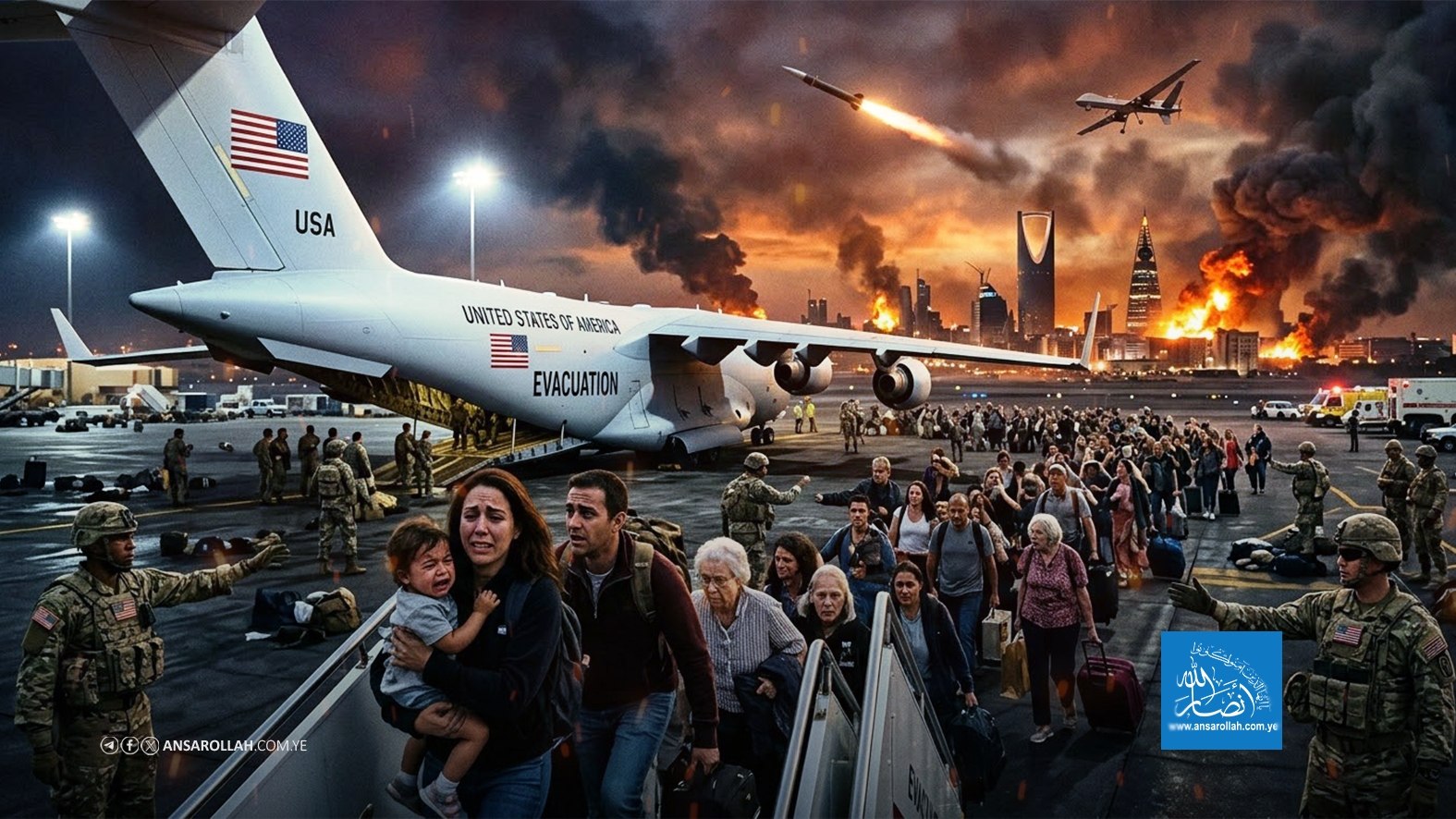
With the launch of the “blockade for blockade” operations, the US mission urged its nationals to avoid using King Khalid International Airport in Riyadh or approaching its vicinity, as an initial precautionary measure intended to reduce risks to the security of air traffic. At the time, this reflected a practical acknowledgment of the impact of Yemeni operations on sensitive air transport routes.
As tensions persisted and the prospect of stable air traffic conditions diminished, official US guidance went beyond warnings to include serious alternative arrangements for nationals to leave the country, directing them to rely on land routes as an emergency alternative to air travel. This shift embodies a rapid field response to the sensitivity of the Yemeni escalation and clearly pushes foreigners to seek safe crossing points into neighboring Gulf states, which could serve as neutral refuges and more stable evacuation hubs amid these turbulent circumstances.
Culminating this escalating reassessment of ongoing risks, the warnings eventually reached a decisive stage, with a direct order for all nationals to pack their belongings and leave Saudi territory while commercial and land travel options remained available. This rapid escalation in US diplomatic rhetoric and decisions confirms a firm conviction within Washington’s corridors of power that what Saudi Arabia is experiencing must be treated as a complex security reality and a strategic predicament requiring the imposition of maximum emergency measures to protect lives and address the open-ended repercussions of this broad field escalation.
A Mandatory Departure Order, Not an Option
The latest decision by the US Department of State to order the departure of non-emergency government employees and their families from the US Embassy and consulates in Saudi Arabia represents a pivotal step that goes beyond routine precautionary measures. The issuance of this directive in the form of a binding official order—“Ordered Departure”—rather than an optional authorization reflects the fact that Washington’s intelligence-based security assessment has reached its highest level of alarm over the danger facing foreign nationals and diplomats, in connection with the escalation of Yemeni operations and Saudi Arabia’s defensive paralysis.
The gravity of this measure is underscored by the fact that it represents the highest level of mandatory evacuation announced by a foreign state to protect its citizens amid continued attacks on vital Saudi facilities using missiles and drones. This gives the situation an exceptional dimension that goes beyond conventional warnings.
The immediate context of the stringent US measure and its heightened intelligence assessments cannot be separated from mounting indicators of threats arising from field operations and the growing likelihood of successive strikes. The decision also emerges as a logical inevitability and natural consequence of precise intelligence monitoring of intensive, combined attack tactics that disrupt even the most formidable defense systems. This reflects the US intelligence agencies’ firm conviction that diplomats and their families must be evacuated, while also indicating an implicit acknowledgment of the extent to which these operations can impose their own equations and exert a direct impact on the ground.
This step also reflects a sharp shift in Washington’s risk-management doctrine and a change in its assessment of Saudi Arabia’s capacity to provide preventive protection amid continued military operations. Its decision to empty its missions of all but essential personnel tasked with managing emergencies therefore constitutes a field-level preparation for a phase in which immediate stability may disappear. It also signals an expectation that the scope of the military confrontation could expand in ways that make predicting the range or direction of strikes increasingly difficult, placing diplomatic missions under imminent threat.
Inability and Exposure in the Face of Attacks
The latest security developments and Yemeni operations have placed Saudi air defense capabilities under their most critical field test. Riyadh’s military strategy relies on the effectiveness of multilayered Western defense networks in confronting the continuing threat posed by Yemeni drones and missiles. This operational challenge extends beyond conventional interception to the question of how to counter repeated attacks, requiring the maintenance of the highest levels of readiness at all times to limit collateral damage.
Looking at the performance of the Saudi aggressor, throughout years of aggression it has remained incapable of bringing about any strategic shift. Instead, it has contributed to the emergence of a young force that, within a very short period and through the grace of Almighty Allah, has overturned conventional equations and ushered in an era in which modest capabilities prevail over technological spectacle and massive arms expenditure.
This Saudi failure, which studies and research have examined, and the resulting exposure to Yemeni attacks have shattered the frameworks through which traditional powers sought to surround themselves in order to reinforce an illusory image of possessing sufficient capabilities to deter any intention to attack their territory. The country’s power has been exposed as an ineffective weapons system, accompanied by repeated reliance on international powers, foremost among them the United States.
Washington’s Double Standards on Allies’ Security
At the level of military coordination, these developments raise strategic questions about the limits of the military partnership and intelligence coordination between Saudi Arabia and US Central Command. While sovereign decisions to protect personnel reflect a cautious assessment of the risks arising from ongoing operations, the management of the battlefield through joint operations rooms is supposedly characterized by a high degree of coordination in exchanging surveillance and early-monitoring data and coordinating warning capabilities.
The US evacuation measure, which is mandatory and linked to the continuation of Yemeni operations, goes beyond the security protection of nationals and raises strategic questions about the nature of the diplomatic messages the US administration is sending to the region and its allies.
This overt move to reduce the diplomatic presence and withdraw non-essential personnel amid continued drone and missile attacks creates a clear contradiction between Washington’s declared commitments to protecting maritime routes and regional security and its practical conduct, which calls for cautious retreat and disengagement when crises erupt. The move also reveals a discrepancy between declarations of political and military support and a policy of avoiding direct losses in the face of actual and continuing threats on the ground.
Furthermore, the decision reveals a shift in the crisis-management mindset of the White House and the State Department toward managing crises remotely in order to limit human casualties in any potential confrontations amid continued field attacks. This approach reduces diplomatic flexibility and weakens direct channels of communication with the local environment and sovereign institutions of the host country at a time when intensive and sustained communication is required to address the repercussions of ongoing operations.
Limiting management of the situation to the minimum necessary diplomatic staff undoubtedly reinforces the impression of a strategy of tactical withdrawal in the face of military threats. This makes it necessary for regional parties to reconsider their existing diplomatic tactics and develop independent political options.
Saudi Arabia Becomes a High-Risk Zone
Accordingly, the mandatory departure order—linked to field threats and ongoing military operations—places Saudi Arabia’s regional and international standing before a strategic challenge concerning the image Riyadh had successfully cultivated in the years before Yemen’s military presence became prominent: that of a political and economic center of gravity and a gateway to security and social stability in the Middle East.
The US portrayal of Saudi Arabia’s domestic environment as a high-risk zone amid continued missile and drone attacks constitutes an indirect blow to the concept of “sovereign stability,” upon which the Kingdom’s major transformation projects and Vision 2030 are built.
Economically, this decision, combined with the repercussions of ongoing field operations, casts a shadow over the confidence of major global corporations and multinational companies that have established their regional headquarters in Riyadh. US evacuation measures typically influence risk assessments conducted by international institutions, insurance companies, and investment funds.
These developments also impose tactical pressure on the investment environment’s competitiveness and foreign direct capital flows, in addition to their potential impact on commercial activity and air and maritime navigation. There is also an immediate effect on global energy markets, where crude oil prices respond rapidly to any signals or continuing attacks suggesting that vital facilities could come under fire. This raises the risk premium and reshapes global supply prices.
Abandonment Despite Generous Financial Support
It was hardly surprising that a state as rogue by nature as the United States would take such action against an ally that has lavished financial support on it under the banner of investment. Washington has always viewed others around the world through a lens of arrogance and superiority. What makes the matter particularly painful, however, is that this move came as a practical response to Saudi Arabia’s efforts to persuade Washington to participate in carrying out aggressive attacks on Yemen.
Despite Washington’s awareness that such a measure would deepen the signs of defeat suffered by its Saudi ally, it chose to prioritize its own interests and the protection of its citizens, regardless of the consequences for Saudi Arabia’s regional standing. This move brings to mind the conclusions reached by some Arab leaders that America and American protection are nothing more than an illusion: at critical moments, its actions are governed by the interests it stands to gain.
By calling on Americans to leave Saudi territory amid the predicament the Kingdom is experiencing today, Washington is effectively indicating that the support it is prepared to offer does not extend beyond consultations.
Throughout its history, Washington has maintained a presence only where that presence is tied to interests and gains it can secure. As for Saudi Arabia, the United States’ confidence that its oil pipelines will continue to supply it under all circumstances has broadened Washington’s decision-making options, without the slightest consideration of whether those choices align with the interests of its Saudi ally.
Observers affirm that the US position on the renewed Saudi aggression against Yemen and the emergence of the Yemeni Armed Forces with such strength is shaped by Washington’s prior understanding that entering into a direct confrontation with Yemen would be painful for the United States, particularly given that the wounds from the naval confrontation have yet to heal. This comes in addition to the shattering of the Zionist entity’s defensive capabilities, after it experienced its worst period of defeat and exposure over the course of two years, despite protection from the United States and the hypocrites.