Published: Jumada I 27, 1447 AH
The latest United Nations Security Council resolution on Gaza has revealed two seemingly contradictory truths that in fact converge at a deeper level. The first is that the Zionist entity has suffered a major political defeat after two years of aggression. Despite inflicting massive destruction on the Strip, it failed to impose its objectives: the return of the captives occurred only through an agreement, while its attempt to destroy the resistance and dismantle its weapons shifted—through the Security Council resolution—from a failed and brutal war to an entirely different track.
The second truth is that Arab states involved with Washington in regional projects have also sustained a clear diplomatic defeat, after failing to secure explicit American recognition of a Palestinian state, or even an international commitment to establishing one—although these same Arab capitals claim, at least publicly, that this is among their primary goals.
While the resolution appeared on the surface to be a step toward peace, at its core, it represents a fully American-designed project for post-war management. It grants Washington—through Donald Trump specifically—absolute authority over Gaza’s future, without offering Palestinians any real guarantees for their fundamental rights.
“Israel’s” Military Failure Despite the Devastation
After two years of continuous bombardment that left more than 70,000 martyrs and destroyed over 90% of Gaza’s buildings, the Israeli entity had hoped to gain clear political achievements. These included eliminating the Islamic Resistance Movement (Hamas), imposing a new governance system under Israeli oversight, and establishing a security environment enabling long-term control over the Strip.
However, the UN resolution placed Gaza’s future in the hands of a "Peace Council" led by Trump. According to observers, this effectively removes the Gaza file from “Israel” and places it under international–American trusteeship.
Although there is little optimism around this structure, it nonetheless amounts to an indirect acknowledgment that the criminal entity failed to achieve its strategic aims despite the vast destruction inflicted on the Strip.
Ambiguity and Risks: An American Administration in International Form
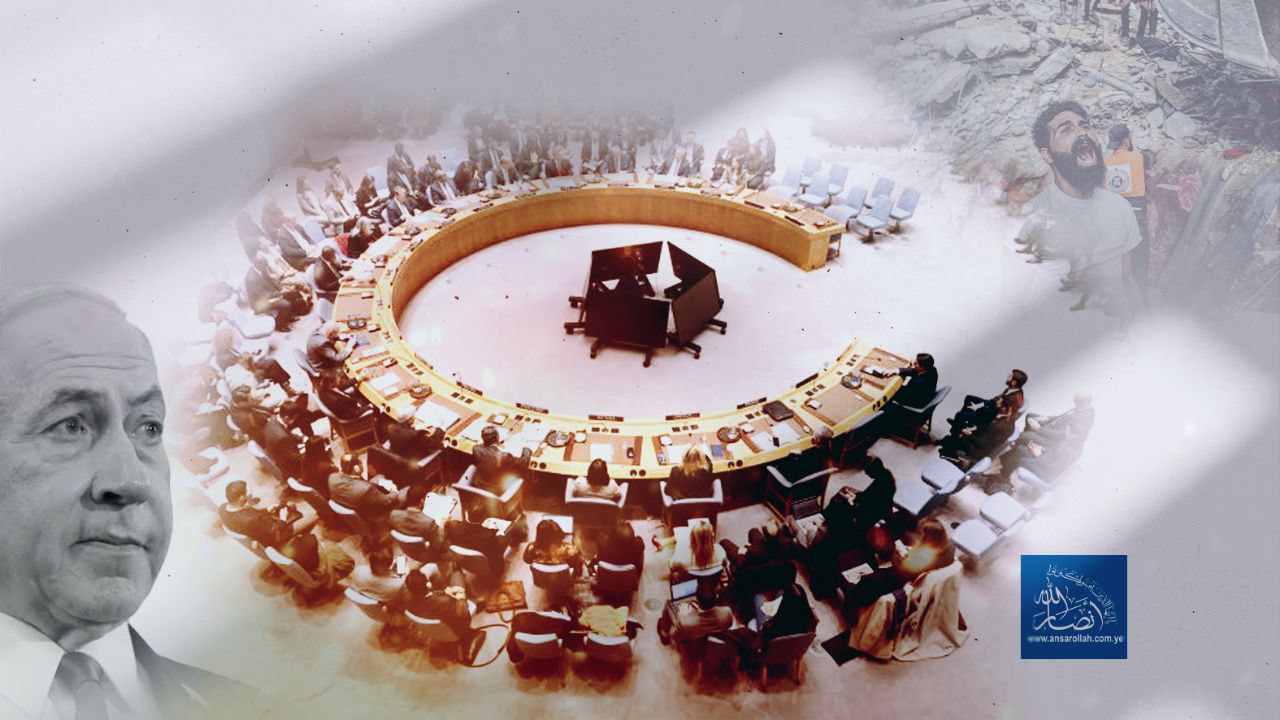
Resolution 2803 stipulates the formation of a “Peace Council” chaired by Trump, tasked with supervising an international stabilization force for “disarmament,” a Palestinian technocratic committee, and a local police force to administer Gaza for two years.
Strikingly, this “Council” is not subordinate to the United Nations, does not adhere to its previous resolutions, and possesses near-absolute authority over upcoming political and security arrangements. With unclear membership and undefined powers, the council reflects a clear intent to internationalize Gaza according to the American vision, free of obligations or constraints.
An Arab Defeat in the Battle for Recognition of the Palestinian State
Despite what appeared to be intense Arab and Islamic pressure for a “two-state solution,” Arab capitals failed to insert explicit wording affirming the Palestinian right to self-determination or recognizing the Palestinian state. Nor did they secure a commitment to the “two-state solution.” Instead, the result was a weak, conditional formulation stating that “Circumstances may emerge that could open a credible path toward self-determination and statehood,”—a phrase that binds no one to anything and ties Palestinian national rights to procedural conditions related to reforming the Authority and reconstruction. Since no criteria were defined, these conditions effectively become tools in the hands of Washington and "Tel Aviv" to evade responsibility, stall, and buy time—paving the way to liquidate the Palestinian cause in a manner even worse than “Oslo.”
Thus, Arab countries have lost the diplomatic round, settling for an incomplete formula that neither meets the moment nor matches the scale of Palestinian sacrifice.
International Concerns and Zionist Alarm
The resolution provoked the anger of the Israeli “right,” which claimed it poses a “direct threat” to the entity’s security, prompting the criminal Netanyahu to reiterate his rejection of any talk of Palestinian sovereignty.
On the other hand, several European and Islamic capitals view the resolution—despite its flaws and ambiguity—as a means of keeping Trump engaged with the issue, potentially opening a window to improve the flow of humanitarian aid into Gaza and perhaps to revive discussions about political settlement. Some argue that internationalizing the file may help curb exclusive Israeli control over Gaza, offer some degree of protection for civilians, and create a political maneuvering space within the so-called “Peace Council.”
While this may be partially true, history and experience with the entity backed by Washington suggest such expectations are little more than distractions disconnected from reality—especially because none of these states can enforce anything on the ground. Meanwhile, the Zionist entity and the United States continue imposing facts on the ground with full freedom of action. This explains the deep Palestinian and international apprehension, most clearly voiced by the Russian and Chinese delegates during the vote on the resolution.
Conclusion
Resolution 2803 reflects the Zionist failure to transform the war into a political victory, and at the same time, an Arab failure to secure international recognition of the Palestinian state. Between these two failures, Washington advances another step toward re-engineering the Palestinian landscape.
The future of Gaza now hinges on the mechanisms for implementing the resolution and on the composition of the international forces, particularly amid reports that several Arab and Islamic nations have declined participation to avoid confronting the resistance and engaging in attempts to disarm it.