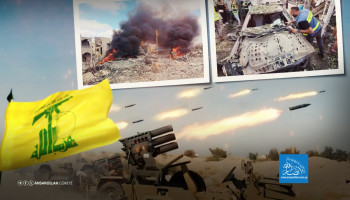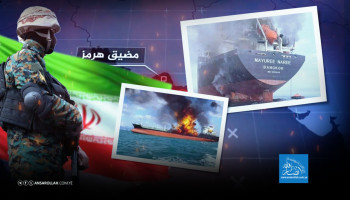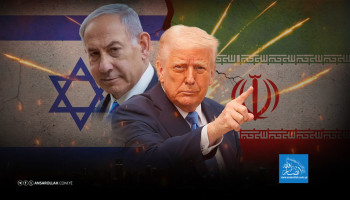

The question of when and how Yemen will intervene in the ongoing battle for dignity and sovereignty—a confrontation framed as one between Islam on one side and the heads and forces of disbelief on the other—has become a central topic of debate.
Through this confrontation, the United States seeks to decisively impose its will on the region and the broader Muslim world, compelling its peoples to accept a new colonial blueprint for the area—one in which Islamic, Arab, and even national identities are gradually eroded.
Few issues rival the importance of this question today. Governments across the globe—along with observers, analysts, and major media outlets—have found themselves increasingly absorbed in speculation over Yemen’s potential role in the unfolding conflict.
Anticipation of Yemen’s possible entry into the battle is being watched with cautious eyes and deep concern about the widening scope of the war.
This heightened attention stems, first and foremost, from the sensitive and strategic cards Yemen possesses, and secondly from the remarkable ability it has demonstrated in deploying those cards in ways that reshape the dynamics of confrontation.
For this reason, many observers do not rule out that Yemen’s intervention could trigger strategic shifts in the outcome of the conflict, significantly raising the cost of war for the United States and “Israel.” Analysts note that Yemen’s stance remains “a key factor in determining the trajectory of the conflict.”
Zionists Anticipate a New Yemeni Surprise
The deep concern gripping the forces of evil over any potential Yemeni move has become impossible to conceal. Not only has this anxiety surfaced publicly, it has also been accompanied by precautionary measures aimed at mitigating the possible repercussions of such an intervention.
With the launch of the campaign described as terrorist aggression against Iran, both United States and Saudi Arabia—alongside the occupying entity Israel and the European Union—expressed high-level concern over the possibility that Yemen might resume attacks in the Red Sea.
In this context, the European mission operating in the Red Sea warned commercial vessels to raise their level of alert, cautioning that attacks could resume at any moment. Meanwhile, media outlets in those countries devoted significant coverage to the potential impact of Yemen’s role in any new confrontations across the region.
For his part, former Israeli military intelligence official and researcher at the Institute for National Security Studies, Danny Citrinowicz, warned that Yemeni forces may once again prove capable of delivering a surprise. Citrinowicz stressed that Washington could face unexpected developments in the war should the Yemenis become directly involved.
“We should expect a noticeable escalation in the pace of operations and a rise in their number,” he said.
“We Will Move Militarily at Any Moment”
The motives behind any potential Yemeni engagement in confrontation with its enemies remain rooted in the same religious and moral principles.
These principles, according to the text’s framing, are ones that the forces described as the “axis of evil” must examine carefully to anticipate the step Yemen may take today or tomorrow—whether as part of efforts to counter what is portrayed as a plan by United States and Israel to entrench their dominance over the region, now reflected in the ongoing aggression against the Islamic Republic of Iran, or in response to any confrontation resulting from the enemies’ persistence in imposing their vision by force.
Abdul-Malik al-Houthi outlined the contours of Yemen’s stance calmly and firmly, describing what this fierce campaign by the enemies of Islam and Muslims demands.
He stressed that the current battle does not concern the Islamic Republic alone, but all countries across the region. He further warned that efforts are underway to expand the aggression against Iran, adding that the adversaries are working intensively to push in that direction.
As for the direct message the world had been awaiting from the Yemeni leader, it was delivered without embellishment or room for interpretation. He stated plainly: “Our hands are on the trigger, and we will move militarily at any moment should developments in the region require it,” while calling on the Yemeni people to remain at the highest level of vigilance and preparedness.
He added: “We affirm our solidarity with the Muslim people of Iran and with the Islamic Republic of Iran, and we confirm our readiness for all possible developments in this battle.”
According to al-Houthi, this stance stems from the view that the confrontation represents a struggle of the entire Islamic nation against what he described as American–Israeli–Zionist tyranny.
The remarks were widely circulated by international media outlets, which offered extensive analysis in an attempt to anticipate when and how such a Yemeni move might unfold.
Anticipation, Anxiety, and Heightened Readiness
The clear Yemeni stance articulated by Abdul-Malik al-Houthi has prompted widespread attempts to assess the nature of the steps Yemen might take amid the prevailing climate of anticipation.
Many observers believe the remarks alone were sufficient to trigger a wave of concern and tension among several regional and international actors.
In his reading of the unfolding developments—and the evident unease in both United States and Europe over Yemen’s position—national security and international relations expert Major General Mohammed Abdulwahid stressed that even the mere threat is enough “to create tension in international maritime navigation.”
He added that actual Yemeni involvement would further complicate the military landscape and open a new maritime front.
He also noted that the prospect of Yemen entering the confrontation places the international environment in a state of intense pressure, exerting psychological and strategic strain on both Israel and the United States.
Analysts further suggest that Yemeni involvement could significantly complicate the political landscape and cast a shadow over prospects for a diplomatic resolution—particularly as such a move would come in response to what is described as ongoing aggression, rather than the publicly declared objectives of leaders such as Donald Trump and Benjamin Netanyahu.
According to these assessments, the underlying aim of the confrontation is portrayed as the domination of the entire region—through direct occupation in some cases and indirect control in others.
Among the scenarios being discussed is the possibility that the entry of regional and international powers into the conflict could trigger a sweeping paralysis of maritime traffic stretching from the Red Sea to the Persian Gulf, with severe repercussions for global supply chains, in addition to potential human losses and far-reaching economic damage.
The Cost of Turning the Red Sea Into a Battlefield
Some countries aligned with the American camp—despite bearing the consequences of adopting its policies and adapting to its risky ventures—occasionally attempt to approach unfolding developments with a degree of pragmatism.
From this perspective, Yemen’s potential entry into the conflict is viewed as a dangerous escalation that would significantly widen the scope of the confrontation. In such a scenario, the region’s resistance camp would position itself as defending the nation and its sovereignty, while the American–“Israeli” camp, as portrayed in the text, would be pushing the region deeper into a spiral of instability and chaos.
Saudi Arabia, despite the intensity of Iranian strikes that reportedly targeted military assets and infrastructure on its territory, has closely monitored statements emerging from Yemen regarding the issue. The kingdom fears the possibility of losing what remains of its vital maritime outlet through the Red Sea.
Just days ago, Riyadh reportedly raised concerns with United Kingdom—which holds what is known as the “penholder” role on Yemen at the United Nations Security Council—about the potential repercussions of any Yemeni move to close the strategic Bab el‑Mandeb Strait. Analysts interpret this as a sign of mounting Saudi fears that Yemen could effectively choke off the kingdom’s remaining maritime breathing space.
The British newspaper Financial Times, citing informed sources, reported that Saudi Arabia had proposed reaching an agreement with what it described as the “Houthis,” offering financial incentives in exchange for refraining from joining any military escalation.
Meanwhile, national security and international relations expert Major General Mohammed Abdulwahid warned that if the Red Sea becomes an active theater of war, the economic cost would be extremely high for the international community—particularly for the United States and Israel.
Intimidation That Has Already Failed
Some voices have gone—rather naively—so far as to play what the text portrays as the role of a “junior intimidator” on behalf of United States, warning that Yemen could face “intensive attacks from Washington, ‘Israel,’ and even Saudi Arabia if it joins the war.”
Yet what exposes the weakness of such claims, according to the argument presented, is the failure to grasp a simple reality: Yemen only emerged as a central topic on international agendas and in geopolitical calculations after confronting the United States, Israel, and their allies.
Since 2015, these powers have carried out sustained military operations against Yemen, employing extensive aerial bombardment and a wide range of weaponry—some of which are internationally prohibited.
Despite that, the outcome, as portrayed in the text, has been the opposite of what was intended: the conflict accelerated Yemen’s development of deterrent capabilities and enabled it to impose what is described as a new equation of retaliation.
As a result, the United States was compelled—publicly on the global stage—to step back from direct confrontation, while Israel retreated as well, leaving other allied actors largely irrelevant.
From this perspective, the question arises: what could further attacks on Yemen achieve beyond demonstrating helplessness through the targeting of civilians and basic infrastructure such as water reservoirs?
At the same time, the reality on the ground may point in a very different direction. Any Yemeni response, the argument suggests, now weighs heavily in the strategic calculations of actors like the United States and Israel. The experience of the past two years, it adds, has shown how Yemeni military strikes proved strategic, painful, and consequential.
In this context, even United States Central Command (CENTCOM) reportedly retains images and video footage documenting Yemeni missiles and drones striking vessels that attempted to defy the Yemeni decision to ban navigation for ships linked to Israel.
The mere preservation of such material, the text argues, reflects the level of seriousness with which Yemen’s capabilities are now assessed.
For that reason, invoking the possibility that the United States, the Zionist entity, or both might launch attacks on Yemen as a means of deterring it from fulfilling what is described as its moral and humanitarian duty toward the Islamic state is portrayed here as a superficial reading of unfolding events and shifting power dynamics.