
Argentine President Javier Milei has launched the "Isaac Accords," a new initiative modeled after the so-called Abraham Accords, to strengthen political, economic, and cultural cooperation between the Israeli regime and a bloc of Latin American countries.
The move comes amid international outcry following the Israeli genocidal war on Gaza and growing isolation in much of the Global South, including Latin America.
Unveiled in Buenos Aires on 29 November during a visit by Israeli Foreign Minister Gideon Sa’ar, the so-called Isaac Accords are explicitly inspired by the so-called "Abraham Accords," the US-brokered deals that normalized relations between the Israeli regime and Arab governments such as the UAE, Bahrain, and Morocco.
While 31 out of 33 countries in Latin America recognize the State of "Israel," the continent has long harbored anti-colonial and pro-Palestine movements. The war on Gaza has only deepened this sentiment, pushing several governments, especially those led by the left, toward firmer pro-Palestine positions and severing ties with Tel Aviv.
Against this backdrop, the "Isaac Accords" emerge as a strategic attempt to counter regional isolation and extend Israeli influence in Latin America.
Javier Milei: 'Israel’s' newest ally
Leading the charge is Argentina's Javier Milei, whose government has undergone a radical realignment in foreign policy. Once part of a regional bloc critical of Zionist policies, Buenos Aires now positions itself as a pro-Israeli regime anchor in South America.
Milei, who has expressed admiration for Judaism and pledged to convert once he leaves office, has made a series of symbolic and strategic moves: pledging to move Argentina’s embassy to occupied al-Quds, reciting Hebrew blessings in official meetings, and designating the Palestinian Resistance movement Hamas a terrorist organization. His government describes Argentina as a "pioneer" in this regional project alongside the US.
Behind the scenes, the initiative is supported by US non-profits such as the so-called American Friends of the Isaac Accords and is financially backed by the Genesis Prize Foundation. It also includes plans for joint projects in security, technology, and commerce; Uruguay, Panama, and Costa Rica are identified as early targets.
A regional battle for influence
The launch of the so-called Isaac Accords comes at a time when the Israeli occupation regime is rapidly losing ground across much of Latin America. Brazil, Colombia, and Chile, led by leftist governments, have condemned it for its war crimes in Gaza, with some severing diplomatic ties and suspending trade.
Bolivia has gone so far as to cut all diplomatic relations with the occupation, while Brazil's President Lula likened the Israeli regime's actions to the Holocaust.
In response, Tel Aviv sees the Isaac Accords not just as an opportunity, but as a defensive maneuver. The initiative is designed to counter this trend by institutionalizing support through right-wing or US-aligned governments, many of which are backed by growing Evangelical Christian movements that view support for the Israeli occupation regime as theological.
The Hezbollah factor
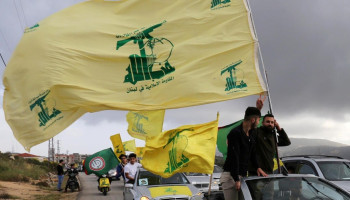
Another key objective of these accords is what the Israelis describe as security concerns, as "Israel" has long claimed the presence of networks affiliated with resistance movements like Hezbollah in Latin America.
Public sentiment
While leaders like Milei align their foreign policy with Zionist interests, the public mood tells a different story. Polls from 2024 and 2025 show widespread disapproval of "Israel" across Latin America, particularly among younger populations who see the Gaza war through a decolonial, anti-imperialist lens.
This anti-Israeli occupation sentiment is strongest in countries with significant Palestinian communities, such as Chile, which houses the largest diaspora outside the Arab world. In contrast, Evangelical populations, especially in Guatemala, Paraguay, and parts of Brazil, remain staunchly pro-Zionist.
Argentina, under Milei, is now playing the role of regional proxy, acting on behalf of "Israel" to rally support, push back against critics like Colombia, and frame joint security efforts through the lens of so-called "counterterrorism."
Source:Websites