
Ansarollah Website Official Report
Published: Rajab 20, 1447 AH
In the shadow wars that define modern proxy conflicts, the value of men is not measured by what they give, but by how long they remain useful in the calculations of those who hire them. Mercenaries—regardless of nationality, banners, or the nature of the missions assigned to them—share a single fate: a cold ending, written with the same ink of betrayal that signed their undeclared contracts. Once their utility expires, they are discarded from the equation like worn-out tools that no longer serve the game of interests.
This reality has now been laid bare in Yemen, stripped of masks and political cosmetics. When the United Arab Emirates found itself cornered under Saudi arrogance and pressure, it did not hesitate to abandon its mercenaries, leaving them exposed to face their fate alone. The abandonment was not surprising so much as it was revealing, exposing the naked truth of the relationship between financier and mercenary: no loyalty, no protection, not even acknowledgment of the services rendered.
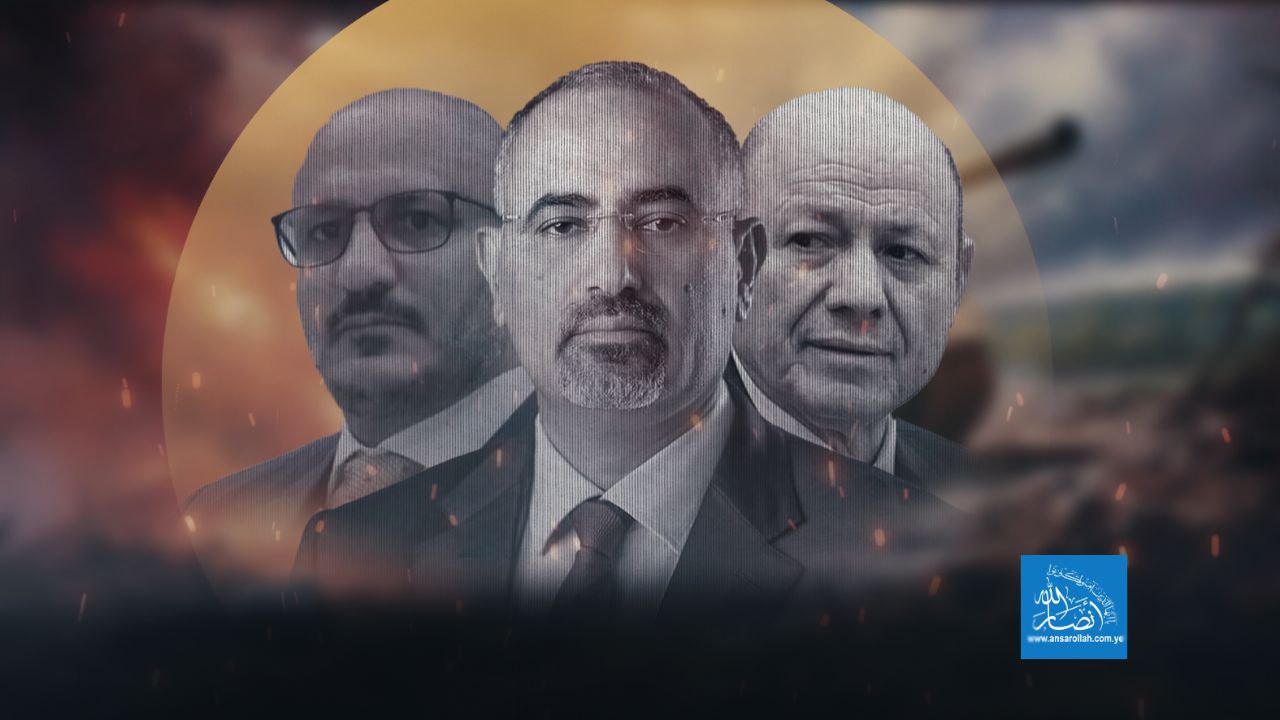
Saudi Arabia required only a few days of bombing and political pressure to dismantle the militias of the “Southern Transitional Council” and remove them entirely from the scene. These formations, long promoted as an imposed “reality on the ground,” collapsed rapidly. Their members scattered between fugitives and the pursued, while their leader, Aidarous al-Zubaidi, was declared wanted for trial, hunted, and without shelter. The UAE did not open its doors to him, nor could his militias provide even the illusion of protection, leaving him as a living symbol of the mercenary’s betrayal once his role had ended.
The scene reached its climax with the arrest of the Transitional Council’s delegation in Riyadh, where they were forced to issue a statement announcing the dissolution of the council and the closure of its offices inside and outside Yemen. This statement was not merely a political declaration, but a death certificate for an entity hastily created and stripped of cover with equal speed once its usefulness expired.
The fate of Saudi-backed militias affiliated with the Islah Party was no better. These forces, which for years had guarded oil looting operations in Hadramawt and paid heavy sacrifices in the service of the occupier, suddenly found themselves pushed out of the picture. They were replaced by newly formed militias under the name “Homeland Shield,” as if the previous chapter had been nothing more than a fleeting episode in a ledger of attrition. There was no recognition of sacrifices, no acknowledgment of losses—only a cold decision to recycle tools.
In Yemen, not only has the truth of the aggression been exposed, but so too have the ethics of the mercenaries and those who employ them. It is a story repeated in every war waged by proxy: the mercenary fights without a cause and is cast aside without mercy, while the land alone bears witness that whoever sells himself is ultimately sold at a cheap price.
The Fall of the Mercenaries and the Exposure of the Aggression Camp
Aidarous al-Zubaidi’s flight from boarding a plane bound for Riyadh was not a passing incident nor a marginal detail in the conflict. It was a revealing moment of deep internal collapse, striking the aggression camp against Yemen at its roots—a moment when the mask fell, when the manufactured “leader” became a fugitive, and when it was discovered that everything built over the years was nothing more than a pile of disposable tools, ready to be thrown away at the first disagreement between operators.
For ten years, mercenaries were presented as “forces of reality,” showered with money, supplied with weapons depots, and inflated by media propaganda to perform one function: striking Yemen from within, tearing apart its social fabric, and legitimizing occupation. Today, as calculations have changed, the spell has turned against the sorcerer, and those who served the project have become its fuel.
Aidarous al-Zubaidi, who stood at the forefront of the aggression for years with open Emirati support, did not fall because he betrayed anyone, but because he was no longer useful. This is how proxy wars are run: loyalty has no value, sacrifices carry no weight, and blood is given no consideration. The only metric is the amount of service delivered, and once it ends, accusations are unleashed and the charge of “high treason” is brandished.
Saudi bombing of his hometown, his pursuit, the handover of Aden to direct Saudi administration, the arrest of the Transitional Council delegation in Riyadh, and forcing them under threat to announce the dissolution of their entity—all of this goes beyond political disagreement to the level of score-settling within a single camp. It confirms that mercenaries possess neither decision-making power, nor control over their fate, nor even the right to object.
What has happened and continues to happen is a message to everyone who bet on external powers and believed that the doors of foreign capitals would remain open forever. The outside protects no one, offers no guarantees, and speaks only the language of interests. Whoever sells his homeland is sold first.
In the occupied south, where militias now spread under new names and different flags, the same conclusion is repeated: the need is to replace tools, not to change the project. Occupation forces are reorganizing their ranks after being drained by internal conflicts and after Yemen imposed new equations in the Red Sea, proving that free will and sovereignty are neither bought nor granted, but seized.
What is unfolding is not merely the end of the Transitional Council, but the collapse of an entire illusion—one built on betrayal, nourished from abroad, and sustained at the expense of Yemeni blood. It is a lesson for all who still wager on the American, the Saudi, or the Emirati. These powers do not build states, do not protect allies, but consume tools.
Yemenis declared it from the first day: this was neither a war of legitimacy nor of sovereignty, but a war of interests. Today, as tools begin to fall one after another, it is confirmed that the correct wager has always been on Allah, on the people, and on an independent national project not managed from intelligence rooms nor written in foreign capitals. Whoever has yet to understand the lesson need only contemplate the fate of mercenaries—for history does not forgive traitors, and the occupier preserves loyalty to no one.
Reordering the Occupation Landscape
A deeper reading of events shows what is happening as a comprehensive reordering of the tools of aggression, after their internal conflicts became an exhausting burden that hindered their functional roles. Saudi airstrikes in the occupied provinces are redrawing the map of control by force and opening the way for new tools under a single umbrella.
This escalation cannot be separated from the broader regional context and the repercussions of the “Al-Aqsa Flood” battle and the transformations brought by the Red Sea confrontation. Yemeni support for Gaza imposed new deterrence equations that pushed aggression forces to attempt to adjust their strategies and compensate for the failure of previous bets.
Observers’ analyses indicate that the United States continues to manage the Saudi-Emirati struggle for influence in a manner that serves its agenda, favoring Riyadh as the traditional player while curbing the Emirati role without fully excluding it, within a framework that ensures all tools remain inside what can be termed a single “house of obedience.”
They Do Not Welcome the Advisers
Here, the early warnings of the leader al-Sayyid Abdul-Malik Badruddin al-Houthi come into focus—warnings issued long ago but met with deaf ears. While hypocrites were united in targeting the Yemeni revolution, Yemenis understood that the moment of collision among these tools was inevitable in a camp bound together only by mercenarism and betrayal.
Today, the scene is fully exposed. Those who waged war on Yemen under the banner of “legitimacy” were nothing more than instruments in an external project. When their expiration date arrived, they were discarded without hesitation, leaving Yemenis alone as the holders of the correct position from the very beginning.


