
Officials in Sana'a celebrated Thursday the signing of a prisoner exchange agreement in Amman while simultaneously issuing fierce condemnations of Quran burning in the United States and "shameful" Arab and Islamic silence.
Prisoner Exchange Finalized
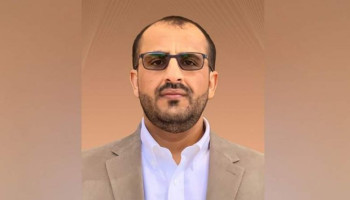
In the Jordanian capital, Yemen's national delegation head Mohammed Abdulsalam confirmed that final lists of prisoners and detainees had been signed, based on the Stockholm Agreement and an earlier accord reached in Oman in December 2025.
Abdulqader al-Murtadha, head of the National Committee for Prisoners' Affairs, announced that 1,100 prisoners and detainees from the Sana'a side and 580 from the other side—including seven Saudi prisoners and 20 Sudanese prisoners—will be released once the International Committee of the Red Cross completes its procedures.
Supreme Political Council President Field Marshal Mahdi al-Mashat hailed the agreement as a "historic achievement" for prisoners and their families, reaffirming Sana'a's commitment to the "all for all" principle. "We reassure the families of our dear prisoners that we place their suffering at the forefront of our priorities, and that they will soon return," al-Mashat stated.
The Shura Council and Parliament issued a joint statement blessing the agreement, emphasizing that "this achievement would not have materialized without the wise directives and continuous follow-up of the Leader of the revolution, Sayyed Abdulmalik Al-Houthi."
Quran Desecration Condemned
In stark contrast, Yemen's religious and political leadership issued a series of blistering condemnations following reports that an American extremist identified as Jake Lang had burned a copy of the Holy Quran in Michigan.
The Yemen Scholars League condemned the "shameful and unprecedented" Arab and Islamic silence in the face of repeated desecration of the Quran and near-daily violations against Islamic holy sites in Quds and Palestine by "usurping Zionist hordes."
"The offense is repeated time after time, revealing the extent of hatred toward the most sacred of Muslim sanctities—the Quran, God's guidance, light, and project for the worlds," the league's statement read.
The league held "the presidents and princes of the Arab and Islamic nation" largely responsible for defending God's book, warning that "any regime that does not defend the Holy Quran is a regime detached from God's verses." It renewed its affirmation that "the punishment for defiling the holy book and repeatedly offending the Holy Quran is death."
Foreign Ministry: Zionist Hatred Revealed
The Ministry of Foreign Affairs and Expatriates described the Quran burning as a "hostile, criminal act, provocation, and disregard for the feelings of nearly two billion Muslims"—an "expression of severe Zionist Jewish hatred and enmity toward Islam and Muslims."
The ministry called upon Islamic nations to "stand firmly against repeated offenses to God's book" and upon the international community to "condemn these shameful criminal acts that incite hatred and violence."
The Shura Council and Parliament, in their condemnation, noted that "the repetition of such crimes in the United States and Western countries under claims of 'free expression' reflects the falsehood of Western slogans, the degradation of moral values, and exposes the policy of double standards."
Calls for UN Action on Sana'a Airport
Alongside the prisoner agreement, the Shura and Parliament urged the United Nations to work seriously to end the siege on Sana'a International Airport and other land and sea ports, and to compel the other party to adhere to its commitments—contributing to ending Yemeni humanitarian suffering and achieving just and honorable peace.
The Foreign Ministry similarly affirmed that the prisoner exchange should contribute to progress on remaining humanitarian files, paving the way for an end to aggression, siege, and the establishment of peace in Yemen.