US President Donald Trump's public messaging during the ongoing war on Iran has become increasingly difficult to reconcile with developments on the ground, raising questions about the credibility of his statements regarding both the war and diplomatic efforts.
In an opinion piece published in The Guardian on Thursday, writer Andrew Roth argues that Trump has repeatedly alternated between declaring that Iran has been effectively defeated and insisting that a negotiated settlement remains within reach, despite the absence of any agreement.
Trump claims questioned
According to the article, the US president has on numerous occasions claimed that a deal with Tehran is imminent, even as military operations continue and tensions remain high. The piece notes that CNN documented dozens of instances in which Trump stated that an agreement was close, yet negotiations have failed to produce a concrete outcome.
Roth argues that this pattern has allowed Trump to simultaneously portray the war as a success while attributing its continuation to Iran's refusal to accept US terms.
"The Bully of the Middle East is DEAD!!!" Trump wrote on Monday. "They've taken too long to negotiate a deal that would have been great for them, now they will have to pay the price!!!"
The article points to ongoing military developments that it says complicate some of the administration's previous claims regarding Iran's capabilities. Roth notes that the president's remarks came after reports that a US Apache helicopter had been shot down near Oman by an Iranian drone, despite earlier assertions by Trump and US War Secretary Pete Hegseth that Iran lacked effective air-defense and radar systems.
Trump's credibility erodes
According to the opinion piece, Iranian missile and drone operations were carried out against US-aligned states in the region, including Kuwait, Bahrain and Jordan. In response, US forces reportedly carried out strikes on more than 20 sites inside Iran, allegedly targeting radar installations and air-defense positions.
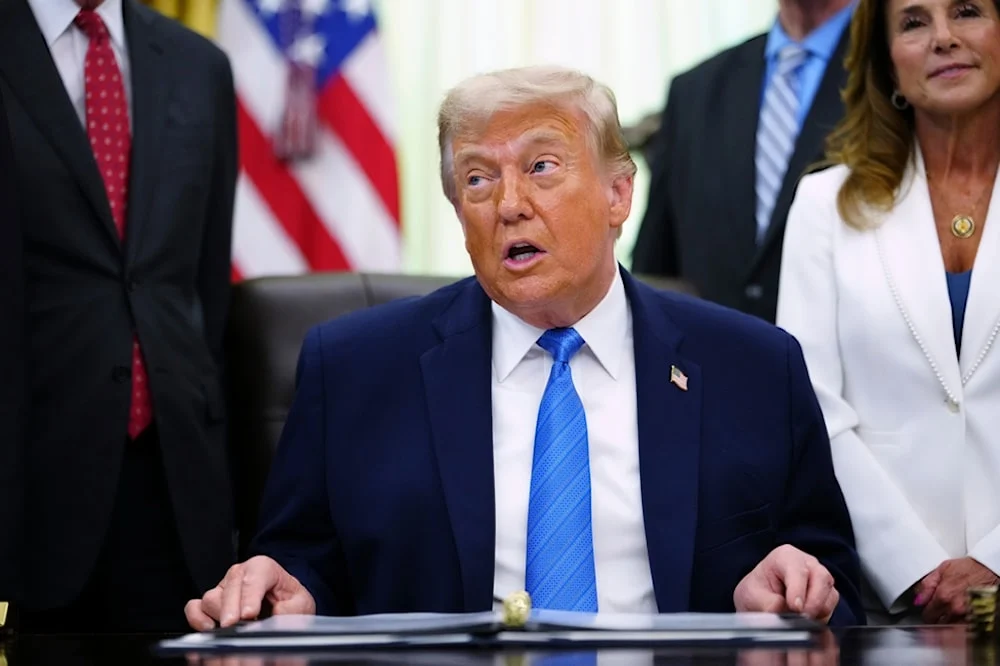
Roth further highlights comments Trump made during an Oval Office appearance on Wednesday, where the president combined fresh military threats with renewed optimism about diplomacy.
"We're gonna hit 'em again hard today ... and we'll see what happens with a deal," Trump said. "We're really close to a deal but they keep on tapping us along, they keep playing us for suckers."
The article argues that this cycle of threats, promises of imminent agreements, and warnings of devastating consequences has helped keep Trump at the center of media attention, but may also have weakened public confidence in official statements concerning the war.
Roth also suggests that foreign leaders have increasingly taken note of what he describes as a credibility gap within the US administration. He cites Trump's comments regarding Israeli Prime Minister Benjamin Netanyahu, noting that the US president initially said he intended to discourage Israeli attack against Iran. After Israeli strikes reportedly proceeded, Trump stated that the missiles had already been launched and later maintained that Netanyahu still follows his instructions.
Failed deadlines
The opinion piece concludes by examining Trump's repeated threats against Iranian civilian and energy infrastructure, a campaign that Roth says many international observers have viewed as constituting a war crime. He argues that such threats have frequently been followed by renewed diplomatic overtures or deadlines that ultimately pass without resolution.
According to Roth, the result has been a pattern of shifting narratives that has made it increasingly difficult to assess the administration's actual intentions regarding both the war and prospects for a negotiated settlement.
Source:Websites