An Israeli military reservist described the destruction of an entire Lebanese village as “a Nakba of 2026,” arguing that Israeli occupation forces have at times operated in both Lebanon and Gaza with a “sense of revenge.” In an interview published by Responsible Statecraft and conducted by a Palestinian journalist alongside Ariella Steinhorn, co-founder of a whistleblower advocacy organization, the reservist also suggested that homes could be classified as “terrorist infrastructure” based on relatively limited evidence, including the presence of hunting rifles and Hezbollah symbols. Both the journalist and the reservist were granted anonymity as a condition of publication.
The account comes from a recently discharged Israeli reservist whose testimony raises further questions about ongoing US backing for Israeli aggression on the region. It also highlights concerns surrounding proposed legislation that would deepen military cooperation between the United States and "Israel".
The soldier, a veteran of several Israeli wars over the past decades, discussed multiple deployments in Lebanon since 2023, including Israel’s ongoing aggression and occupation in southern Lebanon. He also served in Gaza following the 2024 invasion of Rafah.
Responsible Statecraft verified both the reservist’s identity and details of his deployments. The Israeli Embassy in Washington did not respond to a request for comment, as per the report.
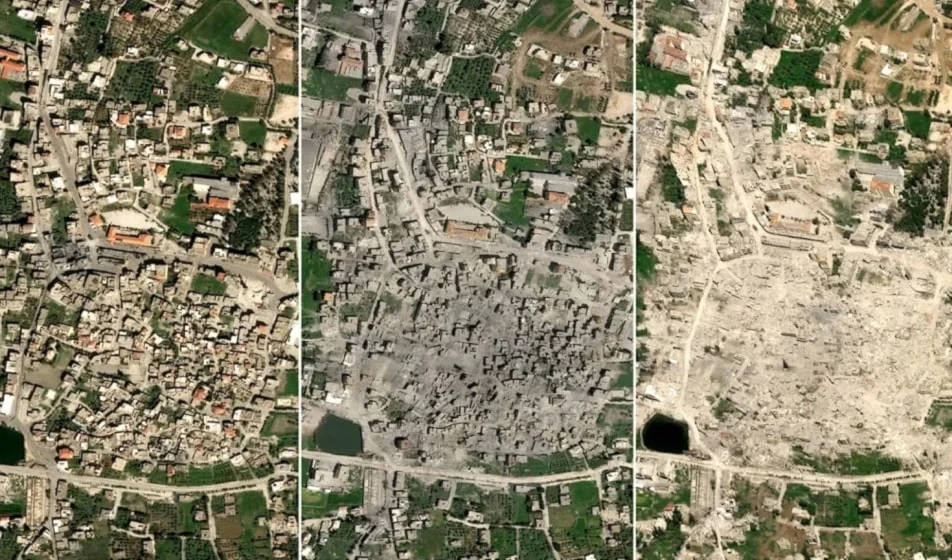
The reservist used the phrase “Nakba of 2026” to describe the destruction of the southern Lebanese border village of Aitaroun. Satellite imagery from late April 2026 showed that nearly every structure in the village had been reduced to rubble.
Explaining the military justification behind the demolitions, he said, “The orders are very clear, to destroy. We got a map of all the homes that were considered terror infrastructure. ... Every home that was used by Hezbollah, it could be used as a hiding place, it could be used as a place where they put ammunition, it could be used as a gathering point, every home like that was destroyed.”
At the same time, the reservist indicated that the threshold for classifying buildings as "terrorist infrastructure" could be broad, particularly regarding weapons found inside homes.
“Every home almost has shotguns and rifles that may be hunting rifles. That’s in every home, literally. ... I probably was in 15, 20 homes I guess, I didn’t count exactly. I would say maybe three of them had actually the big arms, the PK and the kalash and explosives. The rest, it was very clear they were Shia, because there were pictures of Nasrallah, pictures of Khomeini, and then you saw the rifles and other weapons. ... If you find evidence — even a hunter's weapon — under international law, if it comes with a terrorist organization flag, that is a terrorist outpost. Check the law,” he alleged.
The Israeli occupation forces have previously released photographs of hunting rifles it said justified the destruction of civilian infrastructure in southern Lebanon.
When confronted with criticizm that such demolitions amounted to collective punishment, the reservist said that "Hezbollah’s visible presence throughout the village made the town itself part of the group’s infrastructure."
“We entered Aitaroun, all the streets of Aitaroun had Hezbollah flags. The town hall had a huge Hezbollah flag. So you could say, this entire town is used as infrastructure for terror,” he declared.
Source:Websites