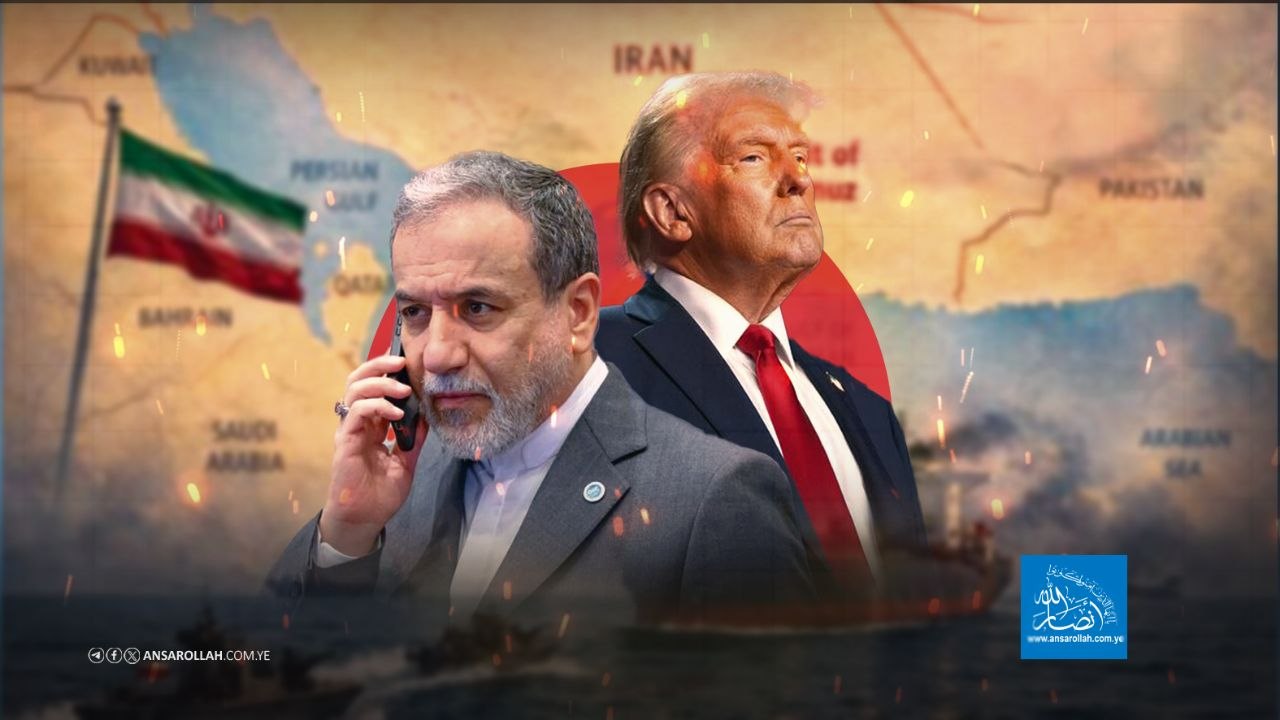
The American-Israeli war of aggression began with Trump's statements: "We will destroy Iran, we will eliminate the Iranian missile program, we will change the regime in Iran, we will reduce Iran to ashes." He concluded by saying that without his presidency, no one would have been able to reach an agreement with Iran, and without his intervention, Iran would have been capable of launching a preemptive strike against "Israel".
Beyond the political disagreements and diplomatic complexities with the Iranian regime, political realism confirms that Tehran has managed to establish a genuine deterrent equation, the only one capable of curbing Israeli arrogance in the region. This comes at a time when the Arab world is experiencing a strategic deficit that makes it difficult to imagine any of its capitals withstanding even a few hours in a direct military confrontation with "Israel".
Would the US have signed the agreement with Iran if it were truly capable of defeating it, destroying its regime, or dismantling its nuclear or missile programs? The obvious answer is that if the United States had been able, it would not have halted its aggression and would have continued its mission until completion. However, none of this happened. So what is happening?
American rhetoric shifts from bluster to capitulation, and the situation on the ground is unraveling the sanctions
In short, Trump's arrogance has collided with the wall of strict rules of engagement and the balance of deterrence established by Tehran. Washington has realized, behind the facade of its rhetoric, that the cost of a direct war with Tehran far exceeds the America'n capacity to bear it. The matter is no longer a military exercise, but an open confrontation that would mean setting oil wells ablaze, closing vital waterways, and unleashing thousands of missiles on American bases and its ally, "Israel". In the world of realpolitik, when brute military force fails to achieve a swift victory with minimal losses, existential threats immediately transform into negotiating points, and an agreement becomes the only available alternative to avoid a scenario of strategic suicide.
Iran's management of the battle forced the United States to move from rhetoric of mobilization and intimidation to the realism of interests and pragmatism. Washington uses the language of force as a tool of maximum pressure to upping the ante, but when it senses firmness in the other side and a high readiness for confrontation and willingness to pay the costs, it recalculates with the precision of a merchant and dealmaker. This is what imposed the American retreat and recognition of the Iranian role, and this is not out of a change of conscience, but rather out of recognition of the reality that says that Tehran's regional power has become a force to be rockened with that cannot be ignored no matter how big the strikes are. Hence came the decision to go towards diplomatic settlements that save face for the superpower.
Wisdom and boldness chart the three paths to Iranian victory
Today's Iranian victory unfolds across three pivotal stages dictated by the language of missiles and the battlefield. The first stage has already begun with the ceasefire, a tacit and practical declaration of the collapse of the illusions of crushing the resistance axis and the enemy's admission of its inability to alter the military equation with a decisive blow. The second stage is currently unfolding with the announcement of the memorandum of understanding between Tehran and Washington, a step reflecting the American-Zionist climbing down from its preconditions and the acceptance of Tehran as a significant player in shaping the region's security. The third stage will be completed with the conclusion of negotiations on the nuclear file and the lifting of the unjust sanctions, fulfilling all of Iran's rights and red lines, thus transforming military steadfastness into an international recognition of Iran's status as a major and fortified regional power.
The Dilemma of the Current Reality and the Decline of Zionist Options
The fiery Zionist rhetoric has been tempered by the blows of reality. Despite Netanyahu's persistent attempts to market what he calls "victories" and to reshape the "Middle East" through assassinations and military operations, the entity finds itself embroiled in a protracted war of attrition that it cannot resolve militarily. This field impasse has forced the United States to pursue regional understandings and agreements, reflecting the inability of both the US and the entity to achieve a decisive military victory and destroy Iran's vital programs. Had it not been for this impasse, Washington would not have resorted to diplomacy and forced compromises.
Thus, Netanyahu is currently attempting to cover up his failure to achieve his objectives of toppling the regime, dismantling the missile systems, or destroying the nuclear program. In his latest speech Monday, he presented assassinations, killings, and destruction as achievements to mask his resounding failure. He also justifies his continued control over territories and buffer zones, whether in the Gaza Strip, southern Lebanon, or parts of Syria, declaring that his forces will not withdraw from them in the foreseeable future under the pretext of protecting the entity's security. This insistence on remaining represents an attempt to impose an alternative geographical reality to compensate for the failure to destroy the regional balance of deterrence established by the resistance fronts.
The most serious threat facing the Zionist entity currently is the exclusion of its immediate concerns from the calculations of its major American ally when drafting major agreements. Political developments indicate that Washington is now acting in accordance with its own pragmatic interests to avoid a comprehensive regional war whose economic and military costs it cannot bear. This has left Netanyahu making angry media statements in which he tries to prove the independence of his decision and the inability of others to impose dictates on him, while the facts on the ground confirm that the margin of maneuver for the entity has become narrower than ever before.
Gains in tandem with Sacrifices
Ultimately, the situation cannot be understood without considering the overall strategic calculations of profit and loss. While Iran has made significant and painful sacrifices, including the martyrdom of its top leaders, most notably Ayatollah Ali Khamenei, and has suffered major military and economic blows, the lesson in this struggle of wills lies in who gets the last laughs and imposes their conditions on the ground. Based on geopolitical calculations and the balance of power, Tehran has emerged from this conflict holding the most crucial cards in the region, having secured control of the Strait of Hormuz as a vital global economic artery, a position it has never held before. Furthermore, it has solidified the unity of its various fronts, transforming them from mere slogans into a cohesive military deterrent network that encircles the Zionist entity from all sides. Above all, it has strengthened the regime and the sovereign rights of the Iranian people, securing full recognition of its nuclear rights and the lifting of sanctions.
Destruction can be repaired and leaders can be succeeded by others, but the lines of geopolitics and the keys to strategic power, once written in blood, cannot be erased. Iran will emerge from this confrontation more fortified and more influential, as a regional power that cannot be bypassed in any future international equation.