Ansarollah Website | Report by: Wadee Al-Absi
For over a decade, the blockade imposed on Yemeni ports and airports has stood as a defining pillar of the humanitarian crisis endured by Yemenis, subjecting them to severe stages of economic and living degradation.
Now entering its twelfth year, this punitive blockade is no longer viewed as a temporary measure tied to wartime conditions. Instead, it has evolved into a tool of leverage designed to exhaust the Yemeni people, violate their rights, and force their submission to Saudi will.
Yet, the blockade has failed to achieve any of its objectives. The coalition of aggression has lost its compass in managing this siege, leaving it directionless and without a clear horizon. This long-term violation of Yemeni reality has cast a shadow over all aspects of life, acting as a primary driver in deepening the humanitarian catastrophe affecting millions.
Amid the total absence of stability in daily life—where capacity to meet the basic needs of tens of millions stagnated at zero—successive crises compounded into one of the worst humanitarian disasters in modern history. These painful realities became a central focus for UN and international organization reports, documenting a crisis where millions lacked the sheer ability to secure basic survival.
Widespread Hunger and Malnutrition:
Over the past years, UN agencies and humanitarian organizations have repeatedly warned that continued restrictions on Yemeni ports severely impede the delivery of food, medicine, and humanitarian aid. This has intensified civilian suffering, particularly given that millions rely entirely on aid to meet their essential needs.
The economic and living situation deteriorated at a rapid pace, with the food crisis dominating the landscape due to disruptions in imports, soaring transport costs, resulting supply shortages, and hyperinflation. Securing adequate food became an immense struggle for countless families, spreading hunger and malnutrition, and forcing vast segments of the population to rely on humanitarian assistance for survival.
Depriving the Sick of Medical Treatment:
The repercussions of the blockade extended far beyond food security, impacting all vital sectors. The economy worsened, while poverty and unemployment surged as commercial activities ground to a halt, job opportunities vanished, and purchasing power collapsed.
Furthermore, the closure of airports and seaports imposed severe restrictions on freedom of movement. This deprived numerous critical patients of life-saving medical treatment abroad, disrupted the journeys of students and travelers, and tore apart families stranded in various countries across the globe.
Compounding Daily Hardships:
In the public services sector, recurring fuel shortages further complicated daily life. Water supply, electricity, and sanitation services deteriorated significantly, directly impacting public health and living conditions while heightening the risk of disease outbreaks.
The impact of the blockade was not merely material; it took a heavy psychological and social toll. Yemenis have lived under continuous psychological strain, driven by the constant anxiety of losing income, the inability to provide for their families, and lingering instability.
A Senseless Siege Killing Millions:
After more than eleven years of relentless restrictions, it has become indisputable that prolonging this blockade is a senseless, futile exercise serving no purpose other than the slow killing of the Yemeni people. Moreover, conditioning the operation of Yemeni ports and airports on external decisions directly violates international law regarding state sovereignty and the right to independently manage economic and commercial affairs.
Consequently, lifting the blockade has become an urgent necessity driven by the people's imperative to break free from all forms of foreign guardianship—a guardianship that reached the extent of restricting their basic freedom of movement and trade, requiring Saudi permission for entry, exit, imports, exports, and even dictating who could be received or what goods could be brought into the country.
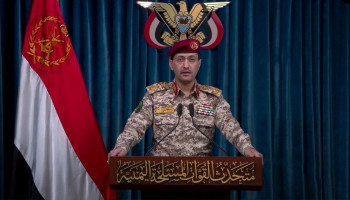
Given the gravity of this suffering, the Armed Forces issued an extraordinary decision to enforce a "siege-for-siege" equation. This step aligns with the Yemeni people's aspirations to break free from foreign dependency and establish full independence, culminating in the complete and permanent termination of the blockade so that vital national portals are no longer tied to external forces.
A New Directive to Confront the Blockade:
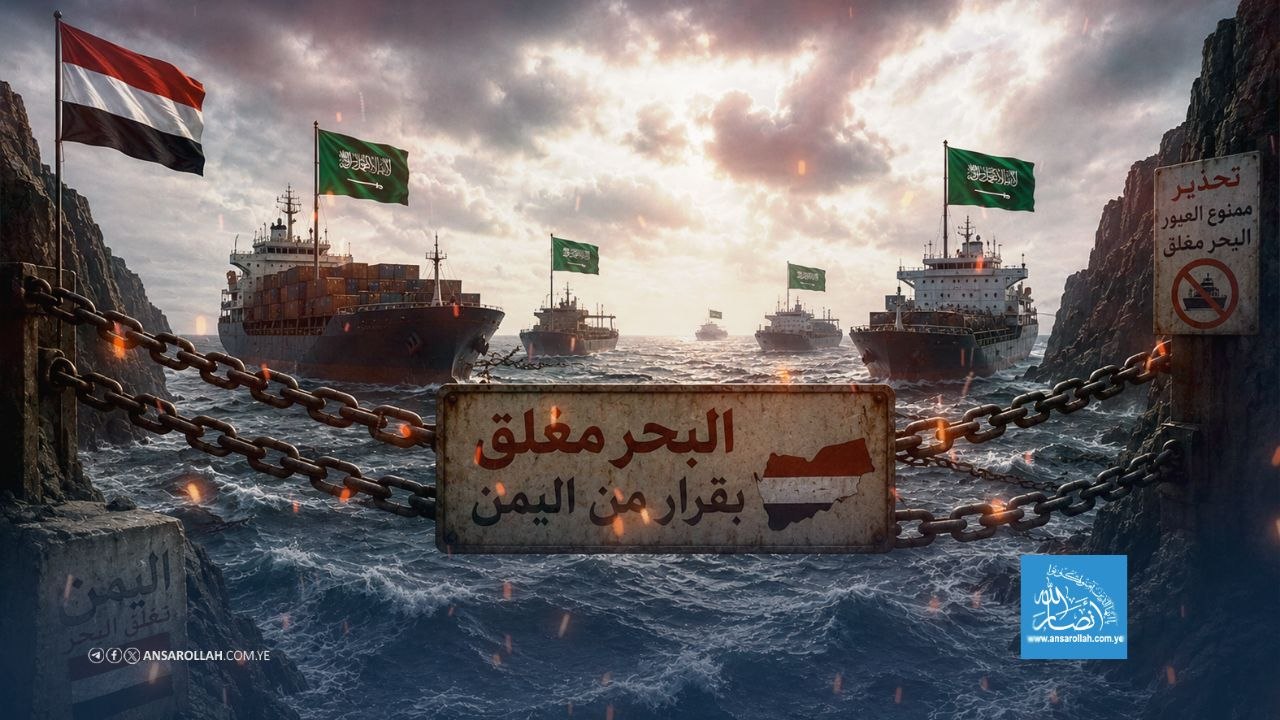
Today, as the Yemeni Armed Forces enter a new phase in responding to the ongoing blockade, the decision to impose a comprehensive maritime ban on Saudi Arabia comes as a practical, realistic response to a humanitarian situation brought to the brink of collapse by over a decade of accumulated crises.
The "siege-for-siege" equation is not intended as military escalation for its own sake. Rather, it aims to establish a new leverage dynamic that forces the lifting of restrictions on Yemen, reopens its vital access points, and restores freedom of travel, transport, and international trade after years of stalled political tracks and mediation efforts.
The Counter-Blockade as a Means:
Therefore, the counter-blockade is not framed as an end in itself, but as a means to compel the enemy to reassess its calculations regarding the continued restrictions. It operates on a straightforward principle: the open status of enemy ports and airports alongside the continued closure of Yemen's air and sea portals cannot persist indefinitely or without political and economic consequences.
In response, international bodies concerned with shipping and commerce have warned that any disruption to regional air or maritime routes could ripple through global trade. This highlights the scale of potential ramifications, bringing international attention to Yemen's humanitarian demands and pushing toward an end to this reckless compromise of Yemeni lives and any ambitions of hegemony over them.
Shifting Balances of Power:
A number of analysts believe that any new confrontation in the region arising from the Yemeni decision will not resemble past conflicts, given the significant advances in the Yemeni Armed Forces' military and technological capabilities and the emergence of non-traditional leverage tools.
This perspective emphasizes that the development of Yemen’s missile capabilities, drones, and naval assets has altered the calculus of engagement, making the protection of vital infrastructure and commercial sea lanes a far more complex challenge. Consequently, any choice by Saudi Arabia to engage in open confrontation appears akin to a suicidal miscalculation, especially given the Yemeni Armed Forces' clear commitment to a comprehensive response.