
Ansarollah Website | Report by Yahya Al-Shami
In a stinging blow to the flank of Arab national security, and at a critical juncture in the regional conflict, rapid and dramatic developments have exposed a resounding new plunge into the mire of allegiance to the Israeli enemy entity. The visit of Abdul Rahman Mohamed Abdullahi, leader of the "separatist region" in northern Somalia, to the enemy entity sent shockwaves through Arab and Islamic circles. Coming amidst a wave of varying normalization efforts that have met with only timid condemnations, the move leaves the Arab public facing a bitter truth: the urgent need for official action that transcends mere "sound bites" and denunciation statements, which are no longer worth the ink they are written with.
"Abdullahi" initiated his treacherous performance with unprecedented audacity, conveying to the leaders of the enemy entity what he described as "greetings from six million Somali Muslims." This blatant attempt to falsify the popular consciousness and enlist it in favor of a suspicious alliance did not stop there. Urged on by his handlers, he went on to inaugurate an embassy for the separatist region in occupied Jerusalem—a provocative step that most nations recognizing the enemy entity have not dared to take. With this move, the separatist region enters the sphere of normalization through the widest of doors, a path opened and paved for it by the United Arab Emirates.
In terms of reactions, Hamas issued a strongly worded condemnation, calling on the Arab League and the Organisation of Islamic Cooperation (OIC) to take immediate action to prevent the separatist region from fracturing the unified stance on the Palestinian cause. However, reality indicates that the official Arab response appears "too slow and too impotent" to curb this growing relationship, which now directly threatens the strategic depth of the Arab world.
Soldiers with African Features and Bases to Target the Neighborhood
Behind the diplomatic curtain, dangerous security and military deals are emerging. A senior official in the Somali Federal Government disclosed to Middle East Eye that fifty Israeli soldiers of African (Ethiopian) descent were deployed to the separatist region following the enemy entity's recognition of it last December. According to intelligence reports, these soldiers were specifically selected "to avoid public scrutiny and remain under the radar of the local community."
This cooperation has gone far beyond training. CNN reported that the separatist region provided the enemy entity with a military base utilized by Israeli aircraft during their airstrikes against Iran. This military presence was openly confirmed by the leader of the separatist region in an interview with the Israeli channel i24, where he stated frankly: "Israel has assisted Somaliland in various fields, ranging from agriculture and water resources to health and security." He further affirmed his total openness to the concept of establishing a permanent Israeli military base, given the region's strategic location overlooking Bab al-Mandab Strait.
"Iron Dome" Radars on Yemen's Doorstep
For Yemen, the threat has transitioned from theoretical possibilities to an active reality on the ground. Satellite imagery and intelligence reports have uncovered the presence of enemy radar systems at Berbera and Bosaso airbases. The detected systems are of the 3D ELM-2084 model—the exact variant utilized by Zionist "Iron Dome" air defense system. These radars, deployed under military arrangements orchestrated with the UAE, primarily aim to intercept Yemeni missiles and drones during their supportive operations for Gaza. This deployment effectively transforms the coastlines facing Yemen into a Zionist "surveillance and control platform," placing Yemeni maritime security and wider Arab national security under direct threat.
The UAE Logistics Bridge: Fujairah to Berbera
This Zionist infiltration cannot be viewed in isolation from Abu Dhabi’s subversive role. Satellite imagery and shipping logs have tracked intense, suspicious activity between the Emirati port of Fujairah and military facilities in Berbera. The vessels spotted last June were not commercial container ships, but heavy-load cargo vessels executing multiple voyages to offload military equipment and support systems. This recurring logistical pipeline revives inevitable questions regarding the true nature of the hardware arriving in Berbera and who is financing the expansion of the military infrastructure there. It appears evident that the UAE is managing regional operations to turn Berbera into a card of Zionist influence in one of the most sensitive regions in the world.
In a statement that epitomizes the depth of subservience, the foreign minister of the separatist region, Abdirahman Dahir Aden, told the Hebrew website Ynet: "Our eyes welled with tears when our anthem was played at the residence of the president... and there are no limits to our cooperation." He added unambiguously: "We will cooperate in everything and in any field we believe both countries can benefit from, whether economic, security, or political."
These declarations reflect how the region is being pushed to serve aggressive Zionist projects aimed not only at Somalia’s neighbors, but at the entire Arab region. In exchange, the separatist region is being enticed with the illusion of purchasing missing "international legitimacy" by offering "sacrifices" to the enemy entity, which include opening up its mining sector and granting exclusive concessions. This comes at a time when the central Somali government reaffirms that the region is an indivisible part of its national territory, and that these maneuvers completely lack any legal basis.
Has the Danger Surpassed the Bounds of Condemnation?
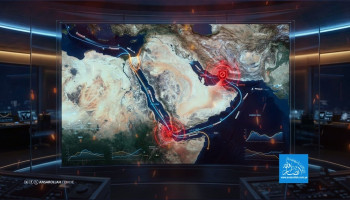
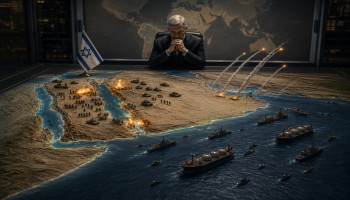
The harsh reality imposed by this aberrant normalization—which breaks away from established Arab and international stances—is that the Zionist enemy entity continues to reap the fruits of accelerated normalization. It is deploying its military bases and assets to tighten the noose around the Red Sea from its southern gateway.
This reality dictates that the Arab community and official regimes—particularly the Arab League and the Organisation of Islamic Cooperation, which still settle for expressions of "concern"—must adopt a firm stance that transcends their lackluster approach before the completion of the "Zionist wall" around their maritime corridors. The Arab world must take a decisive stand commensurate with the actual threat, moving away from pale condemnations that have proven useless in stopping the Zionist enemy from advancing its steps and further threatening Arab national security.
Remaining silent on this breach and these deals—concluded outside the framework of the mother state—does not merely weaken the unity of Somalia; it emboldens separatist tendencies in other regions. This serves Zionist schemes aimed at fracturing centers of power and dividing their attention to create further opportunities for expansion. Ultimately, what is unfolding in the separatist region is far more than a local Somali affair; by virtue of geopolitical interconnectedness, it represents an existential threat to Arab national security and to the sovereignty of the Arab states bordering the Red Sea in particular.