
Published: 14 Muharram 1448 AH
The so-called "Lebanese-Israeli Framework Agreement" marks a highly dangerous shift aimed at reproducing American-Israeli hegemony over Lebanon. It seeks to subject the country's sovereign decision-making to new equations that "Israel" completely failed to impose through military force. Following months of war, aggression, and devastation, and after the failure of the occupation to achieve its strategic objectives on the battlefield, the US-Israeli project has resurfaced through the gateway of politics and negotiations, attempting to extract what tanks, fighter jets, and missiles could not achieve.
Since the onset of the aggression on Lebanon, the declared Israeli objective has been to eliminate the resistance, strip it of its elements of strength, and redraw the political and security landscape in the country. However, the steadfastness of the resistance and the resilience of its popular base prevented these goals from being realized. The Israeli enemy failed to impose new realities on the ground and stumbled in causing any military or political collapse of the resistance. This failure prompted Washington and Tel Aviv to pivot toward an alternative path, which relies on exploiting the Lebanese political authority to achieve the exact same goals under the rubrics of "stability," "implementing international resolutions," and "extending state authority." Consequently, the framework agreement is viewed as a continuation of the war through political and diplomatic means.
The Iranian-American Memorandum of Understanding and the Lost Opportunity
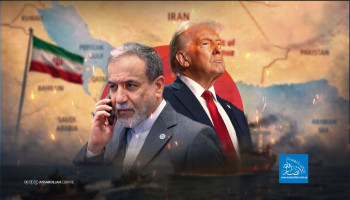
To comprehend the true dimensions of the framework agreement, it is essential to revisit a crucial event that preceded it by only a few days: the Memorandum of Understanding (MoU) concluded between Iran and the United States in June 2026 within the framework of the Islamabad (Pakistan) talks. This memorandum explicitly stipulated, as its first and primary clause, an immediate halt to the war on Lebanon. It tied a full Israeli withdrawal to a strict timeline not exceeding sixty days, without any internal conditions or restrictions regarding the resistance's weapons or its security structure. Furthermore, it included an explicit guarantee for Lebanon's territorial integrity and full sovereignty, which would have placed the Lebanese government in a position of strength had it chosen to leverage this diplomatic achievement to enforce an unconditional withdrawal and reaffirm national sovereignty.
Instead, the Lebanese authority, represented by the decision-making duo of Joseph Aoun and Nawaf Salam, chose the exact opposite path. Rather than holding onto the memorandum as a regional and international leverage card, they refused to utilize it. They went voluntarily into direct negotiations with the Zionist enemy under explicit American dictates engineered by US Secretary of State Marco Rubio. According to positions and statements, the strategic objective behind this pivot was to undermine the outcomes of the Islamabad track, prevent any international rapprochement that would benefit Lebanon, its resistance, and its people, and clear the path for arrangements that entrench the Israeli presence, thereby granting the Zionist entity what it failed to achieve on the military field.
Content of the Announced Agreement and Its True Face
A deep analytical scrutiny of the clauses of the "Trilateral Framework Agreement" published by the US State Department reveals that official rhetoric regarding the extension of state and Lebanese Army authority over the entire territory, the implementation of UN Resolution 1701, and the provisions of the Taif Agreement is merely a legitimate and political cover to pass an integrated Israeli agenda. At the very core of the agreement are two primary articles that condition any Israeli withdrawal on the "actual verification" of disarming the resistance and completely dismantling its infrastructure. It also mandates the creation of "experimental zones" where the Lebanese Army will gradually assume security responsibility, but under close Israeli surveillance and the direct supervision of a "Joint Military Coordination Team" featuring active US participation.
This arrangement clearly grants the Zionist enemy the power to issue or withhold a "certificate of good conduct" to the Lebanese state and its army. Through this certificate, the enemy will control the timing of transitioning from one phase to another and gauge the extent of Lebanon's commitment to its obligations. This content aligns perfectly with what war criminal Benjamin Netanyahu boasted about as a "great achievement for Israel," when he confirmed that the agreement represents a "major blow to Iran, which tried to impose a withdrawal on us from south Lebanon." Netanyahu stressed that "the most important element of the agreement is that we will remain in the security zone located under our control." He did not stop there, but clearly defined the occupation's ceiling: "We will remain in south Lebanon as long as Hezbollah is not disarmed, and we will not allow it or the people of the south to enter the security zone."
He added, in a custodial tone: "We will allow the Lebanese Army to deploy and control specific areas in the south, and we confirm that there is no role for Iran and Hezbollah in Lebanon."
Consequently, the agreement inherently transforms into a document of submission that grants the Israeli enemy the right to security surveillance and guardianship over Lebanon. It establishes a reality that allows the occupation to persist for long years, while displaced citizens are turned into perpetual cards for pressure and blackmail. Netanyahu reinforced this explicit direction by confirming that he "will maintain freedom of military action within the security strip in Lebanon."
Free Concession of Lebanese Strength Elements
The resistance considers that the most dangerous violation committed by the Lebanese authority is its abandonment of the elements of strength it possessed, foremost among them the Iranian-American understandings that guaranteed an unconditional Israeli withdrawal from Lebanese territories, while preserving the unity and integrity of Lebanese lands and insulating domestic affairs from external interventions. However, the political leadership in Lebanon sought to displace the country from a position of possessing political and field leverage to a position of receiving Israeli dictates and conditions, without obtaining any genuine reciprocal guarantees to protect its sovereignty or secure a complete withdrawal of the occupation.
The essence of the objection to the agreement lies in tying the Israeli withdrawal to the complete disarmament of the resistance. This condition practically means that the Israeli enemy is the party that determines the timing of its withdrawal and decides whether the required conditions have been met. Thus, southern Lebanon becomes a hostage to Israeli decision-making, and the occupied land turns into a permanent card for blackmail, which establishes the legitimacy of the occupation remaining for long years, and perhaps decades, under renewed security pretexts.
Furthermore, among the most hazardous clauses are those addressing security arrangements, coordination committees, and joint monitoring mechanisms. This realistically means that the deployment and field trajectory of the Lebanese Army become subject to Israeli and American oversight, and transitioning from one security phase to another requires implicit or explicit approval from the Israeli enemy. In other words, the Lebanese state requires a certificate of good conduct from its enemy to exercise its sovereignty. Thus, the agreement is a project aimed at undermining Lebanese sovereignty and placing the Lebanese Army under the umbrella of US-Israeli security oversight.
The resistance deeply warns that the agreement does not solely target its weapons, but actively seeks to ignite a domestic Lebanese-Lebanese confrontation. Attempting to place the Lebanese Army in direct confrontation with the resistance and its popular base represents a dangerous recipe for destabilization and the reproduction of internal divisions. Because of this, the resistance consistently asserts its adherence to the "Army, People, and Resistance" equation as the genuine guarantee to protect Lebanon and prevent its slide into chaos or civil war.
Moreover, the resistance does not view the agreement as a limited, isolated security measure. Rather, it considers it part of a broader project aimed at reshaping the Lebanese system according to the US-Israeli vision. This includes weakening the forces of resistance, re-engineering the internal balance of power, imposing new political arrangements, transforming Lebanon into a state completely devoid of deterrence capabilities, and consecrating the dependency of Lebanese decision-making on foreign powers. Hence, the framework agreement serves as a prelude to a new political era that directly threatens Lebanon's identity and its strategic choices.
The Accord of Submission in the Crosshairs of National Rejection: Stances
In the face of this concessionary path, the positions of the resistance leadership have emerged to express a national and constitutional legitimacy that cannot be ignored. The Secretary-General of Hezbollah, Sheikh Naim Qassem, warned that linking the Israeli withdrawal to the disarmament of the resistance throughout all of Lebanon is an incredibly dangerous proposal that crosses all red lines. He explained that the agreement is legally non-existent and void, considering that the authority is legitimizing the presence of the occupation for long years, which could eventually lead to the annexation of lands to the Zionist entity.
Sheikh Qassem highlighted the major irony, questioning how the authority could refuse to utilize the Iranian-American Memorandum of Understanding—which provided it with a high sovereign ceiling—and then head to Washington to sign an agreement that gives Israel exactly what it failed to extract by force. He asked indignantly:
"Where is the authority's trustworthiness and responsibility toward its people and the protection of Lebanon's sovereignty?"
For his part, the head of the Loyalty to the Resistance bloc, MP Mohammad Raad, went as far as describing the trilateral framework statement as the "hooting of an owl" in Lebanon and the region. He revealed that the text deliberately inverted facts, knowingly and purposefully committing taboos and vices with prior intent and design. He viewed it as an expression of the Lebanese authority's complete submission to the logic of American guardianship and its complicity with the Zionist enemy against its own people. Raad warned that the essence of the agreement lies in its "evil, malicious role" aimed at covering up the continuation of the occupation and providing an escape route for America to evade its commitment to Iran regarding a full Israeli withdrawal.
These national stances heavily rely on Article 52 of the Lebanese Constitution, which strictly prohibits canceling hostility with the Israeli entity or concluding agreements that infringe upon national sovereignty without a comprehensive, unifying national consensus. By proceeding with this signing in Washington, the current authority has bypassed established constitutional and national pact procedures, entering into a direct confrontation with more than half of the Lebanese people, who view the resistance as an existential guarantee against Zionist ambitions. From this standpoint, the resistance views the battle to reject this agreement as an existential battle to defend Lebanon's identity, its sovereignty, and its absolute right to be a free, independent state that never submits to the dictates of occupation or foreign custody.