
Ansarollah Website | Report
Since 2015, Saudi Arabia's strategy in Yemen has hinged on a core pillar: absolute air superiority. This dominance served as the backbone for all other forms of pressure, including the economic blockade, restricting humanitarian aid, controlling the movement of people, and enforcing international isolation. The underlying Saudi assumption was that overwhelming air supremacy would guarantee the continued imposition of its terms without incurring major strategic costs.
This assumption gradually eroded over years of the war, but it collapsed entirely when Saudi fighter jets attempted—and failed—to intercept an Iranian aircraft on June 3rd. The message here reflects not only the Yemeni air defenses' capacity to intercept, but also their declared and proven ability to shift the battlefield into the depths of Saudi territory.
Proven Capabilities and Credible Deterrence
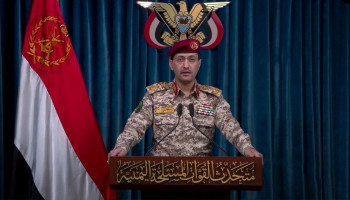
The warning issued in the Armed Forces' statement—declaring that any repeated airspace violation "will be met with a comprehensive response targeting Saudi enemy airports and vital interests on land and at sea"—rests on a track record of qualitative operations. These missions have demonstrated the Yemeni Armed Forces' capacity to strike strategic targets with increasing precision.
Yemen's missile and drone capabilities have undergone a series of qualitative evolutions throughout the war. Initially limited in range and accuracy, continuous development has yielded an integrated ecosystem capable of reaching targets thousands of kilometers away, as demonstrated by operations targeting Israeli depths. More importantly, these capabilities have proven effective against the advanced air defense systems possessed by Saudi Arabia and the US-Israeli coalition.
What compounds the severity of these capabilities for Saudi calculations is the highly sensitive nature of the Kingdom's critical infrastructure. Saudi Arabia relies on hyper-vulnerable vital assets: oil pumping stations, the massive Ghawar oil field, refining and petrochemical complexes in Rabigh and Yanbu, desalination plants, and strategic pipelines. Targeting these facilities—even partially—could inflict economic damage on Riyadh that far outweighs any gains it hopes to achieve by maintaining the blockade on Yemen. Consequently, those who succeeded in forcing strike fleets to exit the Red Sea are equally capable of shutting down Saudi coasts and ports. Linking the achievements made in the naval confrontation with the United States to what can be achieved against Saudi Arabia forms the core of the new deterrence framework built by the Yemeni Armed Forces; they are no longer threatening with potential capabilities, but are relying on documented field achievements.
A Comprehensive Redefinition of the Engagement Rules
Prior to the Armed Forces' statement, the rules of engagement were governed by an asymmetrical equation: Saudi Arabia had the right to impose a total air blockade, while Yemeni options were confined to defense and limited retaliation, based on Sana'a's baseline commitment to agreements. This equation has collapsed today. The new rules heralded by the Armed Forces' statement are based on the principle of strategic reciprocity: just as Saudi Arabia attempts to disrupt air navigation to and from Yemen, Yemen is capable of disrupting air navigation to and from Saudi Arabia. Just as the Saudi blockade threatens the Yemeni economy, Yemen is capable of threatening the core of the Saudi economy. And just as Saudi Arabia violated Yemeni sovereignty for years, Yemen has become capable of violating Saudi sovereignty at any moment.
This shift in the rules of engagement extends beyond the immediate military dimension into economic and strategic realms. The Armed Forces' focus on "targeting vital interests on land and at sea" opens the door to multiple scenarios: from targeting oil fields and Aramco facilities, to threatening maritime navigation in Saudi territorial waters, to striking command and control centers. This sends a clear signal that the cost of maintaining the blockade on Yemen will become too exorbitant for Saudi strategic calculations to bear.
Unity of the Fronts and Internal Mobilization
Among the central dimensions highlighted by the military statement is its explicit call for "our beloved people to continue general mobilization and combat readiness in response to the Leader’s call." This call indicates a profound strategic shift in the nature of the confrontation with Saudi Arabia. The state of continuous mobilization within Yemeni society, particularly across tribal regions, represents one of the most critical sources of strength accumulated during the years of aggression. Unlike conventional standing armies whose infrastructure can be destroyed or capabilities depleted, a popular army built on broad societal mobilization represents an elusive adversary that is difficult to defeat.
What doubles the significance of this mobilization in the current context is that it has transformed into an offensive posture aimed at reclaiming rights and sovereignty. The Yemeni public is no longer content with merely enduring aggression; it now looks toward a phase of decisiveness and enforcing terms. This transformation grants the leadership a broad popular mandate to move forward with options that years ago would have seemed like an uncalculated gamble.
Internal Cohesion: Countering the Bet on Fragmentation
Since the beginning of the aggression, the coalition has relied on a dual strategy: external military pressure combined with the incitement of internal divisions. The declared objective was to fracture the Yemeni internal front to mirror the fragmentation suffered by the pro-aggression camp. However, this bet has failed decisively.
Today, as the war crosses its eleventh year, the internal front in the free zones stands more cohesive than ever. The military statement clearly reflects this reality by affirming the readiness of the Armed Forces across all formations for any options chosen by the Leader. This readiness translates into a unity of political, military, and popular decision-making, particularly as Yemeni tribes have proven—over the past days—their ability to effect fundamental changes in the battle. Major Yemeni tribes have mobilized in military parades, declaring solidarity, general mobilization, and full readiness for any escalation or decisions taken by the Leader. Most importantly, the unity of the internal front—encompassing military, popular, and tribal spheres—poses a strategic challenge to Saudi Arabia, which gambled that prolonged pressure would ultimately weaken the leadership and erode its popular base. Instead, the exact opposite occurred: increased pressure fostered deeper alignment around the leadership, and the longer the war lasted, the more deep-rooted the societal mobilization became.
Relying on Faith-Based Identity
The depth of Yemeni internal cohesion cannot be understood without invoking the spiritual dimension and the Yemeni identity that forms the overarching framework for this mobilization. The Leader’s emphasis on faith-based identity confirms that this confrontation is not viewed solely within its local geographical context; rather, it is seen as part of a broader struggle against global arrogance and US-Zionist hegemony in the region. This starting point provides the Yemeni people with a powerful incentive for steadfastness that transcends mere territorial defense, elevating it to the level of defending identity. This explains the continuity of mobilization despite the prolonged war and the severity of the siege. The war is no longer viewed as a war on Yemen as a geographical entity, but as a war against a cultural and civilizational project, rendering the prospects of internal collapse or fragmentation far lower than Saudi calculations anticipate.
The Nature of Relations with Iran: From Moral Support to Strategic Partnership
The flight of the Iranian aircraft to Sana'a, coupled with the official Yemeni praise for Iran's stance, marks a turning point in the evolution of relations between Sana'a and Tehran into a strategic partnership. This partnership gains major strategic significance in light of recent regional variables. Iran, having demonstrated its resilience against American and Israeli pressures and succeeded in establishing regional equations through hard power, has become a bolder ally capable of defying the arrangements Saudi Arabia attempts to impose. The entry of the Iranian aircraft into Sana'a without Saudi permission sends a message that Tehran does not recognize Saudi guardianship over Yemen and is prepared to act on that basis.
In conclusion, the Yemeni step in countering the attempt to block the Iranian aircraft and breaking the air blockade represents a definitive strategic shift in the trajectory of the conflict with the Saudi-American adversary. By relying on its faith, self-reliance, and historic steadfastness, Yemen has transitioned from a besieged country to an active player that dictates deterrence equations and imposes terms. It serves as a practical declaration that the era of Saudi custody has ended irrevocably, and that the state of "no war, no peace" has been bypassed to make way for a phase of decisiveness and the full reclamation of rights. The ball is now in the Saudi court, and the choices are clear: either a peace based on equality and mutual respect, or a war whose exorbitant price the aggressor will pay deep within its own territory and economy.