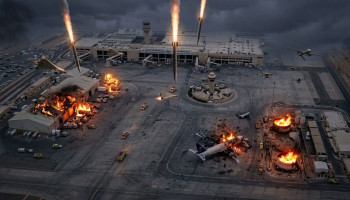
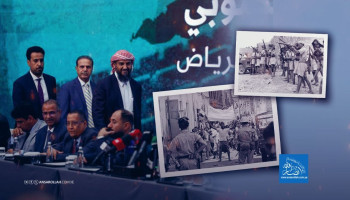
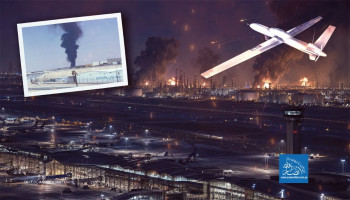
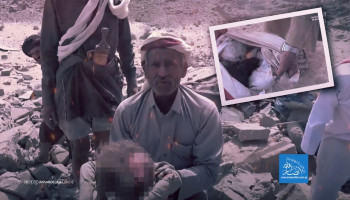
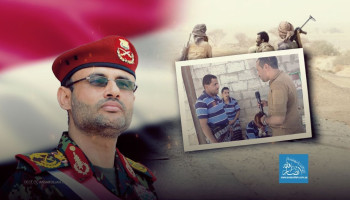
As part of the ongoing effort to protect and defend the homeland and its people, and as a confident step toward restoring the legitimate rights of a nation entitled to enjoy full independence and sovereignty over its entire territory, the military operation “Allah Is Stronger in Might and More Severe in Punishment” was launched along Yemen’s western coast.
The operation once again demonstrated the resilience and steadfastness of the Yemeni armed forces and people in confronting Saudi military movements and what the text describes as futile Saudi schemes—efforts that, over the years, have sought to preserve a “crushing equation” designed to subjugate the resilient Yemeni people and ultimately compel them to accept it as an imposed framework for determining their sovereignty and political and military decisions.
By all military and operational standards, “Allah Is Stronger in Might and More Severe in Punishment” was an exceptional and highly significant operation, given its strategic weight and its reported achievements on the ground, particularly in freeing territory and civilians from the grip of Saudi forces and their proxies.
This was clearly reflected in the widespread popular reception in the areas along the western coast described as having been liberated. The public response and embrace of the operation sent an explicit message affirming the soundness and legitimacy of the leadership’s decision to intervene directly and put an end to the deteriorating conditions and blatant violations inflicted on civilians and residents of villages and rural communities over the preceding period.
The military action, therefore, was not driven by an excess of strength or intended as a mere display of military capabilities. Rather, it came as an inevitable response to the responsibility of protecting civilians and defending Yemen’s right to self-defense and national dignity against Saudi military movements and troop concentrations, which had intensified sharply in recent months and became even more aggressive as Yemen moved to take decisive steps toward reclaiming its homeland and pursuing what it describes as the complete liberation of the country from foreign interference and the Zionist-American-Saudi agenda.
The People’s Grievance and the Legitimacy of Liberation
Time and again, statements issued by the Yemeni armed forces have presented the official account of their operations in a factual, precise manner, entirely free of media embellishment or cosmetic rhetoric.
The country has been subjected to aggression, siege, and the seizure of its rights and resources for more than 12 years. What Yemen needs, therefore, is not a polished narrative, but the translation of its sacrifices into tangible pressure on the battlefield.
In this context, the western coast operation further reinforced its legitimacy and moral and humanitarian justification, from the planning and preparations that preceded it to the moment it was carried out, grounding its rationale directly in its defensive nature and stated national objectives.
In the military statement issued by the Yemeni armed forces on Friday, a number of key considerations formed the core of the message, reminding the international community and international institutions of the Yemeni people’s longstanding grievances and the humanitarian suffering resulting from the continued aggression and siege.
These considerations were presented as the central motive and driving force behind the military action: to put an end to what the statement describes as systematic and sustained Saudi targeting, and to confront the continuing efforts to subjugate the Yemeni people and force them to live according to the dictates of their adversaries.
The statement also reaffirmed the continuity of the armed forces’ approach and the consistency of its military and political position.
It made clear that the operation came within the framework of targeting the “criminal Saudi enemy’s military concentrations,” confronting its “blatant aggression” and the “unjust siege” it has maintained against the Yemeni people for 12 years, with the stated aim of forcing them to abandon their legitimate demands and their principled position in support of the oppressed Palestinian people.
The Popular Call and the Response on the Ground
The scale of the latest escalation and renewed aggressive military activity is now unmistakable, with the enemy continuing to reinforce its positions and intensify its deployments along key fronts and strategic axes.
Yet the most significant and consequential factor behind the western coast operation was the direct targeting of civilians and the economic and security pressures imposed on residents of the coastal districts.
Many patriotic forces had repeatedly warned of the disastrous consequences of such actions, describing them as a blatant violation of the rights of civilians and local communities to their livelihoods, security, and peace—conditions that demanded a national response and comprehensive defense by every available means.
As attacks by forces aligned with the Saudi enemy against residents, villages, and local communities along the western coast continued for years—and intensified markedly in recent months—residents of those areas repeatedly and courageously called on the army and popular committees to intervene urgently, support them, and put an end to the injustice and abuses they were enduring. Under these circumstances, a decisive military operation became unavoidable.
Taken together, these accumulated factors and circumstances provided the natural and compelling backdrop for a new strategic shift in the course of liberating the people and the land from the authority and dominance of the Saudi-American alliance.
Developments on the ground offered a clear and compelling picture of this course, with events unfolding in a manner that, according to the text, demonstrated its moral justification.
Those developments, however, were subjected to attempts at distortion by the opposing side and its media outlets, which sought to obscure the facts through allegations and fabrications that could not withstand the realities on the ground.
The Context of the Operation and Popular Cohesion
A detailed account of the operation’s context and the scope of its military expansion revealed significant field and intelligence information. On the one hand, these details underscored the genuine necessity behind the extensive military action.
The armed forces were not operating in isolation from their social base; rather, they were backed by broad popular support and extensive cooperation from local residents and tribal communities, including people from the very areas where the operation unfolded—those most familiar with the terrain and local geography.
On the other hand, the statement shed light on the operation’s starting points and operational routes, which had been set in motion days before the operation was officially announced in the media.
Brigadier General Yahya Saree, spokesman for the Yemeni armed forces, said that “with the help of Almighty God and with broad participation from our people and their free tribes, the Yemeni armed forces launched, on September 3, the major military operation ‘Allah Is Stronger in Might and More Severe in Punishment’ along several axes.
The operation was aimed at driving back Saudi military concentrations in several districts along the western coast, where they have committed the gravest crimes against civilians and sought to bring Yemeni territory under Saudi occupation and control.”
It was only natural that this decisive military action would alarm its Saudi sponsor, which had remained closely involved in developments on the ground and the course of the fighters’ operations.
Saudi forces quickly responded by providing intensive air cover and carrying out sustained airstrikes in an effort to support their military concentrations and prevent their collapse. However, by God’s grace and with His support, those efforts failed to alter the course of the operation.
The Collapse of the Saudi Camp’s Military Doctrine
The major military operation culminated in a clear and tangible battlefield success, achieved, as the text puts it, “by the grace of Almighty God.” It produced concrete results that reportedly stunned military observers in the region.
The operation liberated territory by completely driving Saudi enemy forces from six strategically important districts across Taiz and Al Hudaydah governorates, covering a total area of 5,400 square kilometers. Thanks to the efforts of the fighters, these areas have, according to the account, become completely secure and stable.
The operation also dismantled opposing forces by striking seven military formations affiliated with the Saudi enemy’s deployments, with a combined organizational strength of 38 brigades.
Hundreds of their personnel were reportedly killed, captured, or wounded, while their military equipment was seized. The operation also brought an end to the detention of Yemeni fighters by securing the release of a number of prisoners who had been held for years in detention facilities operated by Saudi-backed mercenaries along the western coast.
At the same time, the operation neutralized and restricted the enemy’s air power. According to the account, Yemeni air defenses and armed forces, “by the grace of God,” carried out 32 interception and anti-aircraft operations against Saudi warplanes, successfully shooting down nine enemy aircraft of various types.
The rapid and dramatic collapse of the defensive lines was particularly striking to military observers and experts. The Saudi-backed military formations reportedly disintegrated with remarkable speed, a development that military personnel attributed to the fact that these forces were operating almost entirely according to the agenda and directives of their Saudi sponsor, rather than in pursuit of a national cause.
This, they argued, deprived them of a coherent military doctrine as well as the ideological, religious, and patriotic motivation necessary to withstand the battle.
This assessment is further reinforced, according to the text, by the fact that Saudi Arabia conducts and manages the battlefield solely according to what serves its narrow interests and its own strategic objectives.
It has therefore remained determined to maintain tight control over the deployment and movement of forces on the ground in order to dictate the course of events.
This, the text argues, points to a deep lack of trust between the two sides: Saudi Arabia uses its proxies as expendable manpower, sending them to the front lines, while refusing to provide them with effective protection or equip and enable them with advanced aircraft and sophisticated weaponry.
Maritime Navigation and Strategic Deterrence Messages
The key points and parameters outlined in the Yemeni armed forces’ statement went far beyond merely presenting figures and battlefield gains.
Nor did the statement portray the operation as a purely liberatory action without regard for concerns or speculation among other members of the international community—particularly amid enemy media reports warning of alleged risks posed by the armed forces’ operation to international maritime traffic in the Red Sea and the Bab al-Mandab Strait.
The statement therefore offered an explicit clarification and reassurance, grounded in what it described as a strong sense of national responsibility and years of direct oversight of maritime traffic in Yemeni territorial waters.
It officially affirmed that “maritime navigation is completely safe for all vessels and companies, with the exception of Saudi vessels, which were previously subjected to a strict ban.”
Concluding its statement, the armed forces reaffirmed that they would continue to firmly enforce the “siege for siege” equation, strike all Saudi enemy military concentrations and plans, and respond to “escalation with escalation”—a strategic course from which, according to the statement, there will be no retreat until the aggression is completely halted, the unjust siege on the Yemeni people is lifted, and their full rights and territorial integrity are restored.