Ansarollah Website Official Report
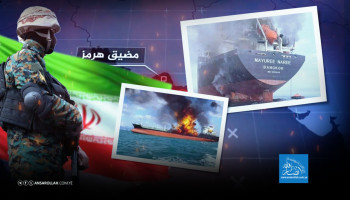
What is now being repeatedly pressed upon the criminal “Trump”—as Iranian strikes begin to yield tangible results—is the increasingly volatile front of the Strait of Hormuz, whose potential closure has cast a dark shadow over global energy markets and raised serious concerns about the wider impact on the world economy.
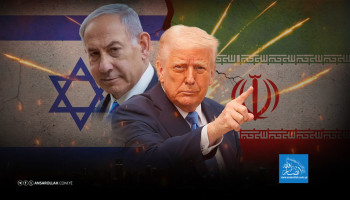
Driven by the same mindset devoid of sound judgment and immersed in illusions of grandeur, Trump has attempted to downplay the Islamic Republic’s ability to influence events in the strategic waterway, claiming that Iran is outside the circle of decision-making over the strait.
At the same time, Trump—widely accused of fueling terrorism around the world—has also sought to promote the claim that he could end any closure of the strait “in a moment,” though he has chosen not to do so.
A Powerful and Resounding Blow
The regional and global repercussions indicate that Iran’s use of the Strait of Hormuz amounted to a powerful and resounding blow, demonstrating the ability of the Islamic nation to act as an influential force in international politics and global trade.
For this very reason, the region—endowed by Allah with immense wealth and strategic geography—has long been the focus of relentless ambitions and competing interests.
Prior to the operation described as terrorist, U.S. military officials had warned President Donald Trump of the possibility that Tehran might move in practice to activate the Strait option, the world’s most critical maritime passage, by disrupting navigation through it.
Although Trump did not entirely rule out such a scenario, the nature of his personality—dominated, according to critics, by arrogance and overconfidence—pushed him toward a risky decision.
According to the Wall Street Journal, Trump justified his gamble to his team based on two assumptions: first, that Tehran would most likely yield before taking the step of closing the strait; and second, that even if it attempted such a move, the U.S. military would be capable of handling the situation, in his estimation.
These calculations were further undermined by the dismissal of repeated warnings issued by the leadership of the Islamic Republic, which had long emphasized its commitment to ensuring the smooth flow of maritime traffic and the uninterrupted passage of trade and energy through the strait.
In mid-February, Admiral Alireza Tangsiri, commander of the Naval Forces of the Islamic Revolutionary Guard Corps, stated clearly that the Strait of Hormuz is under continuous Iranian intelligence surveillance around the clock—covering the sea surface, the airspace above it, and even the waters beneath—stressing that this comprehensive monitoring is aimed at safeguarding the security of this vital waterway.
Out of Step with Events
Trump’s attempts to reassure the world about the Strait of Hormuz appear entirely disconnected from the unfolding reality—something increasingly evident to countries already affected by declining oil and gas supplies and rising energy prices.
Meanwhile, Iran has confidently declared that the strait is fully under the control of its forces “without a single moment of negligence,” stressing that its grip over the strategic waterway remains complete and that vessels linked to the United States and its allies will not be allowed to pass. Between these two narratives, Iran appears to be gaining the upper hand.
As for the psychological warfare traditionally waged by Trump regarding the strait, it has proven largely ineffective. His declared efforts to secure control over the passage have failed to materialize, and he has been unable to escort any tankers despite earlier claims to that effect.
A spokesperson for Khatam al-Anbiya Central Headquarters confirmed that the region had not witnessed the passage of any vessel under American escort.
For his part, Ali Naeini, spokesperson for the Islamic Revolutionary Guard Corps (IRGC), dismissed Trump’s claims—as well as assertions by U.S. Energy Secretary Chris Wright—that the U.S. Navy had successfully escorted an oil tanker through the Strait of Hormuz.
Naeini warned that any movement by the U.S. fleet or its allies would be intercepted, a statement that reportedly prompted Wright to delete his earlier post on the matter. The White House later confirmed in a statement that U.S. forces had not escorted any oil tanker through the strait.
In the same context, Khatam al-Anbiya Headquarters warned oil tankers and commercial vessels against transiting the Strait of Hormuz without complying with the laws of the Islamic Republic under wartime conditions.
In a statement, it stressed that any vessel carrying oil owned by the United States, the Zionist entity, or their hostile allies—or any ship belonging to them—would be considered a legitimate target. Meanwhile, IRGC Navy Commander Admiral Alireza Tangsiri emphasized that any ship seeking to pass through the strait must first obtain permission from Iran.
The Strait’s Closure: A Consequence, Not a Cause
What is certain is that the current reality—marked by security turmoil and a deepening energy crisis—is the direct result of the U.S.–Israeli aggression. From this perspective, the Islamic Republic, which says it is facing a terrorist campaign, did not initially resort to closing the Strait of Hormuz as a first option.
Rather, according to the spokesperson for Khatam al-Anbiya Central Headquarters, it was the actions of the United States and the Zionist entity that pushed the situation toward this outcome.
Iranian officials have repeatedly stressed that Tehran did not close the Strait of Hormuz, but that the passage has effectively been disrupted by the war instigated by Washington and “Israel.”
Iran’s deterrence capability, therefore, has surpassed what the United States—and those who once believed in the overwhelming strength of its “artificial” military—had assumed to be unquestionable facts about its power and ability to act without constraint.
The Islamic Republic, having made its decision, has effectively prevented “even a single liter of oil” from passing through the strategic strait for the benefit of the United States, the occupying “Israeli” entity, and their partners.
In this view, the situation is a result rather than a cause, leaving the aggressors today increasingly accused of bullying behavior and of undermining global security without regard for the consequences.
Meanwhile, Ali Larijani, Secretary of Iran’s Supreme National Security Council, stated that the strait must either remain a gateway open to all or become a choke point for those pursuing war.
At the same time, the Islamic Revolutionary Guard Corps set a condition for countries seeking passage through the strait, calling for the expulsion of the Israeli ambassador from those states.
“Abraham Lincoln” Forced to Retreat
The United States attempted to assert control over the Strait of Hormuz through various means, relying on Donald Trump’s rhetoric and threats involving the aircraft carrier Abraham Lincoln.
However, the U.S. president’s bluster quickly evaporated, and the Lincoln was forced to withdraw following Iranian naval attacks, retreating more than 1,000 kilometers away from Iranian shores before leaving the entire operational zone and heading back toward the United States.
According to Abolfazl Shekarchi, the official spokesperson for Iran’s General Staff of the Armed Forces, the U.S. aircraft carrier USS Abraham Lincoln departed the American operational area after being neutralized.
In the same context, observers say Trump’s actions—between his practical decisions and what critics described as “empty” statements—reached a level that appeared increasingly desperate, as he reportedly appealed to China to intervene and help him escape the strategic pressure surrounding the strait. This came despite U.S. forces carrying out a series of strikes on Iran’s Kharg Island, a key hub for Iranian oil exports to China.
Analysts described the situation as a genuine setback, one that failed to help the U.S. president preserve his standing in the face of his most formidable adversaries.
The Largest Crisis on Record
In an effort to ease the repercussions of the Strait of Hormuz closure and curb soaring oil prices, member states of the International Energy Agency (IEA) have begun releasing 400 million barrels from their strategic reserves—the largest drawdown in the agency’s history—to offset the shortfall caused by declining oil production and shipments from the region.
However, warnings persist that the situation could spiral out of control. Analysts note that this volume would sustain the global market for no more than 20 days, while concerns are mounting that the price of a barrel of oil could surge to $200.
Iranian Foreign Minister Abbas Araghchi stated that “global markets are facing the largest deficit and supply gap in history,” describing the crisis as one that surpasses the combined impact of the 1973 Arab oil embargo, the 1979 Islamic Revolution in Iran, and Iraq’s invasion of Kuwait in 1990.
Meanwhile, Saudi Aramco warned of “catastrophic consequences” for global oil markets if the strait remains closed. The company’s chief executive emphasized that “the current crisis is by far the largest ever faced by the oil and gas sector in the region.”