Published: 27 Ramadan 1447 AH
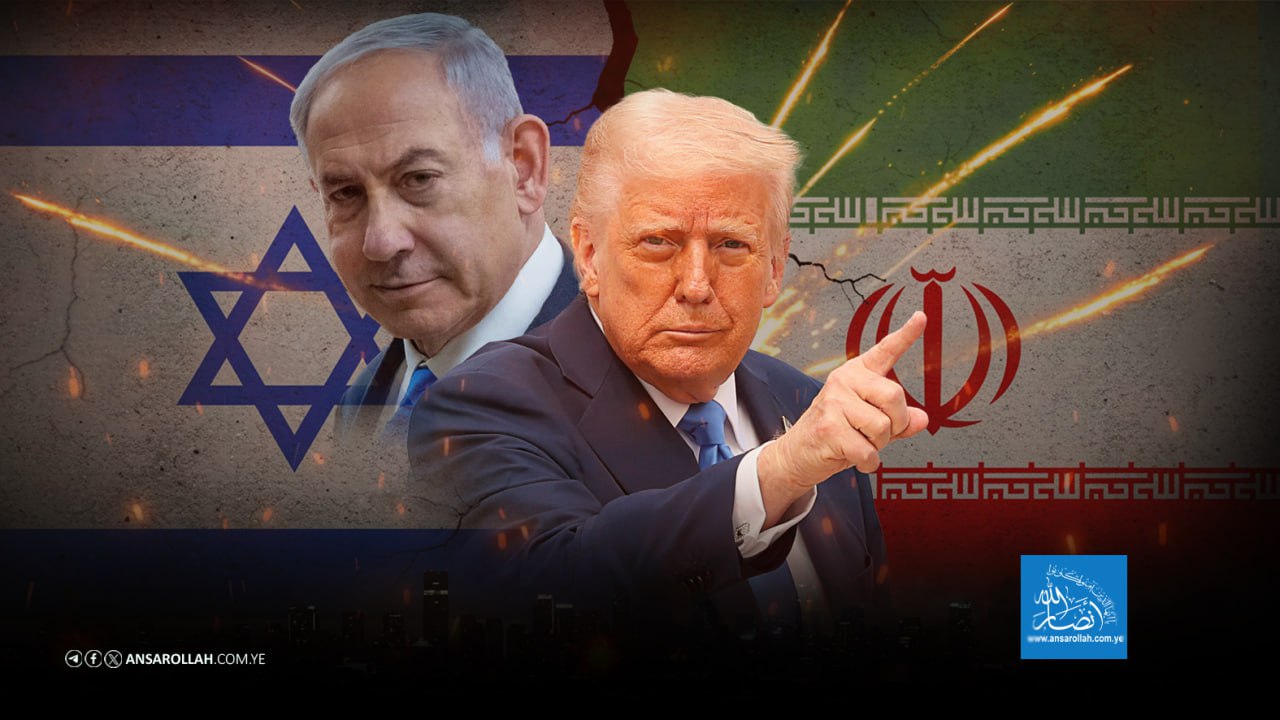
Major wars rarely begin with a sudden moment of bombing. What appears publicly as a dramatic military “explosion” is usually the culmination of a long process of political, economic, military, and media mobilization. In the case of the aggressive war against Iran by the Zionist entity and the United States, the moment of the strike was not the beginning of the war but rather the culmination of a series of cumulative steps aimed at reshaping the balance of deterrence in the region and redefining Iran’s position within the international system.
Understanding this process is essential, because interpreting the war only from the moment of military operations leads to a truncated reading of events that ignores the deeper structure of the conflict. The war against Iran is closely linked to the project of the “New Middle East” and to efforts to prepare the region for Zionist influence. In this sense, the war as a strategic project preceded the moment of its military eruption.
Incitement and Mobilization
The years preceding the war witnessed a systematic effort to reconstruct the image of Iran as a complex threat extending beyond the regional framework. The discussion was no longer limited to the controversial nuclear program. Instead, that program was linked to the development of ballistic missiles, the construction of regional networks of influence—referring to the resistance axis—and the use of asymmetric warfare tools such as drones and cyberattacks.
This narrative expanded the portrayal of the alleged “Iranian threat” from being a danger to a specific entity to being a threat to the “international order”, particularly with regard to freedom of navigation and global energy security.
Biased research centers and Western media outlets contributed significantly to reinforcing this image through repeated reports warning that Iran was approaching a “nuclear threshold” and possessed the ability to “disrupt the arteries of global trade.” At the same time, Iran’s regional presence was seen as a challenge to the influence of the United States and its allies, foremost among them the Zionist entity.
The perceived threat was further amplified with regard to Gulf and Arab states. As a result, the idea of attacking Iran was presented in Western American-Zionist official discourse as a defensive measure but in practice, however, its nature is offensive and aggressive rather than defensive. Throughout previous confrontations—particularly since the events of the al-Aqsa Flood—Iran had been in always been in a defensive position, while the Zionist entity initiated the aggressive war with American support and political cover.
International “Legitimization” of the War
Transitioning to open war required an attempt to construct a framework of international “legitimacy” or at least acceptance. Economic sanctions played a central role in this process, functioning as a dual instrument: a means of pressuring Iran and a tool to convince global public opinion that Iran was refusing to “responsibly integrate” into the international system.
This was accompanied by diplomatic efforts to persuade European and Asian allies of the “danger” of maintaining the status quo, albeit with varying degrees of enthusiasm.
Although a full international consensus for war was never achieved, what could be described as a “gray legitimacy” emerged. This refers to a political environment that allowed states to support or facilitate military operations without formally endorsing them in public discourse or within international institutions.
Countries such as the United Kingdom, France, Germany, and Italy permitted, to varying degrees, the use of military or logistical facilities or airspace as part of their commitments within Western alliances. Meanwhile, several Gulf states—including Bahrain, Qatar, the United Arab Emirates, Kuwait, and Saudi Arabia—as well as Jordan, provided indirect support by hosting military bases or offering operational facilities connected to the American military presence in the region.
Other states adopted more cautious positions. Oman and Turkey, for example, expressed concern about escalation and called for restraint without directly participating in the operations.
Major international powers such as Russia and China opposed the war politically and diplomatically and refused to grant it international legitimacy. However, they did not engage in direct military confrontation to prevent it. This situation reflects a recurring pattern in contemporary conflicts, where the launch of military operations does not require unanimous international approval. Instead, a minimal level of acceptance, silence, or informal support can provide sufficient space for war to proceed under a margin of partial legitimacy.
Military Mobilization and Operational Mapping
Parallel to political maneuvers, a large-scale military redeployment took place across the region under the leadership of the United States in coordination with its allies. The U.S. Navy strengthened its presence in the Gulf and the Arabian Sea by deploying carrier strike groups linked to aircraft carriers such as the USS Dwight D. Eisenhower, along with accompanying naval vessels.
Air defense systems were also reinforced in countries including Saudi Arabia, the United Arab Emirates, Qatar, and Bahrain through the deployment of Patriot batteries and THAAD systems to protect bases and critical infrastructure.
At the same time, the United States, the United Kingdom, and France intensified joint naval exercises in the Persian Gulf and the Gulf of Oman under the banners of “protecting navigation” and “securing energy supplies.”
In the intelligence domain, Washington expanded cooperation with regional partners, including the Zionist occupation entity “Israel” and several Gulf states, to exchange information and monitor Iranian military movements. Cyber operations targeting communications networks and command-and-control structures were also intensified.
These measures were not merely defensive. In practical terms, they contributed to preparing the operational theater and redistributing the balance of military deployment in anticipation of potential confrontation.
In many cases, the overt military strikes were preceded by a series of limited or covert operations designed to test Iran’s response capabilities and gather precise intelligence. Recent years witnessed assassinations targeting prominent military and scientific figures, including the 2020 assassination of Iranian nuclear scientist Mohsen Fakhrizadeh.
In addition, cyberattacks attributed to the United States and Israel targeted sensitive facilities such as the Natanz nuclear facility. Some Iranian-linked military or logistical sites in Syria were also struck through repeated Israeli airstrikes, helping test patterns of response.
These actions formed part of a broader strategy based on gradual pressure and the exploration of vulnerabilities before transitioning to open military confrontation.
Economic Warfare on the Road to Confrontation
Economic warfare constituted a decisive prelude to military confrontation. The sanctions imposed on Iran were not intended solely to change Tehran’s behavior; they were also designed to weaken its capacity to endure a prolonged conflict.
Financial and oil-related measures targeted the state’s main sources of income while attempting to isolate Iran from the global financial system and limit its ability to import both military and civilian technologies.
Pressure also extended to Iran’s economic partners. Companies and states engaging with Tehran faced the threat of secondary sanctions, creating a restrictive economic environment that increased the cost of any potential military confrontation for Iran.
Nevertheless, experience demonstrated that despite their deep impact, the sanctions did not produce a rapid internal collapse. Instead, they pushed Iran to develop strategies of economic circumvention and to establish alternative alliances.
Media and Psychological Warfare
The confrontation was not solely military or economic; it was also a battle over public perception. The idea that confrontation with Iran was inevitable was widely promoted, and the concept of a preventive strike was framed as a less costly option than waiting for Tehran to acquire stronger deterrent capabilities.
This narrative played a role in preparing Western societies to accept the possibility of war and in reducing the political shock when hostilities eventually began.
In response, Iran adopted a discourse centered on resilience, sovereignty, and the rejection of external dictates. This narrative contributed to a degree of internal mobilization and reinforced defense of national independence.
The interaction between these competing narratives created a polarized international environment in which the war became not only a military struggle but also a contest over the interpretation of legitimacy and the right to use force.
The Moment of Explosion
The timing of the war’s outbreak raises complex strategic questions. On one hand, Washington and the Zionist entity believed that the moment was opportune for a strike capable of reducing Iran’s capabilities before they reached deterrence levels that would be difficult to counter.
On the other hand, the decision was linked to domestic considerations, including the need to demonstrate firmness and restore prestige following a series of international crises.
Transformations within the international system also played a major role. Competition with major powers such as China and Russia has intensified, making the "Middle East" a key arena for reaffirming influence.
The timing was therefore not the result of a single factor but of the convergence of military, political, and economic considerations. This convergence produced a decision point at which the cost of waiting—at least from the American and Zionist perspective—appeared higher than the cost of war, even though the outcome was far from guaranteed.
War as a Product of Deterrence Crisis and Global Transition
The preparation for war against Iran reveals a recurring pattern in the history of major international conflicts. When a power that sees itself as dominant—such as the United States at certain moments in the international system—feels that the balance of deterrence is gradually shifting against it, whether due to the rise of a competing regional power or the development of that power’s military and technological capabilities, it tends to resort to force in an attempt to reestablish the “rules of the game” governing the balance of power.
This dynamic emerged when Washington perceived that Iran’s nuclear and missile programs, along with the expansion of allied forces across Iraq, Lebanon, Yemen, and Syria, were beginning to restrict American and Israeli freedom of action in the region.
However, the outcomes of such wars are not measured solely by the scale of military destruction or the number of targets destroyed. They are judged by whether they succeed in producing a new political reality that serves the interests of the power that initiated the war.
If war succeeds in imposing new “security” or political arrangements—such as reducing the adversary’s influence, altering its strategic behavior, or reshaping regional alliances—it can strengthen the position of the dominant power and prolong its international dominance.
If, however, the war produces the opposite effect—strengthening the opponent internally, expanding the scope of the conflict, or draining the economic and military resources of the attacking power—it may accelerate the transition of the international system toward a more complex and multipolar order. In such a scenario, the ability of a single power to impose its will diminishes, while the role of other international and regional actors—such as China, Russia, and emerging powers in the Global South—increases.
In this sense, the war against Iran cannot be understood as an isolated regional event. It is part of deeper transformations in the structure of global power. The war began long before missiles were launched—in decision-making rooms, energy corridors, financial markets, and media platforms. By the time the conflict reached the moment of military eruption, it had already become a struggle over the shape of the emerging international order, not merely a confrontation between two states or alliances.