Ansarollah Website Official Report
Published: 27 Ramadan 1447 AH
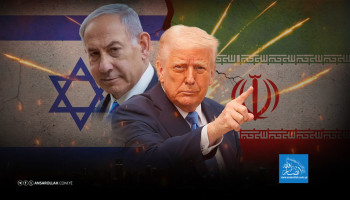
In its third week, the U.S.–Israeli aggression against Iran has shifted from a series of air and missile strikes into an existential test for the American administration and its allies. The conflict is exposing rapidly accelerating strategic fragmentation, suffocating economic repercussions, and growing doubts about the Western alliance’s ability to manage the crisis.
Amid Washington’s confusion, the anxiety of the Israeli enemy entity, the reluctance of European capitals, and Tehran’s resilience, this report—drawing on investigative testimonies from the American street as well as Zionist and American media circles—maps the comprehensive consequences of a campaign that has failed to achieve its objectives and instead deepened the complexity of the regional equation.
Trump’s Dual Dilemma: Bleeding Costs or the Defeat of Withdrawal
According to analyses by the American agency Bloomberg, the constantly shifting explanations by Trump regarding the objectives of the war against Iran have left both allies and adversaries uncertain about what the agency described as the “endgame.”
While the White House initially promoted the operation as a “decisive preemptive strike,” the narrative later shifted to talk of “limited deterrence,” and eventually to public appeals for allies to assist in securing the Strait of Hormuz.
Reuters reported, citing diplomatic sources, that Trump has been appealing to regional states to help shoulder the burden of the aggression, in what appears to be a clear attempt to internationalize the costs and avoid bearing the failure alone. In the same context, The Wall Street Journal reported that the White House is seeking to build a new maritime coalition to address the emerging energy crisis. However, no country has shown enthusiasm for participation, particularly after the resounding failure of two previous U.S. attempts in the Red Sea.
The New York Times summarized the American predicament succinctly: Trump is not facing a choice between victory and defeat, but between escalating losses if the war continues and political and strategic defeat if he withdraws before achieving decisive results. This explains why discussions in Washington now revolve not only around what the strikes are achieving, but around how the war will end and at what domestic cost to the U.S. economy and public opinion.
For its part, the Axios news site described the situation as an “escalation trap,” noting that every new wave of attacks raises the political and military costs. Yet if Trump stops without a decisive change on the ground, Iran will be able to claim that it has imposed a heavy strategic price on the United States. The outlet quoted figures close to Trump expressing growing concern that he may have “overestimated his ability to impose a rapid end to the crisis.”
The American Street Boils: “$7.5 Per Gallon”
While Washington is consumed by complex geopolitical calculations, the average American citizen is experiencing a daily nightmare due to soaring fuel prices. Gasoline prices have jumped by 25 percent in just two weeks, while crude oil remains near the threshold of $100 per barrel.
Virtual field tours documented by U.S. media outlets and social media platforms captured voices reflecting rising anger:
A resident of Texas said:
“Seven and a half dollars per gallon! Are you seeing this, Trump? How high do you want the price to go every week? We’re the ones paying taxes, we’re the ones keeping this country running, and we can’t keep up with this madness.”
A mother from the suburbs of Chicago said:
“I took a picture of the pump: $8.20 per gallon! This is unbelievable. I just filled my car, and prices are so high I can’t even afford groceries or my rent anymore. America has never been worse than it is now.”
A young man from California added:
“Where are all of you who used to talk about how great it was when gasoline prices dropped a few cents under Trump? Where are you now? This war isn’t worth it because we’re the ones paying for it.”
A woman from Florida said:
“He started this war, and he’s the one who should pay for it—but he doesn’t pay from his own pocket. We do. I’m deeply affected, and every time I go to fill my car, I feel like I’m paying part of the cost of his adventure.”
An elderly man from Pennsylvania reflected:
“I thought Trump was the better option… He says this war is for our safety, and I tell him: leave others alone and they won’t bother you.”
The Associated Press summarized the atmosphere by noting that “political unease is rising in Congress over the lack of oversight and the ballooning costs of the war.” Meanwhile, The Washington Post reported that some young voters who had previously supported Trump now feel “regret and betrayal,” as the war has become a tangible daily burden in fuel prices and living costs.
Europe Says “No”: Washington’s Allies Refuse to Rescue It from the “Hormuz” Predicament
In a development reflecting the depth of American isolation, traditional U.S. allies have refused to be drawn into Trump’s requests for assistance in securing the Strait of Hormuz. From Brussels to Tokyo and Canberra, the response has been the same: “This is not our war.”
Kaja Kallas, the European Union’s High Representative for Foreign Affairs, stated that European ministers expressed a “clear desire” to strengthen the naval mission “Aspides” in the Red Sea, but they do not wish “at this time to expand it to include the Strait of Hormuz.”
Germany’s defense minister went even further, publicly asking: “What do we do if the U.S. Navy itself has failed to guarantee maritime security?” The question reflects the essence of the European refusal: a lack of confidence in Washington’s ability to manage the crisis and fear of becoming trapped in a quagmire with no exit.
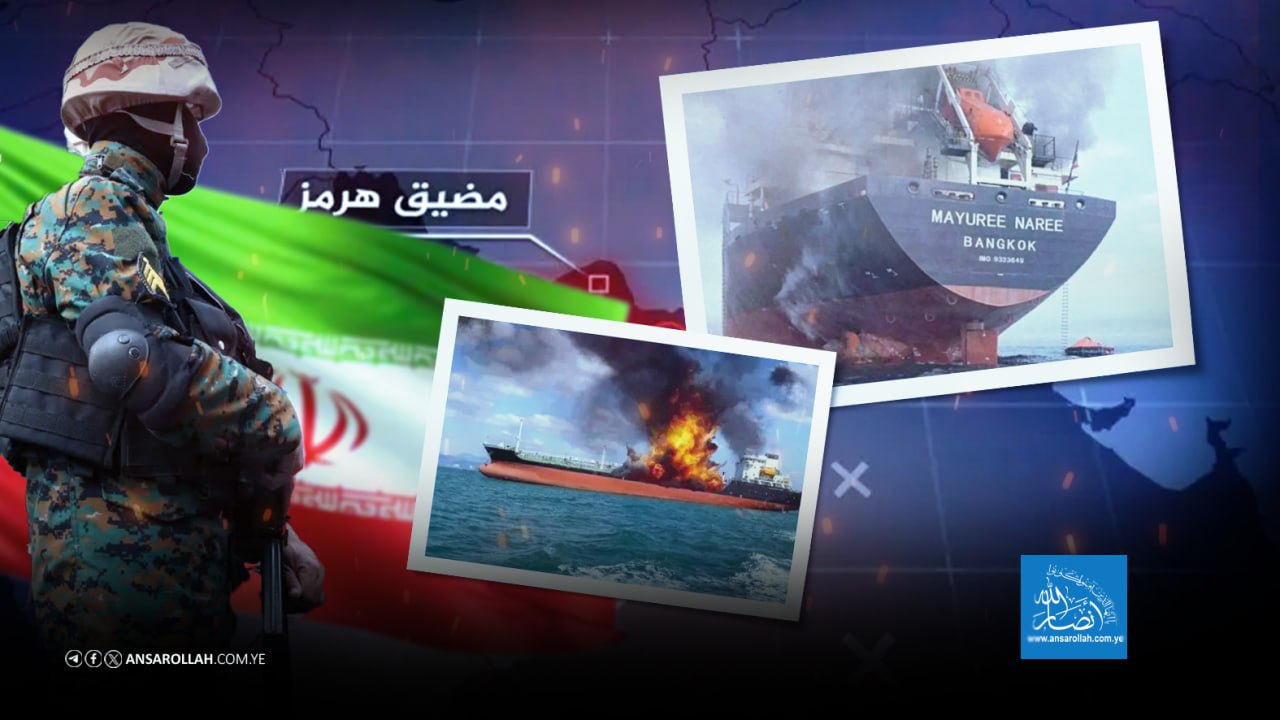
In a particularly clear signal, Iranian Foreign Minister Abbas Araghchi reiterated that “the Strait of Hormuz is already open, but it is closed to countries that attack Iran.” The message underscores Tehran’s position and has rendered Trump’s appeals to China and Gulf states largely ineffective—especially as many recognize that Iran holds the keys to closing the vital artery of global energy.
This perception has been reinforced by the refusal of America’s traditional allies to engage in military operations against Iran under the pretext of reopening the strait.
The Israeli Entity’s Fatal Weakness: “Interceptor Missile Stocks Are Running Out”
Inside the Israeli enemy entity, anxiety is rising over the consequences of the prolonged confrontation with Iran—not only on the security front but also regarding its defensive capabilities.
Zionist media leaks have revealed a “dangerous decline” in interceptor missile stocks after hundreds were launched to intercept Iranian missiles coming from Iran and Lebanon. Although the Israeli army has attempted to deny these reports, the travel of the so-called Director General of the Zionist Ministry of War to Washington to request additional munitions—and the allocation of nearly $800 million for this purpose—suggests that the leaks were not baseless.
Ran Kochav, a commander of the Zionist air defense system, said:
“I tell you that interceptor missiles are limited in number. Even though the aerospace industries are producing around the clock, and despite all efforts, defense is a resource that is running short. There is no permanent immunity… interceptor missiles are not an infinite resource; on the contrary, they are very limited.”
Zionist military analyst Alon Ben David added:
“A report was published stating that the Americans were informed that our interceptor missile stockpile has begun to run out. In response, a senior official said there is no shortage. But it is clear that if we face Iranian missiles every day for dozens of days, this will obviously challenge our capabilities.”
Meanwhile, Zionist experts are watching with growing concern as Iranian confidence rises and new technologies are introduced that pose a fundamental challenge to air defense systems.
Or Heller, a military correspondent for Zionist Channel 12, said:
“The Iranians have shifted to launching missiles with explosive warheads because they are studying the performance of our defense systems. When a warhead explodes over Tel Aviv, Holon, or Ramat Gan, it causes real destruction to apartments, people, and cars.”
Ohad Hemo, a Zionist analyst for Arab affairs, remarked:
“The Iranians’ self-confidence has returned. They are now saying: we will determine the end point. With all due respect to you Americans, we will decide when the war ends. And they are demanding financial compensation and mechanisms to ensure the aggression is not repeated.”
A Paralyzed Life: Sirens and Shelters
In occupied Palestine, life has become a cycle of short warning periods and repeated sheltering. For the past two weeks, Zionist settlers have been forced to spend most hours of the day in shelters, allowed to leave only briefly before being ordered back again.
Iranian missile strikes have halted many aspects of normal life, including the paralysis of Ben Gurion International Airport, the entity’s vital artery. Although the Israeli army admits little and conceals much, fragments from one of the waves (wave 56) wounded at least 140 settlers, according to limited official acknowledgments.
Indicating the precision of Iranian missiles and their ability to cross Arab airspace and reach deep Zionist targets, the Yedioth Ahronoth, a Zionist newspaper reported that one of the residential buildings struck by Iranian cluster missiles is the building used as the residence of the U.S. consul in "Jerusalem". The building was damaged, although the extent of the damage has not been disclosed.
The incident confirms that Iranian cross-border missiles are striking with precision—even in areas adjacent to Palestinian towns.
The Expanding Circle of Fire Targets the American Presence
Iran’s ability to respond is not limited to the Israeli entity; it also extends to American support centers across the region, as part of a clear strategy to exhaust the U.S. military presence and push it out of the region entirely.
From Al Dhafra base in the United Arab Emirates, to Sheikh Isa and Juffair bases in Bahrain, and even to the hiding places of American soldiers in towers, hotels, and shelters across Gulf capitals, Iranian retaliatory fire has pursued the nodes of U.S. military presence.
To execute this strategy, Tehran is using an advanced mix of suicide drones and medium-range missiles, supported by precise intelligence capabilities that make every American base a confirmed target. According to reports, Iranian operations have already succeeded in destroying all advanced American surveillance and reconnaissance centers in the region.
This expansion of the response reflects an Iranian realization that pressuring the U.S. presence in the region may be more effective in forcing Washington to reconsider its calculations than focusing exclusively on targeting the Israeli entity.
How the Aggression Became a Strategic Trap
What began as a calculated U.S.–Israeli campaign to weaken Iran has evolved into a harsh test of Western strategy in the region. While Washington sinks into a quagmire of rising costs and allied refusal, the Israeli enemy entity faces existential challenges to its defensive capabilities, and Tehran emerges as a force capable of imposing a new equation: whoever attacks it will pay the price.
A growing reality echoed in global decision-making circles—not just in media commentary—is that American confusion over both the initiation and conclusion of the aggression is increasingly affecting the U.S. domestic front. The war has become a daily burden reflected in fuel prices, living costs, and the mood of voters who are beginning to ask a simple question: “Why are we here?”
With American objectives shifting by the hour and failing to align with operational realities on the ground, the central question is no longer “What are the strikes achieving?” but rather “How will this war end—and who will pay the price for its ending?”
Until that moment arrives, the Strait of Hormuz remains a symbol of Iran’s ability to alter the balance of deterrence—and a key that could be closed by the one who holds it if the aggression continues.
In a world where energy grows scarcer and certainty more elusive, this may be the harshest lesson Washington and its allies are learning: that many of America’s wars are launched only for it to lose them.