
Ansarollah Website Official Report
Published: 21 Dhu al-Qi'dah 1447 AH
In 1901, American writer Mark Twain sarcastically wrote: “As for a flag for the Province of the Philippines, we can use our usual flag, paint the white stripes black, and replace the stars with skull and crossbones.” Through those words, Twain condemned the massacres committed by his country in the Philippines, where between 200,000 and one million Filipinos were killed under the pretext of “civilizing the savages.” More than a century later, the United States continues to operate according to the same bloody logic, though with more sophisticated tools and more carefully crafted narratives.
Land Piracy: How America Seized Half a Continent
When the United States declared independence in 1776, it occupied only a small strip along the eastern coast of North America, covering no more than 800,000 square kilometers. Yet its appetite for expansion, was never satisfied.
During the Mexican-American War (1846–1848), Washington launched its first major war beyond its borders and seized approximately 2.3 million square kilometers of Mexican territory, including what are today the states of Texas, California, Arizona, and New Mexico. Mexicans who remained on those lands suddenly became foreigners in their own homeland and were subjected to persecution and ethnic cleansing.
At the end of the nineteenth century, the collapsing Spanish Empire became the next target. The Spanish-American War of 1898 marked Washington’s first colonial war outside the continent, resulting in U.S. control over Cuba, Puerto Rico, the Philippines, and Guam, while Hawaii was forcibly annexed. These wars are blatant acts of theft against sovereign nations under slogans such as “Manifest Destiny” and “the White Man’s Burden.”
Systematic Massacres
American massacres were not limited to one country. Beginning with Native Americans, at least 10 million indigenous people were killed in one of the largest genocides in history. The brutality of the U.S. military continued across multiple wars and regions.
The Philippine-American War (1899–1902)
Between 200,000 and one million Filipinos, most of them civilians, were killed. American soldiers used the “water cure” torture method to force prisoners to reveal the locations of those Washington labeled as “rebels,” while the island of Luzon was transformed into a mass grave.
The Korean War (1950–1953)
More than three million Korean civilians, most of them women, children, and the elderly, were killed. The famous No Gun Ri massacre, in which American aircraft bombed Korean refugees, is presented as only one example among hundreds of massacres.
The Vietnam War (1955–1975)
More than two million Vietnamese civilians were killed. The U.S. military used napalm, nerve gas, and Agent Orange, a chemical said to have caused cancer and severe birth defects that continue to affect generations to this day.
The Iraq War (2003–2011)
More than one million Iraqi civilians were killed and the alleged weapons of mass destruction used as justification for the invasion were never found. Iraq was destroyed for the benefit of American oil companies and Pentagon contractors.
The War in Afghanistan (2001–2021)
Hundreds of thousands of civilians were killed, while 38 million people were displaced or became refugees.
750 American Bases in 80 Countries: Permanent Occupation Under the Banner of “Defense”
The United States currently maintains approximately 750 military bases across 80 countries and territories worldwide, nearly three times the number of its embassies.
In Japan alone, dozens of bases transformed Okinawa into a “floating warship.” Residents of Okinawa have suffered for decades from noise pollution, environmental crimes, and sexual assaults committed by American soldiers, while the Japanese government, bound by a security treaty with Washington, remains unable to act.
In Europe, American bases are spread across Germany, Italy, Turkey, and Britain, and are used as tools of pressure even against U.S. allies. In the Middle East, bases are located in Qatar, the UAE, Bahrain, Kuwait, Saudi Arabia, Syria, and Libya.
Environmental Crimes
American military bases are becoming environmental disasters in host countries.
In Okinawa, Japan, 270 environmental pollution incidents were reportedly recorded between 2002 and 2016, most of which were never disclosed by the Japanese government.
In South Korea, measurements conducted in May 2022 revealed severe contamination of soil and groundwater at the returned Yongsan base. Hydrocarbon levels exceeded standards by 29 times, benzene by 3.4 times, and phenol by 2.8 times.
In Vietnam, more than 350,000 tons of unexploded bombs and mines remain scattered across the country, with estimates suggesting that complete removal could take 300 years.
During NATO’s bombing of Yugoslavia under U.S. leadership, depleted uranium shells were used, resulting in sharp increases in cancer and leukemia cases among local populations.
Torture Prisons and Black Sites: Where Law Does Not Exist
Abu Ghraib: A Hell Created by America
At Abu Ghraib prison west of Baghdad, American soldiers embodied every form of human brutality. Former Iraqi detainee Badu Al-Hamad described life there as “hell,” with barely sufficient food and months of solitary confinement under extreme heat or freezing cold.
The worst abuses, included systematic torture: stripping prisoners naked, forcing them to pile on top of one another unclothed, and threatening them with rape and sexual humiliation. American forces even placed detained police officers alongside extremists to subject them to torture at their hands.
Guantanamo Bay: A Black Spot in the Caribbean
Since 2002, the United States has operated the Guantanamo Bay detention facility in Cuba, where more than 700 detainees, most of them Muslims, were held outside any legal framework. Interrogators used methods amounting to drowning simulations and electric shock torture.
The desecration of the Quran was done through throwing copies into toilets, tearing them apart, and burning them. In a blatant violation of Islamic sensitivities, female guards were reportedly assigned to monitor naked male prisoners.
The “Costs of War” project revealed in early 2022 the existence of “black sites” in at least 54 countries, where more than 100,000 people, including women and children, were detained.
Overthrowing Legitimate Governments: A History of Coups and Puppet Regimes
Academic Lindsay O'Rourke documents in her book "Covert Regime Change", which documents at least 64 covert U.S. regime change operations between 1947 and 1989, in addition to six overt operations targeting both allies and enemies, democracies and dictatorships alike.
Iran, 1953
The CIA overthrew the democratically elected government of Prime Minister Mohammad Mosaddegh after he nationalized Iranian oil, restoring the Shah to power and keeping Iranian oil under American influence until the 1979 Islamic Revolution.
Guatemala, 1954
Washington overthrew the elected government of Jacobo Árbenz because his agrarian reform threatened the lands of the United Fruit Company, in which members of the American administration held interests.
Chile, 1973
The United States supported the coup led by General Augusto Pinochet that overthrew elected President Salvador Allende and led to the deaths of thousands of Chileans.
Regime Change Through Direct Force
Beyond covert coups, Washington openly invaded countries under weak or fabricated pretexts to overthrow governments:
-
Haiti (1994 and 2004)
-
Afghanistan (2001) to overthrow the Taliban
-
Iraq (2003) to topple Saddam Hussein over alleged weapons of mass destruction that were never found
-
Libya (2011) to remove Muammar Gaddafi under the slogan of the “Responsibility to Protect,” leaving Libya in chaos and violence
-
Syria (2011–2025), where support for armed groups led to the fall of the Assad government and extremist groups taking power
-
Yemen (2015), through support for the military coalition against Yemen following the loss of American interests
-
Venezuela (2025), where the Venezuelan president and his wife were arrested and American decisions imposed on the ruling authority
-
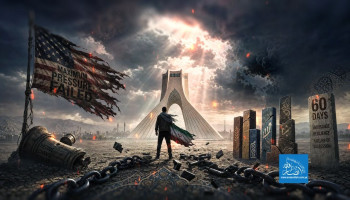
Iran (2026), where the aggression and the killing of military and civilian leaders were intended to overthrow the government but ultimately failed
Violating Sovereignty and International Law: A State Above the Law
“Freedom of Navigation” as a Pretext for Piracy
Since 1979, the U.S. Navy has carried out what it calls “freedom of navigation” operations to challenge the sovereignty of coastal states. Between 1990 and 2021, more than 70 countries were reportedly targeted, including allies such as Japan, Saudi Arabia, and Italy.
American warships enter territorial waters and exclusive economic zones without prior permission, challenging international law, despite the fact that the United States itself has not ratified the United Nations Convention on the Law of the Sea.
Diplomatic Immunity for Killers
Researcher Asif Efrat revealed that American soldiers abroad committed crimes at unprecedented levels. In South Korea, the non-prosecution rate for crimes committed by U.S. soldiers reportedly reaches 70.7%, rising to 81.3% in violent crimes such as murder, rape, and theft.
Between 1954 and 1970, more than 360,000 legal cases involving American military personnel and their families were reportedly recorded, while local courts reviewed only one-third of them.
Withdrawal from International Treaties
The United States has withdrawn from 17 major international organizations and agreements since the 1980s, including UNESCO, the Human Rights Council, the World Health Organization, the Paris Climate Agreement, the Iran nuclear deal, the Intermediate-Range Nuclear Forces Treaty, and the Open Skies Treaty.
Even when administrations change and the country formally rejoins some organizations, the doctrine of “America First” continues to dominate U.S. policy.
Biological Weapons and Human Experiments
In September 2022, the Russian delegation in Geneva revealed documents indicating that the United States violated the Biological Weapons Convention.
The documents referred to an American patent for a “toxic mosquito aerial release system,” involving drones used to spread mosquitoes carrying toxins into designated areas in order to infect populations with deadly diseases at low cost.
Washington has for years conducted dangerous biological experiments in South Korea and human experimentation within the United States while opposing the creation of an international verification mechanism.
The Suicide of 30,000 American Soldiers
American soldiers sent to fight in Afghanistan and Iraq returned psychologically devastated. More than 30,000 U.S. veterans committed suicide following the post-September 11 wars, a figure four times higher than the number killed in combat.
Rates of post-traumatic stress disorder, drug and alcohol addiction, divorce, and child abuse among veterans are significantly higher than among the general population.
“The Empire of Evil Bites Its Own Tail”
The is the reality of the United States : the greatest aggressor against freedom and democracy in human history. It has stole land, massacred peoples, destroyed environments, tortured prisoners, overthrew governments, violated laws, and spreaded terror across the globe.
History’s greatest lesson is that evil does not go unpunished. The United States is now losing its prestige and suffering repeated defeats, particularly following the failed aggression against Iran and Yemen. Those confrontations, dealt severe blows to Washington’s reputation and forced the United States to seek de-escalation agreements with its adversaries without being able to impose its demands.