Ansar Allah website - Report - 4 Rabi' al-Awwal 1448 AH
Field developments confirm that the United States and its ally Saudi Arabia are undergoing their harshest strategic and existential test, having moved beyond a state of “being bogged down” in the repercussions of their misguided political and military decisions. The confrontation has moved beyond the arenas of direct engagement to strike at the daily details of the economic and financial structures in both Washington and Riyadh. The battle is no longer merely consuming military arsenals; it has become a severe financial drain threatening the financial stability and immediate budgets of both countries, amid a state of political defiance as they wait for a miracle that never comes.
Military analyses show that six months of protracted operations against the Islamic Republic have caused a sharp setback to the American standing in the international consciousness. The problem is no longer merely a political embarrassment for the American administration; it is now striking at the very core of the United States’ alleged superiority, represented by its military might. During this period, an ammunition and direct-capabilities attrition crisis has emerged, particularly involving Patriot interceptors, THAAD systems, and Tomahawk offensive missiles. This has negatively affected the supply situation and the ability to maintain the smooth logistical operation of American bases during the exhausting confrontation with Iran.
The military bases have been paralyzed, turning logistical activity into a genuine nightmare with an enormous financial and operational cost. Following the destruction of the naval logistics base in Bahrain, “warships and naval crews deployed in the Arabian Sea and Gulf of Oman have been forced to receive fuel and food supplies at sea every five days. Supply ships have been compelled to undertake arduous journeys of up to 2,200 miles toward Diego Garcia in the Indian Ocean, or 3,700 miles toward Singapore through the congested Strait of Malacca. This consumes huge amounts of time and fuel and leaves the forces in a state of exhaustion.”
Erosion of the Professional American Command Structure
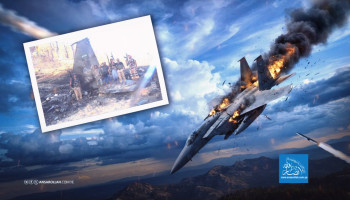
On the level of the technological and field confrontation, the new generation of advanced Iranian missiles, such as the “Kheibar Shekan” fortress-breaker missile, has shocked Western intelligence agencies. Thanks to the missile’s ability to maneuver during the terminal phase and alter its trajectory to strike critical targets, advanced defense systems have been penetrated and pivotal bases such as Muwaffaq Salti Air Base in Jordan, as well as other bases in Bahrain and Saudi Arabia, have been targeted. This has turned the American military deployment network into a security burden after it had been a source of imposing influence.
The deterioration did not stop at the boundaries of the logistical battlefield and technological confrontation; rather, it penetrated the institutional core of the U.S. Department of Defense (the Pentagon), which found itself in an unprecedented state of doubt and confusion. The Lebanese newspaper Al-Binaa reports that “fear of leaks concerning ammunition shortages and military commanders’ reservations about prolonging the war prompted federal investigations to subject around 50 officers from the Joint Chiefs of Staff and senior personnel to polygraph tests. The measures also included the seizure of electronic devices and searches of journalists’ homes, in what former officials described as a state of toxic suspicion and a deepening lack of trust in the leadership of Secretary Pete Hegseth.”
This strict approach, along with the dismissal of around 24 generals and admirals, also caused the erosion of the professional command structure, culminating in the resignation of Army Secretary Dan Driscoll amid sharp disagreements over technological modernization programs for drone networks and missile defense. This created a critical leadership vacuum that is obstructing the approval of defense budgets and prompting members of Capitol Hill to express serious concerns over the military’s readiness.
These administrative crises coincided with the emergence of psychological and field exhaustion among the overstretched forces, which were pushed toward entertainment activities to lift the spirits of personnel whose morale had collapsed after long months of siege and intense anticipation off the Iranian shores. Circulating footage of the aircraft carrier Abraham Lincoln upon its arrival in Thailand also revealed its poor and deteriorated condition.
Drawing Down Reserves and Delaying Projects
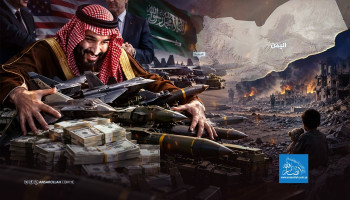
In parallel with this American military and financial bleeding, Saudi Arabia finds itself facing an unprecedented economic and logistical dilemma striking at the artery of its financial existence, namely the halt in crude oil exports and cash flows, following the imposition by the Yemeni Armed Forces of a strict blockade on its maritime navigation in the Red Sea and Bab al-Mandab, due to its intransigence and insistence on continuing the blockade imposed on the Yemeni people for 12 years.
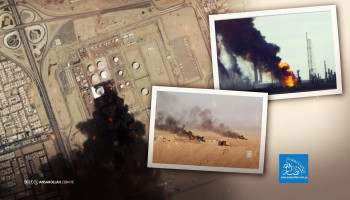
Saudi oil production has contracted sharply amid the absence of opportunities to export it. Aramco attempted to circumvent the maritime ban by increasing pumping rates through the East-West pipeline toward the port of Yanbu on the Red Sea, with the aim of transporting around 5 million barrels per day. However, the extension of pressure and direct strikes to shipping near Yanbu forced the company to retreat and reduce the flow. Even alternative solutions involving the transfer of crude to Egypt’s SUMED pipeline appeared to be an emergency measure that was not spared the additional costs and extended transit times.
This sharp contraction in exports has, naturally, produced serious financial repercussions. Revenues that had been feeding the state’s general budget and the major investment projects under “Vision 2030” have halted, forcing the Saudi government to direct financial spending toward borrowing, drawing down direct reserves, and postponing some economic transformation projects in order to finance the current deficit and high operating bills. Direct losses have also increased as marine insurance costs have surged and international companies have become reluctant to operate in an unsafe environment.
The Only Realistic Option Before Riyadh
In the military and field assessment, the Yemeni and Iranian forces have proven that they possess leverage capable of influencing both American and Saudi decision-making. Strategic analyses confirm that the two armies’ ability to directly close, or comprehensively threaten, Bab al-Mandab and the Strait of Hormuz has inflicted severe damage on global energy markets. It has also affected the budgets of American households as gasoline and diesel prices have risen domestically, which has now become a direct political and financial threat to the American administration and the ruling bloc as electoral deadlines approach.
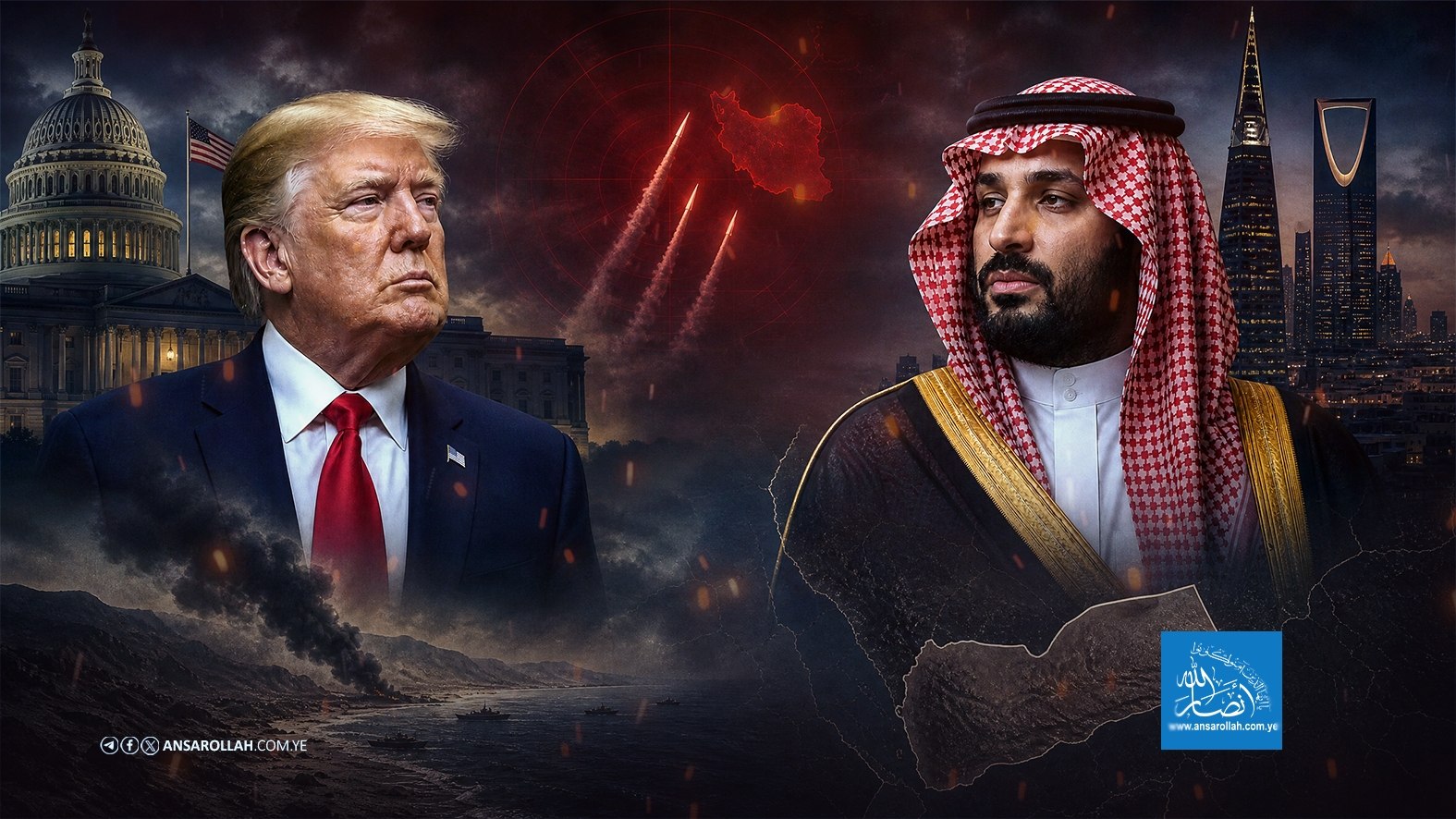
Within this complex context, the Saudi leadership finds itself facing a strategic exposure. It recognizes that continuing the war without direct military cover has become extremely costly and fraught with economic risks. While Riyadh seeks to drag Washington into leading a new military campaign against Yemen, the American administration is drawing clear red lines and firm limits on any contribution to the Yemen battle.
In response to Mohammed bin Salman’s request for American intervention and a direct war against Yemen, Washington has limited its role to providing intelligence and logistical support, refusing to deploy its forces or allow them to become mired in the Yemeni mud, in order to avoid opening another war of attrition. This places Washington and Riyadh before a clear reality: continuing to persist in defiance and attempting to drag the Yemenis into internal fighting, or relying on the continuation of the blockade, will not change the reality on the ground. “The only realistic option remaining before Riyadh to ensure the safety of its infrastructure and the flow of its oil exports is to move directly toward a comprehensive agreement with Sana’a to lift the blockade and end the war.”
When the Inability to Continue Equals the Bitterness of Withdrawal
The comprehensive reading of the field reality goes beyond the traditional concept of a “state-versus-state” war, confirming that the strategy adopted by the Jihad and Resistance Axis has succeeded in “dismantling the regional presence network” of American forces and stripping their bases of their offensive function. It has also intensified the direct material losses suffered by their supporters, while the American military deployment spread across the Gulf and the Middle East has become a collection of exposed targets.
A study by writer Shaher Al-Shaher, published in the Lebanese newspaper Al-Binaa, summarizes the final picture of the dual bleeding, stating:
“In light of the failure of maximum-pressure policies, and the insistence of the fronts opposing Washington’s presence on continuing the battle to sever logistical and economic arteries, the United States and its allies are moving rapidly toward a point of strategic collapse; where the inability to continue fighting a war without prospects becomes equal to the bitterness of forced withdrawal and the relinquishing of the geography of influence.”