Published: Shawwal 20, 1447 AH
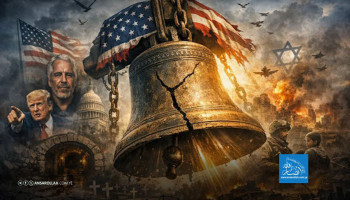
For decades, global audiences have watched a familiar cinematic script unfold: American heroes descending into the heart of danger, defying the impossible, and rescuing their comrades from the grip of the enemy in unmatched acts of bravery. It is a tightly crafted narrative—consistently victorious and fueled by Hollywood mythology—that has shaped a perception of an “invincible power.” But what happens when this narrative begins to crack? What if what Washington described as “one of the most daring and complex rescue operations” in the history of American special forces turns into a nightmare of wreckage, losses, and a media scandal exposing the scale of misinformation and the reality of failure?
From the deserts of Isfahan, where the wreckage of American aircraft and helicopters lies scattered, echoes of “Black Friday” and “Bloody Sunday” continue to resonate. These events reveal how senior officials in Washington were forced to promote a desperate “needle in a haystack” narrative, accompanied by a disinformation campaign led by the Central Intelligence Agency, in an attempt to cover up a strategic defeat. The Intercept mockingly likened the episode to a real-life version of “Black Hawk Down,” while major Western newspapers began questioning a “crisis of the American narrative” amid the growing strength of Iran.
.jpg)
In a world where narratives shape public opinion, America has long relied on its vast media and Hollywood machinery to craft heroic illusions and dramatic turning points reminiscent of action films. Yet history, with its precise record, neither flatters nor forgives. In the mountains of Isfahan—where fragments of American myths now lie shattered—a new chapter has been written, echoing the wreckage of Tabas in the past. The contrast is stark between fictional superhero films that inspired the American narrative and the realities of battlefield dynamics shaped by Iranian capability.
While Washington described the incident as “one of the most daring and complex rescue operations” in its history, the Iranian narrative presents it as further evidence of American losses and the erosion of its reputation and standing. Regardless of attempts by Trump to cloak the failure in a Hollywood-style narrative—through symbolic messaging and participation in a broader disinformation effort—the images of wreckage in Isfahan impose an undeniable truth: today’s crisis for Trump mirrors the catastrophe that once confronted Jimmy Carter, and “America will not return to greatness” as Trump had promised.
The U.S. Air Force’s “Black Friday”
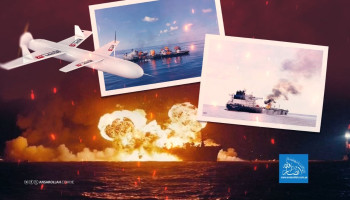
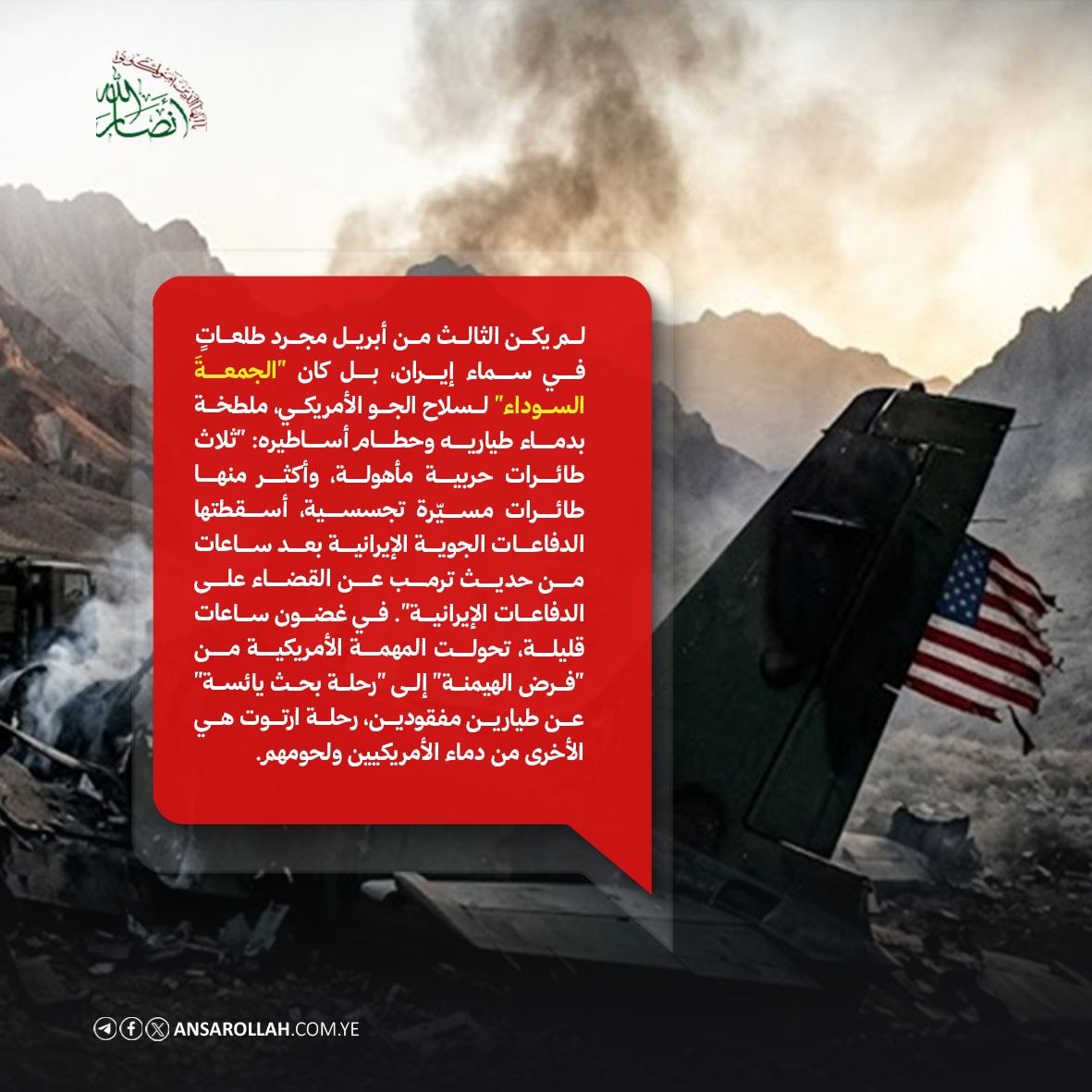
April 3 was not merely another day of aerial operations over Iran; it became what observers described as a “Black Friday” for the U.S. Air Force, marked by bloodshed and the collapse of its perceived superiority. Iranian air defenses reportedly downed three manned warplanes and several reconnaissance drones within hours—despite Trump’s prior claims that Iranian air defense capabilities had been eliminated.
The sequence began with the collapse of a F-35 stealth fighter, while American accounts instead referred to an F-15 Strike Eagle—seen by critics as an attempt to soften the psychological impact. Shortly thereafter, reports emerged that an A-10 Thunderbolt had been hit near the strategically vital Strait of Hormuz. Within a few hours, the American mission had transformed from "imposing dominance" to a desperate search for missing pilots.
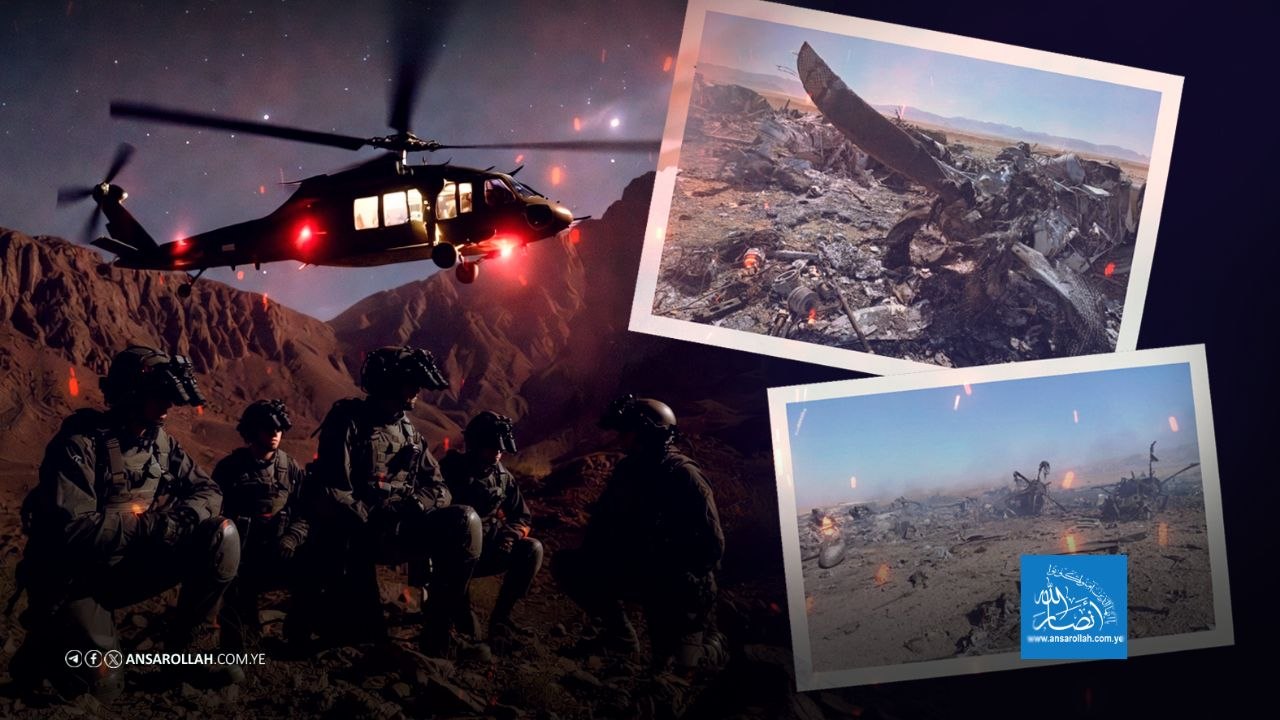
U.S. military command deployed Black Hawk helicopters for search-and-rescue operations. On the ground, Iranian civilians—including farmers and tribal groups—alongside Basij forces, the Revolutionary Guard, and the regular army, mobilized to defend their territory, engaging with the incoming helicopters in clashes that continued through Sunday. Washington soon realized that the mission was no longer a simple recovery effort, but a confrontation on terrain that knows how to break invaders. Despite withholding many details, America was ultimately compelled to acknowledge losses highlighted by Iranian accounts and supported by visual evidence.
A “Race Against Time” or a Failed Hollywood Script?
As initial rescue attempts failed, Washington escalated its efforts by deploying specialized aircraft such as the HC-130J, as confirmed by flight tracking data and later American reports. In a remark reflecting the shift in priorities, Iranian Parliament Speaker Mohammad Bagher Ghalibaf stated that the war had “shifted from regime change to a mission to search for pilots.”
The operation—described by American media as a “life-or-death race”—lasted two days and involved approximately 100 special forces personnel, multiple aircraft, and coordinated intelligence efforts between America and the Zionist entity, all aimed at locating a wounded navigator.
.jpg)
Military experts described the situation as “the worst possible scenario for the Pentagon,” noting that the capture of a pilot would have provided Iran with a powerful propaganda tool and leverage during the conflict. In response, the CIA launched an intensive disinformation campaign, spreading false reports within Iran claiming that the pilot had already been found and was being transported out of the country.
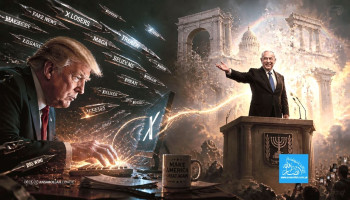
While Politico suggested that the tactic bought “valuable time,” The Intercept mocked the narrative, highlighting the repeated use of the phrase “needle in a haystack” across major outlets such as The New York Times, Axios, and CBS News. Mocking the media's blind repetition of the same phrase attributed to an "unnamed senior administration official," The Intercept report began: "Everyone told the exact same story at the exact same time, and they all relied on the same liars who got us into this mess."
The dramatic account of a pilot surviving for more than 24 hours in hiding, traversing mountainous terrain, and sheltering in deep rock crevices was presented by Trump and defense officials as evidence of resilience and superiority. Critics, however, viewed it as proof of a failure to secure operational control and a reliance on transparent intelligence tactics to manage a worsening crisis. Even the Associated Press adopted the narrative by describing the mission as a “daring rescue,” while emotionally charged details—such as the pilot allegedly transmitting “God is good” before Easter—were criticized as resembling scripted drama rather than credible reporting.
Heavy Losses
Despite extensive preparation and intelligence coordination, and despite the reluctance of major American newspapers to fully detail the failures of the first two rescue attempts, The Wall Street Journal acknowledged the high cost. In the first attempt, Iranian forces struck two helicopters, injuring their crews and forcing them to withdraw for treatment. In the second attempt, American forces encountered a different problem: two MC-130J aircraft landed at a temporary base inside Iran, but their front wheels sank into the ground, leaving them unable to take off again.
Images released by the Revolutionary Guard depicted the confrontation, emphasizing Iranian resistance and countering Hollywood-style portrayals. According to American accounts, forces were ultimately forced to destroy abandoned equipment—including two MC-130J aircraft, each valued at over $100 million, and two helicopters—to prevent sensitive technology from falling into Iranian hands. Following these failures, a contingency plan was implemented, deploying three smaller aircraft carrying specialized teams.
Regardless of differing narratives, the scale of losses represents a minimum baseline that cannot be denied. Beyond material damage and casualties, the greatest cost lies in the erosion of American credibility and global standing—described by Iranian Foreign Minister Abbas Araghchi as “irreparable.”
.jpg)
Strategic Consequences
The Intercept further criticized the absence of skepticism in mainstream media coverage, noting that the same outlets had previously supported narratives leading up to the wars in Iraq and Afghanistan. It highlighted a contradiction: just days before the aircraft was downed, Trump claimed Iran had been left “without any anti-aircraft capabilities,” yet the rescue operation itself demonstrated Iran’s continued ability to shoot down U.S. aircraft.
Meanwhile, reports and leaked images from bases in Kuwait indicated additional Iranian strikes, including damage to a Chinook helicopter and earlier attacks affecting key surveillance systems in Saudi Arabia. Complaints from Gulf states about what they described as “Iranian aggression” which is ironic in light of their own involvement.
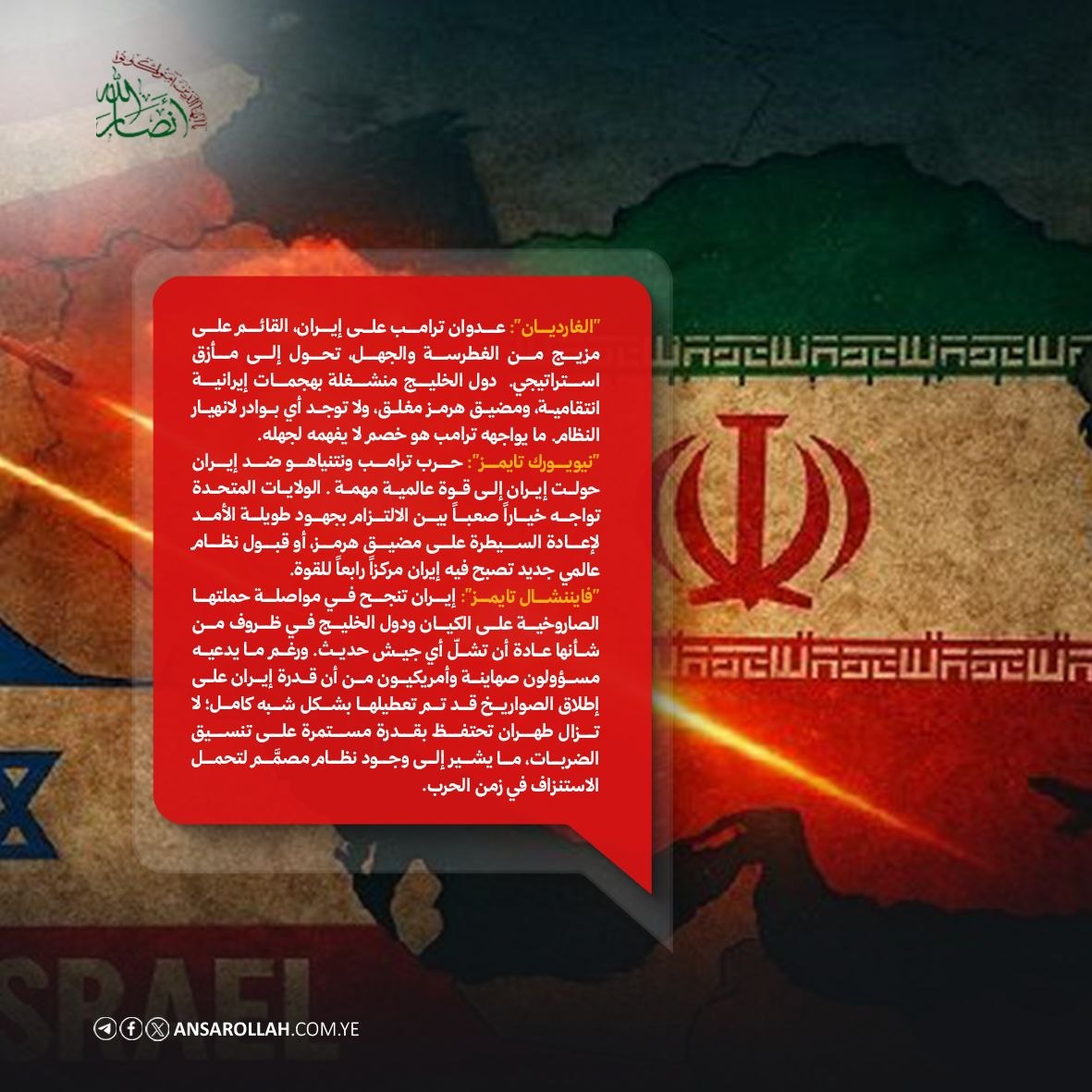
The Guardian described Trump’s approach—based on “a mix of arrogance and ignorance”—as leading to a strategic impasse, noting ongoing Iranian retaliatory strikes, the closure of the Strait of Hormuz, and the absence of any signs of regime collapse. The New York Times, citing University of Chicago political scientist Robert A. Pape, reported that the conflict had elevated Iran into a significant global power, leaving America facing a difficult choice: commit to a prolonged effort to reassert control or accept a new global order in which Iran becomes a central power.
The Financial Times also acknowledged Iran’s continued ability to carry out coordinated missile strikes under conditions that would typically paralyze modern militaries, suggesting the existence of a resilient system designed to withstand prolonged warfare.
A Collapsing Narrative
The unfolding events highlight a widening gap between the narrative Washington seeks to project and the realities on the ground. The Iranian experience—particularly the recent operation—demonstrates a clear distinction between Hollywood fiction and real warfare. America, regardless of its power, cannot restore its image of greatness except in the perception of those who fail to recognize their own agency.
Between the wreckage of Tabas and that of Isfahan, a single conclusion emerges: America’s latest collapse is not merely the loss of aircraft, but the collapse of an entire myth. For Iran, each round of confrontation reinforces the adversary’s miscalculation of Iranian resilience and capabilities—qualities that have asserted themselves even against the world’s most powerful military.
Ultimately, the events affirm that reality is stronger than any Hollywood script. The architects of past wars—whose narratives were once amplified by major media—appear not to have learned from history. This time, the narrative is being reshaped on the ground, challenging the scale and influence of American storytelling and asserting a new balance of power.