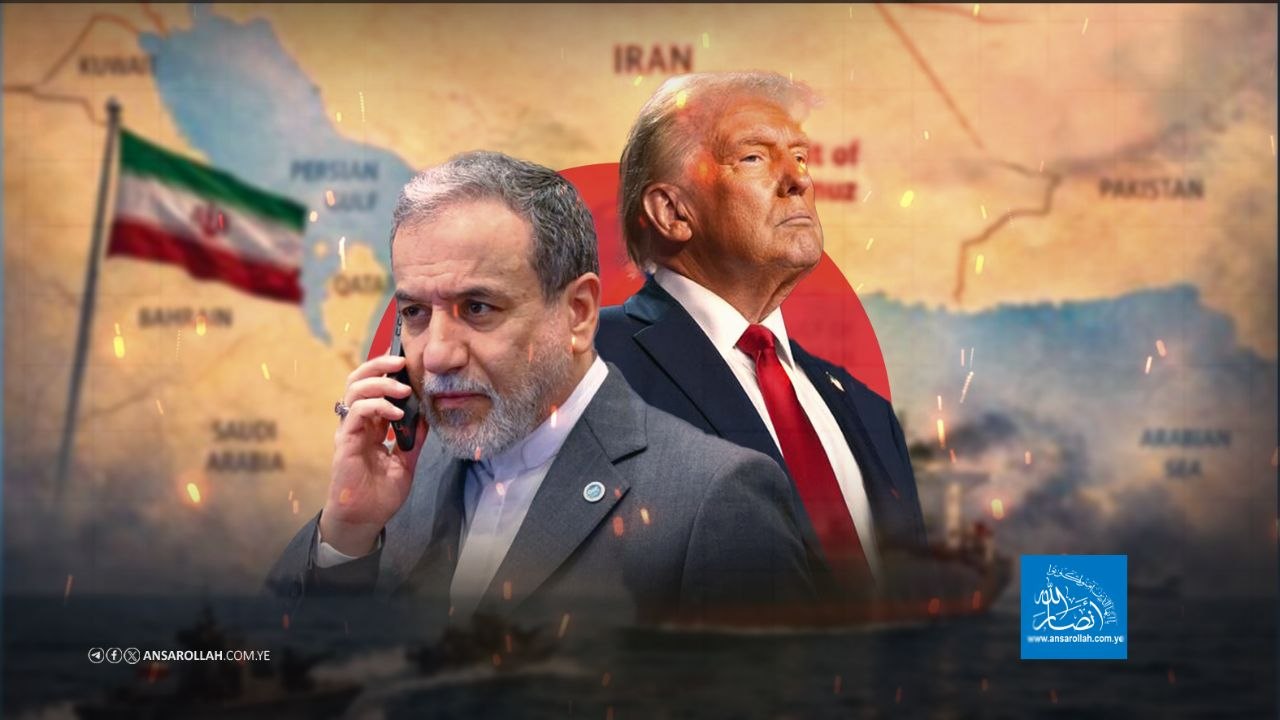
Amid the ongoing campaign of U.S.-Israeli aggression and Washington’s unabated arrogance in the region, the confrontation entered a new and more dangerous phase of escalation in August 2026.
Following its failure on the battlefield and its setbacks at sea, Washington reverted to its familiar criminal methods, launching an economic strangulation campaign and imposing an unprecedented and unjust siege.
This malign shift amounted to an acknowledgment of defeat after more than 170 days of aggression, launched by Washington and “Tel Aviv” on February 28, 2026, targeting the leadership and infrastructure of the Islamic Republic.
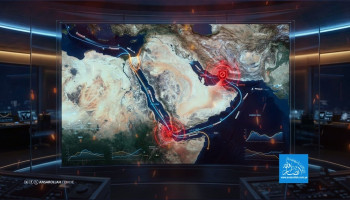
Faced with stalled negotiations and attempts to circumvent the confrontation through the “Memorandum of Understanding” in Islamabad, Tehran delivered a decisive military response and a calculated political decision, ultimately moving toward the strategic decision to close the Strait of Hormuz and shatter U.S. arrogance.
The Dimensions of the Announcement and the Foundations of the Comprehensive Economic War
With its military options collapsing and the deceptive nature of its diplomatic overtures laid bare, the head of U.S. imperialism, Donald Trump, announced via the Truth Social platform what he called an “Economic D-Day”—a desperate attempt to impose absolute financial and commercial isolation and to pursue anyone who refuses to submit to U.S. hegemony or seeks to break the siege imposed on the steadfast Iranian people.
The aggressive U.S. narrative rests on delusions and misleading assumptions claiming that the treacherous strikes have succeeded in crippling the Islamic Republic’s military capabilities.
The criminal head of U.S. imperialism, Trump, continues to feed on false claims designed to portray the United States as having the capacity to destroy Iran’s naval and air power, its military-industrial facilities, and its national currency.
From this detachment from reality, Washington is attempting to draw the world’s attention toward the prospect of a new phase of aggression, creating the illusion that its confrontation with Tehran has entered a more advanced stage—one that manufactures a fictitious reality with no foundation beyond the imagination of the deranged Trump.
In this fabricated picture, Washington is supposedly confronting a challenge more complex than the military equation itself: strangling the arteries of daily life and sealing off alternative supply lines that Iran has deliberately and steadfastly developed over decades to dismantle the mechanisms of the Western blockade.
The contours of this illusory strategy are taking shape in Trump’s mindset through the imposition of secondary sanctions that transcend all international laws, coupled with political extortion and bullying directed at countries and institutions around the world that conduct business with Tehran.
The U.S. tyrant’s message warned both America’s allies and adversaries that facilitating Iranian transactions through ports, airports, or banks would expose them to the full force of U.S. sanctions.
This fictitious offensive seeks to eliminate the mechanisms for circumventing the blockade by targeting oil-transport networks, shutting down currency-exchange channels and direct money-transfer routes, crippling barter-based bilateral trade, and pursuing shadow fleets and front companies.
Through this sweeping campaign of economic piracy, the U.S. administration of aggression seeks to leave the world with an arbitrary choice: either submit completely to U.S. hegemony and sever relations with Iran, or face comprehensive financial isolation and exclusion from the banking system dominated by Washington.
Iranian Responses: The Strategy of a Resistance Economy
In response, the Iranian side met this American hysteria with a firm and unified rejection at every level, stressing that this latest round of pressure is nothing more than a renewed attempt to revive the failed policy of “maximum pressure”—a reflection of the depth of U.S. military and political bankruptcy, particularly after the American arsenal failed to achieve its objectives on both the battlefield and at the negotiating table.
At the political and diplomatic level, Iranian Foreign Minister Abbas Araghchi stressed that the so-called “Economic D-Day” is nothing more than an expression of the structural confusion and internal bankruptcy of the U.S. administration, as well as a blatant attempt to mislead the American public and conceal the mounting financial crises and spiraling debt weighing down the empire of U.S. hegemony.
Araghchi emphasized that the campaign constitutes organized economic terrorism that violates the sovereignty of nations. Deputy Foreign Minister Kazem Gharibabadi, for his part, noted that resorting to economic aggression amounts to an explicit American acknowledgment of its inability to impose political terms through hard power, and of the failure of the military option in the face of the Resistance Front’s steadfastness.
On the security and military front, Iran’s armed forces have established a decisive and expanded deterrence equation. A senior security official revealed that a comprehensive response plan is ready, including direct strikes against critical U.S. infrastructure and that of its regional proxies should Iran’s energy sector be targeted.
The Islamic Revolutionary Guard Corps, meanwhile, affirmed its readiness to enter the confrontation with weapons capable of inflicting even greater damage on the enemy, stressing that control over the Strait of Hormuz remains a firm strategic option that will not be altered by fleeting airstrikes.
At the level of strategic moves, members of Iran’s parliament, led by lawmaker Ebrahim Rezaei, called for a deterrent response through immediate withdrawal from the Treaty on the Non-Proliferation of Nuclear Weapons (NPT) and a complete repudiation of the constraints imposed by the International Atomic Energy Agency.
At the same time, the leadership of the Islamic Revolution, represented by Mojtaba Khamenei, has reaffirmed the vision of a “Resistance Economy,” grounded in national unity and national security, as a strategic option for breaking the blockade through self-reliance, expanding domestic production, and exploiting vulnerabilities in Western supply chains to break the grip of U.S. financial dominance and thwart the plans of aggression.
Regional Positions and Signs of Foiling U.S. Bullying
In this context, regional regimes dependent on the U.S. umbrella find themselves caught in a perilous predicament. Gulf governments fear the catastrophic consequences of a comprehensive blockade and are acutely aware of the legitimate Iranian response that could reach the energy corridors and regional refining facilities upon which the Western system relies.
This comes after Washington’s hysterical announcement was preceded by a wave of maritime piracy and reckless bullying aimed at restricting navigation through the Strait of Hormuz.
The violations reached their peak with a direct attack on commercial vessels outside the strait itself, including the M/V Vela Nova, in a desperate attempt to impose a new maritime reality and project a tenuous claim of control over the strait.
Yet those claims have been shattered by Iran’s steadfastness and its determination to impose protection fees and reorganize maritime transit security according to the rules of national sovereignty—rules that serve to rein in imperial arrogance.
International Positions Expose the Illusions of a Unipolar World
This American hysteria has been met with a broad wave of rejection and contempt from major global powers. The economic bullying has exposed a reckless miscalculation whose only foreseeable outcome is to open an unprecedented war of attrition against the very instruments of U.S. arrogance, particularly because it directly infringes upon the sovereignty of states and their independent commercial interests.
On the Chinese front, Beijing delivered a blunt rebuke to the illusion of U.S. “economic sanctions.” Chinese Foreign Ministry spokesperson Lin Jian reiterated Beijing’s categorical rejection of American bullying, stressing that economic terrorism and unilateralism would bring nothing but further failure.
China views threats of sanctions as a blatant assault on its national sovereignty and has made clear that it will continue purchasing Iranian oil and circumventing the U.S.-dominated banking system through the use of the Chinese yuan and direct barter trade.
This, in turn, would accelerate the erosion of the dollar’s dominance and ultimately turn the economic war into a burden on the U.S. economy itself.
For his part, Russia’s Permanent Representative to the United Nations, Vasily Nebenzya, demolished Washington’s claims to the right to impose its will on others, stressing that Moscow would exert no pressure on Tehran to submit to Washington’s duplicitous negotiations. He placed full responsibility on the United States, arguing that its actions amount to a clear declaration of intent to launch a blatant and unjustified act of aggression that could set the region ablaze.
Nebenzya further explained that U.S. threats of sanctions no longer frighten anyone, after Russia’s own experience demonstrated the futility of the American blockade.
He noted that Washington’s involvement in this economic war exposes the extent of the strategic paralysis now afflicting the White House, warning that merely going along with the course Washington intends to pursue would deepen the global energy crisis, while also carrying far-reaching consequences for the geopolitical foundations of U.S. interests and those of its proxies across Eurasia.
In Europe, meanwhile, a climate of fear and confusion hangs over states orbiting the U.S. sphere of influence, amid concerns that their institutions could be subjected to extortion through tariffs and arbitrary sanctions—threatening to disrupt energy supply chains and undermine the continent’s economic security.
On the U.S. domestic front, the extent of political confusion and internal division has been laid bare.
While the U.S. Treasury Secretary attempts to justify economic strangulation as a desperate escape from being dragged into the quagmire of a large-scale ground war, observers and analysts argue that this cowardly strategy will accelerate the loss of control over vital maritime chokepoints in favor of Chinese and Eastern influence. It will also expose Americans at home to soaring fuel prices, deepen the country’s financial crises, and hasten the fragmentation of the empire of hegemony from within.
The Dimensions, Consequences, and Direct Repercussions
The far-reaching impact of the aggressive U.S. announcement extends well beyond its immediate effects, threatening to shake the foundations of the American economic and geopolitical order and set in motion profound transformations that could accelerate the dismantling of the illusions underpinning U.S. arrogance.
Malicious acts of piracy and the relentless targeting of Iranian oil networks are likely to trigger a severe supply crisis in global markets, drive up risk premiums, and send marine insurance costs soaring for tankers navigating the Gulf of Oman and the Strait of Hormuz.
Faced with this direct assault on its economic lifeline, Tehran will inevitably move to activate its legitimate deterrence strategy by cutting off the export lifelines of Washington’s regional proxies.
Such a move would threaten to unleash a massive structural shock capable of roiling Western oil markets and bringing the economies of the powers of U.S. hegemony to a grinding halt.
Washington’s insistence on turning its banking system and currency into instruments of coercion and economic shock will likewise inevitably rebound against it with potentially devastating consequences.
This reckless overreach will push the major powers opposed to hegemony—China, Russia, and Iran among them—to accelerate the development and adoption of alternative financial and trading systems centered on direct barter and national currencies, foremost among them the Chinese yuan.
This strategic shift would undermine the future effectiveness of U.S. coercive tools and drive the final nail into the coffin of Washington’s financial dominance and manipulation of global trade.
Moreover, in the face of an absolute blockade and all-out aggression, the leadership of the Islamic Revolution is now firmly convinced that traditional deterrence equations are no longer sufficient to curb U.S.-Israeli arrogance or thwart plans aimed at toppling the Iranian system.
This is pushing Iran’s defense imperatives toward a complete break with international constraints and restrictions, above all through final withdrawal from the Treaty on the Non-Proliferation of Nuclear Weapons (NPT) and a determined move toward acquiring a credible nuclear deterrent capability as a legitimate right of sovereignty and national security.
Such a course would redraw the region’s security map and impose new balances of power capable of breaking U.S. hegemony once and for all.
Conclusion:
The “maximum sanctions” scheme represents the most bankrupt chapter yet in the United States’ escalating campaign against Iran. Washington’s tyrants are betting on comprehensive financial strangulation, shutting down alternative lifelines, and criminalizing legitimate trade under the threat of bullying and sanctions.
Yet no matter how severe this economic hysteria becomes, it will neither break the will of the Iranian people and their leadership nor deter Tehran from pursuing its deterrent options.
On the contrary, it will only deepen Iran’s commitment to the pillars of the Resistance Economy, while driving it to raise its readiness to strike at the energy infrastructure of its enemies and their proxies and to move resolutely toward acquiring a comprehensive nuclear deterrent capability as a legitimate right to break U.S. arrogance and drive imperialism out of the region.
Accordingly, the “Great Satan” of the United States’ illusion of isolating the Islamic Republic is being shattered against the hard realities of a new set of interactions and balances that have increasingly taken shape as an irreversible reality.
This is further reinforced by a wall of international opposition, embodied in the positions of major powers such as China and Russia, which reject the continued excesses of U.S. arrogance.
Rather than forcing Iran into submission, the immediate consequence of this aggression will be to accelerate the collapse of the “dollar” empire, hasten the unraveling of the unipolar financial order, and set vital maritime corridors ablaze—leaving the American enemy and its proxies trapped in a protracted energy and security crisis with no way out except the collapse of U.S. hegemony and the defeat of the American project of piracy across the region and the world.